
Mimsy Review: The Art of Korean Cooking
Around the net
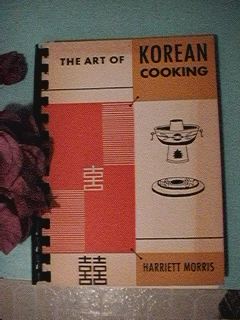
An interesting book and a very attractive cover, it would make a nice addition to your collection if you need a book of Korean recipes.
| Author | Harriett Morris |
|---|---|
| Publisher | Charles E. Tuttle |
| Year | 1959 |
| Length | 104 pages |
| Book Rating | 5 |
In the end, “A majestic view has no charm if the table is bare.” Harriett Morris quotes a “Korean proverb” at the beginning of the final chapter detailing dinner menus. “The Art of Korean Cooking•” was written in 1959, when Korea suggested “far-flung battlefronts and cold wars rather than the unequivocal pleasures of the table”.
This is a small book, spiral-bound, with an aesthetically pleasing patchwork front cover. A tiny insert on the front page gives the price in both dollars and yen: $3.05 or 700 yen.
The introduction notes that seasonings have sometimes been reduced, “to suit the Western palate, which is not accustomed to the extremely high seasoning so often found in Oriental cuisine”. Sesame is almost universal in these recipes. A “prepared sesame seed”, involving browned and mashed sesame seeds, is called for in most of the recipes from soups to meats to desserts.
Keem-chee gets its own chapter. Keem-chee, also translated as “kimchee” more commonly today, is very much like a spiced sauerkraut. Most of them even call for cabbage: you chop the vegetables, cover in water, and let sit for a few days. It ferments into a spicy, self-pickled snack or condiment, depending on your temperament.
I used the spring kimchee for a party, and it went over surprisingly well! Even the kimchee hater was snacking at it, although the only reason I know she doesn’t like kimchee is because everytime we have some at a restaurant she says it “must be good”, because “I don’t like kimchee”. I’ve never actually seen her not like kimchee...
Except for the “celery cabbage” called for in the kimchee, most of the recipes call for familiar ingredients. They tend to get mixed in non-western ways, however, as in “Sesame Seed Soup” (Cho-kay tang), which calls for chicken, soy sauce, ginger, onions, sesame, cucumbers, eggs, mushrooms, and pears.
The vegetable chapter is generally more prosaic, consisting of interesting, simple recipes using quite standard ingredients. You’ll find fried sweet potatoes, fried onions, fried potatoes, spinach & beef, and any number of recipes that would be at home on any rural American table.
In the meat and fowl chapter, what distinguishes the recipes from Western recipes tends to be no more than the soy sauce and ‘prepared sesame seed’. “Liver Pok-Kum (Kan pok-kum)” is nothing more than liver and onions, but using soy sauce and sesame seed for additional flavor. “Beef Pok-Kum” adds candied ginger to the ingredient list. Coming far second to prepared sesame seed, candied ginger and pine nuts are also common ingredients in these recipes.
Most of the seafood recipes are for fried seafood. The three exceptions are “Boiled Fish with Vegetables”, “Salted Fish”, and “Raw Oysters”.
Desserts includes an interesting “spinach cookie” recipe: the “Cinnamon Folds” calls for wrapping “parsley, spinach, or celery leaves” into a dough while frying. It also calls for a cinnamon mixture of cinnamon, sugar, and prepared sesame seed. Dates are common, a couple of chestnut recipes, a wonderful strawberry beverage and ginger tea, fried honey cakes, and candied fruit fill this chapter with very sweet desserts.
The sample recipe includes a guess: the recipe calls for 1 cup sugar, and the instructions call for adding 1 cup sugar to the strawberries, and then the remaining sugar with boiling water... For the most part, however, the recipes are better tested. I can’t recommend searching this book out, but if you see it at a good price and you don’t already have a Korean cookbook, I think you’ll find it useful and interesting.
Strawberry Punch (Dal-ke hwa chyah)
- 12 large strawberries,
- 1 cup sugar,
- 4 cups water,
- 2 tbsp pine nuts.
- Wash berries, remove stems, slice, and add ½ cup sugar.
- Boil water and remaining sugar five minutes and cool.
- Place berries in small glass bowls, add the syrup and pine nuts, and serve with a spoon.
If you enjoyed The Art of Korean Cooking…
For more about Asian, you might also be interested in Classic Chinese Cuisine, Corn and clam soup, and The Complete Book of Oriental Cooking.
For more about cookbooks, you might also be interested in A Concise Encyclopedia of Gastronomy, Bull Cook Historical Recipes, Cavalier Cooking, Classic Chinese Cuisine, Cooking the Bahamian Way, Country Commune Cooking, Life, Loves, and Meat Loaf, The Casserole Cookbook, The Complete Book of Oriental Cooking, The Complete Bread Cookbook, The Frugal Gourmet Celebrates Christmas, The Healthy Cuisine of India, The New Larousse Gastronomique, A Decade of Jell-O Joys: 1963-1973, Saucepans and the Single Girl, The Northwest Cartoon Cookery, Good Food From Mexico, Laurel’s Kitchen, The Cooking of Vienna’s Empire, James Beard’s Fireside Cook Book, French Bistro Cooking, A Fifteenth Century Cookry Boke, Crockery Cookery, Southern Cooking, The Frugal Gourmet Keeps the Feast, The Fannie Farmer Cookbook, French Cooking Simplified With a Food Processor, In Good Taste, Heritage of America Cookbook, Our Favorite Hometown Recipes Vol. II, The Indian Spice Kitchen, Japanese Country Cookbook, La Cuisine Française, Larousse Treasury of Country Cooking, The Natural Foods Cookbook, A Russian Jew Cooks in Peru, Soul Food Cook Book, The Tassajara Trilogy, Pains Spéciaux & Viennoiseries, Whole Earth Cookbook, The Wok: a chinese cook book, Southern Living Cookbook for Two, Lebanese Cuisine, The Art of Syrian Cookery, Popular Greek Recipes, In a Persian Kitchen, The Art of Pennsylvania Dutch Cooking, The Southern Living Cookbook Library, The Donna Rathmell German Bread Machine Cookbook collection, The missing indexes, St. Mary’s Altar Society Cookbooks, The Deplorable Index, My year in food: 2022, My Year in Food: 2023, My Year in Food: 2024, My Year in Food: 2025, Franklin Golden Syrup Recipes, Promotional cookbook archive, Finding vintage cookbook downloads, Chiquita Banana’s Recipe Book, A golden harvest of sunflower seeds, A 1950 recipe calendar for 2023, Hope Lutheran 1950 Lenten fish au gratin, Tempt Them with Tastier Foods: Second Printing, Mrs. Winslow’s Domestic Receipt Book for 1876, Stoy Soy Flour: Miracle Protein for World War II, A Traveling Man’s Cookery Book, Rumford Recipes Sliding Cookbooks, Using ingredients to guess cookbook years, Four New Ices and an Ice Cream Cookery, Ice Cream Cookery, Second Printing, A Bicentennial Meal for the Sestercentennial, Padgett Sunday Supper Club Sestercentennial Cookery, Refrigerator Revolution Revisited: 1928 Frigidaire, Refrigerator Revolution Revisited: 1942 Cold Cooking, Refrigerator Revolution Revisited: 1937 Kitchen-Proved, Padgett Sunday Supper Club, Club recipe archive, Promotional Cookbook Archive, Cookbook publication year estimates I have made, and Club Padgett Cookery Errata.
- The Art of Korean Cooking•
- If you see it at a good price and you don’t already have a Korean cookbook, I think you’ll find this book by Harriett Morris useful and interesting.