


Exchanging the market for high prices and corruption
What is with politicians trying to force consumers through a government-designed exchange to buy services? Everytime I read about the health insurance exchange that the Democratic plan sets up, I get flashbacks to the power exchange set up by California politicians in the late nineties.
Here in California the government “allowed” us to buy our electricity from individual providers instead of a single power company. But those providers were forced to buy all of their power through a single exchange at a single price. How was that supposed to help lower prices or increase service quality?
All an exchange does is ensure high prices and corruption. It increases costs by reducing choices, by increasing the number of middlemen—someone has to be paid to run the exchange and monitor the regulations—and it creates a single point of corruption. And because the exchange is just a series of regulations set up by the government, it inevitably fails at a crisis point.
When that crisis hit here in San Diego, power prices went crazy—and power wasn’t even “gravity-driven” before the power exchanges came into play. Rather than let us choose our power based on service, price, quality, or some combination, we had to go through a company that had to go through a PX that had to conform to strict government regulations. Consumers—those of us that actually had to use power—could only “negotiate” with companies that had no power1 to set prices or to give us what we wanted.
I remember looking into buying green power. There was a company that claimed to be green; it didn’t provide green power. It couldn’t—all the power was on the other side of the exchange and they weren’t allowed to go there. All they could do was promise to donate some part of their profits to green sources. That was the extent of consumer freedom under the power exchanges.
Like California’s power exchanges, health care exchanges add more regulations; these cost money to comply with. They add more middle-men; these cost money too. They mandate a one-size-fits-all pricing scheme; this increases prices for everyone who doesn’t need that size. It creates a system where we have little to no control over what services we buy. And it creates a massive single point through which all money flows. It’s going to attract corruption on a scale that will dwarf that of Enron’s traders.
- March 4, 2020: California never had a free market power failure
-
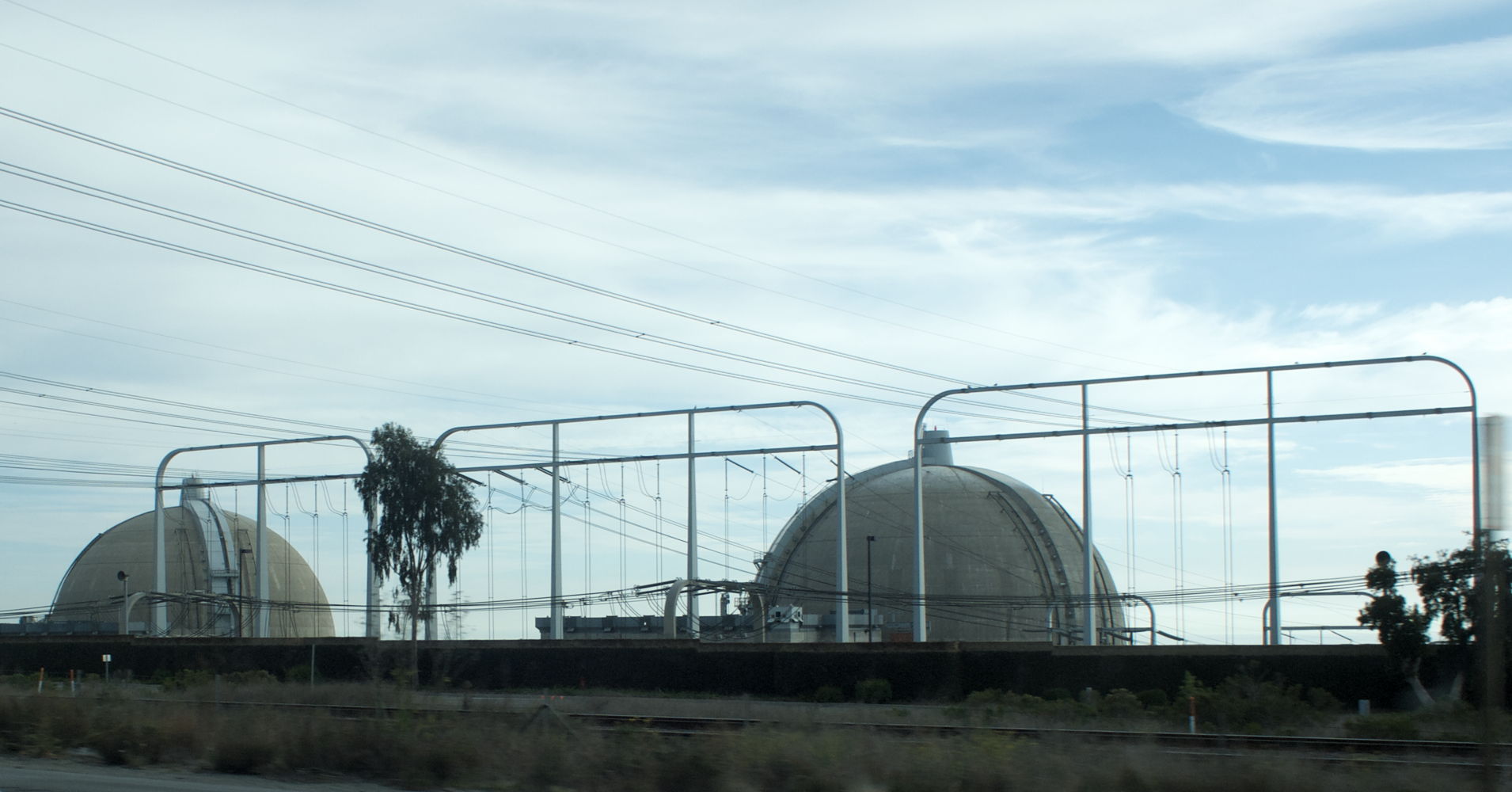
A monument to regulatory sclerosis.
Now that California’s state-managed power grid is yet again failing, I hear again how deregulation failed back in 2000. But I was in San Diego, at the brunt of the damage. There was never any deregulation. There was never any attempt to bring a market economy to electricity in California. We never had a choice of power generator, nor did the people we bought power from. I remember looking at the various options we had, and looking at the mix between green and non-green power generation, compared to the average; every option, even options supposedly focused on green power generation, had exactly the same mix percentage-wise.
According to Green Mountain’s three-fold flier, what they did that made them green was donate to clean energy solutions. At the time I thought that was silly, but it didn’t occur to me it was indicative of a larger problem with the system. It was only afterward, when I learned how the system worked, how micromanaged it was by California, that I realized why power companies did it that way.
They had to. There was no market where Green Mountain could go buy green energy and sell it to me. Instead, we had an exchange run by California bureaucrats that funneled all the same power from one side, the electricity producers, to the other side, the electricity sellers. The politicians claimed it was a means of simulating a market economy, but if you looked at it, it was clearly designed to deny a market economy. Long-term contracts were forbidden. Negotiating prices was forbidden; well, technically not forbidden, but the power sellers didn’t get to pay the price they negotiated. The formula decided the price they were going to pay, and it was designed to run high. Everybody paid the same price, what the bureaucrats, not the end customers, decided was the market price. They used a formula that heavily weighted the highest bids, making it an easy system to manipulate.
This was what Enron did. They looked at the formula and manipulated the inputs to the formula, forcing all consumer-side sellers to pay high prices for power. They, of course, passed the formula’s costs on to us. That wouldn’t have worked in a market economy, because we could have chosen to switch to different power generators, and we’d have negotiated prices with them already anyway so that faking high prices wouldn’t have altered our contracts.
No pun—the way that power exchanges were set up meant that we had rolling blackouts, where we literally had no power at all.
↑
- The Country’s in the Very Best of Hands at Li’l Abner•
- This song from the Li’l Abner musical is still pretty damn funny fifty years later.
- GOP health-care reform cost: $61 billion, cut deficit $68 billion: Ed Morrissey at Hot Air
- “CBO director Douglas Elmendorf scored the new proposal from House Republicans on health-care reform and gave them plenty of ammunition to use against expansive and expensive Democratic plans for government takeovers. Their plan, which relies on interstate competition, HSAs, and tort reform, would only cost $61 billion in the first ten years of the plan—or slightly less than 6% of what Democrats plan to spend to overhaul the entire system.” (Hat tip to Elizabeth Scalia at The Anchoress)
- Lights Out: What Killed Off the California Power Exchange?: Ivy Schmerken
- “Under the deregulation law passed in 1996, California’s investor-owned utilities (IOUs) were not allowed to enter into long-term contracts. They were mandated to purchase electricity in the day-ahead and day-of spot market.” (The best part about California’s power exchanges? They kept calling these ridiculous new regulations “deregulation”.)
- A Tale of Two Birds - the Vulture and the Eagle: Dafydd at Big Lizards
- “The fundamental GOP philosophy is that if you make health care cheaper, then insurance will likewise become cheaper (Capitalism); and if insurance is cheaper, more people will buy it (Econ. 101). Everything in this bill is designed with that end in mind: Make health care cheaper by removing the perverse incentives of the ‘invisible foot’ of government, driving costs up.”
- That 1,990-page Democratic health care bill? It’s longer now; includes new government controls: Byron York
- “What’s more important is what is in the new amendment. Remember when the House leadership, the White House, and sympathetic media commentators everywhere attacked the insurance industry for predicting that the Democratic bill would cause premiums to go up? The manager’s amendment is, in effect, the House Democrats’ admission that it would do just that. Their answer: more government control.”
- The Worst Bill Ever
- “In a rational political world, this 1,990-page runaway train would have been derailed months ago. With spending and debt already at record peacetime levels, the bill creates a new and probably unrepealable middle-class entitlement that is designed to expand over time. Taxes will need to rise precipitously, even as ObamaCare so dramatically expands government control of health care that eventually all medicine will be rationed via politics.”
More exchange
- TXU bets against deregulation and loses
- TXU was once the government-sponsored monopoly energy provider in Texas. They just went bankrupt, apparently because they expected a free market to act like a government market.
- Firewall affordable care act failures
- Because Senate Democrats are not going to repeal the mess that is the ACA, we need to firewall the failing parts of it in order to keep health care and health insurance costs from escalating too much.
- The precarious value of middlemen
- In a world of choice, a middleman must add value (lower prices, ease of delivery) in addition to their added costs (fewer choices, lower quality, etc.) But the costs are always there. Once a middleman is mandated, there is no longer any need to add value.
More free market
- Reagan’s Lincolnian Revolution
- Reagan provided an alternative to the assumption held by both parties that bureaucracy was superior to individual freedom.
- Capitalism is not an ism
- Capitalism is not a system—it’s just what people do when they get together peacefully. When people complain about capitalism, they’re really saying that they want more power over what people do when they get together peacefully.
- TXU bets against deregulation and loses
- TXU was once the government-sponsored monopoly energy provider in Texas. They just went bankrupt, apparently because they expected a free market to act like a government market.
- The precarious value of middlemen
- In a world of choice, a middleman must add value (lower prices, ease of delivery) in addition to their added costs (fewer choices, lower quality, etc.) But the costs are always there. Once a middleman is mandated, there is no longer any need to add value.
- Trying the market, or “No, you are.”
- I think I’ve figured it out. When people say they’ve tried the market and found it wanting, they’re really just trying to deflect criticism of government policies. They’re trying to pretend that the problems government causes are someone else’s fault—in this case, the free market.
More health care
- COVID Lessons: The Health Care Shutdown
- It’s fortunate that COVID-19 was not as bad as the experts said, because our response was almost entirely to make the problem worse. We shut down everything that could help, including health care for co-morbidities. We locked the healthy and the sick together, and cut people off from routine care. Most of the deaths “from” COVID-19 were probably due more to our response than to the virus itself.
- Community health acts to improve Obamacare
- Democrats now want to talk about how to improve Obamacare. Here’s how to do it.
- Why government-funded cancer research is dangerously unlike the Manhattan Project
- A “Manhattan Project” for cancer is likely to delay cancer cures, and make what cancer cures we find more expensive—like the Epipen. And kill people, like the original Manhattan Project.
- Why does the EpiPen cost so much?
- With Mylan raising the cost of the EpiPen even as the EpiPen enters the public domain, people are complaining—but they’re complaining in ways that will raise health costs even more.
- Strangling the iPhone of health care
- We have no idea what great improvements in health care we have strangled through our current system of government regulations, subsidies, and tax incentives.
- 17 more pages with the topic health care, and other related pages