France at the Start of Louis XIII’s Reign
La Rochelle
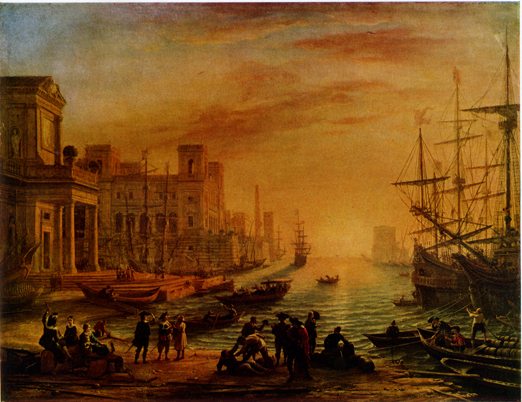
“La Rochelle,” wrote Dumas, “deprived of the assistance of the English fleet, and of the reinforcements promised by Buckingham, surrendered after a siege of a year. On the 28th of October, 1628, the capitulation was signed.”
It happened pretty much as Dumas described it: La Rochelle was the last remaining of the Huguenot cities. The Huguenots were Protestants, and France was a Catholic kingdom. The Huguenots pinned all their hopes on English assistance, and the death of Buckingham, combined with the earlier marriage of Louis XIII’s sister Henrietta to Charles I of England, quashed that hope.
Duels
Early in 1626 a very severe edict had renewed the ban on duelling. Two popular nobles were put to death for having killed other nobles in a duel.
And here we must stress yet again that the reign of Louis XIII was a period of transition from the Middle Ages to the modern social system, and that royal authority was the instrument which effected this far-reaching change. It was no longer enough for a noble to be recklessly brave or to display all the Christian virtues when he came to die after behaving in a way that was far from virtuous. He must serve the king, and live and die in his service alone. (Tapié, 165)
The ban on duels was more likely to be Louis XIII’s assertion of royal power than any influence by a minister such as Richelieu. As early as 1617, Louis XIII was enforcing the ban on dueling with the death penalty to nobles, such as the baron of Guémadoc (Moote, 119).
Louis showed his stand against dueling very clearly in the Bouteville case: Bouteville and Chapelles were sentenced to decapitation. They had fought a duel in the very public Place Royale, after Bouteville was ‘pardoned’ for a previous duel: if he returned to France, he would not be killed if he stayed away from court. Fighting this last duel was as much a fight with Louis as it was a fight with the baron of Beuvron. Bouteville was rebuking his king in order to save his honor.
According to the royal historiographer Bernard, Louis exclaimed to one of those who called for leniency: “It is necessary for a little blood to be shed in this instance to stop the stream that flows daily.” Louis XIII insisted that the execution be public, nervously ordered the guards to seize anyone who so much as called for “grace,” and had the surrounding streets blocked off with chains and carts.
Bouteville and Chapelles died bravely and repentant for their crimes, dignifying a scene that must have sickened the entire court. Louis himself had to be bled a week later, and immediately fell dangerously ill. (Moote, 188)
The Jesuits
In the later Musketeer books, “the Jesuits” were a secret order, allied at times with Spain and considered a rival to royal control. In reality, the Jesuits were feared: the order had even been temporarily banished from France by Henry IV because they were tied to advocacy of “tyrannicide—killing a king who ‘tyrannically’ opposed the Pope and Catholic church”. (Moote, 45)
The Musketeers
There is some question as to whether the Musketeers even existed, at least in the form described by Dumas. John Noone, in The Man Behind the Iron Mask, while not addressing this, does mention the Musketeers often in passing. The jailer who kept the prisoner, Monsieur de Saint-Mars, was originally a Musketeer, and was among those who, with d’Artagnan, arrested Fouquet. The Musketeers as described by Noone fit the Musketeers as described by Dumas:
The name Saint-Mars was the sword-name of Benigne d’Auvergne… In 1650, when he was twenty-four, he was given a place in the First Company of the King’s Musketeers and, though he was thirty-four before he was promoted corporal and thirty-eight before he was made sergeant, he could flatter himself that to achieve rank at all in the Musketeers, where every man was a gentleman, was a mark of some distinction for a man with neither birth nor money behind him. It was as a sergeant that, in December 1664, he was appointed governor of the State Prison of Pignerol and he was recommended for that post by the commander of his company, d’Artagnan, who recognized in him all the qualities necessary for a gaoler. (Noone, 257-258)
Alexandre Dumas
So, how qualified was Alexandre Dumas? According to Moote,
As I read about Louis XIII, the ghost of Alexandre Dumas was always at my shoulder. Dumas was not only a prolific writer of historical novels, but also a competent historian who knew the standard sources and even wrote a half-serious history of Henry IV and Louis XIII. (Moote, 6)
The Iron Mask
So was there a Man in an Iron Mask? No one knows for sure. There was certainly a mysterious long-time prisoner. The records of his jailer, Saint-Mars, and the records of the Bastille, make this certain. Whether this prisoner ever wore an iron mask, whether it was always velvet, or whether it was ever worn at all inside of the prisons, remains open to conjecture. Theories of who the man was include:
- The Twin of Louis XIV, conceived first and born last.
- The father of Louis XIV, in the theory that Louis XIII was unable to father a child, so a stand-in was produced.
- The elder brother of Louis XIV, whose father was not Louis XIII but rather the result of an affair the Queen had with another man. Because of the repeated failures to conceive a child by the King, the Queen had assumed herself to be incapable of bearing a child. When she found herself pregnant, she realized this was not true, and (a) hid her first child, and (b) maneuvered the King into her bed where Louis XIV was conceived.
- A doctor who had participated in the autopsy of Louis XIII, and who discovered that Louis XIII was incapable of fathering a child.
- The daughter of Anne and Louis XIII: their first child, rather than being a boy, was a girl, and the King was so afraid of not having another child that the girl was secretly taken and replaced with an infant boy. The queen never knew, and ironically the King and Queen conceived a son not three months after the switch.
- Louis de Bourbon, Comte de Vermandois: the son of Louis XIV and Louise de la Vallière, who supposedly died in 1683 at the age of 16.
- The Duc de Beaufort: he disappeared in battle in Crete, and was presumed dead. He was imprisoned, so the theories go, either because Colbert did not want him as admiral, or because he was Louis XIV’s true father.
- Richard Cromwell, the son of Oliver Cromwell.
- Duke of Monmouth, “one of the love-children of Louis XIV’s cousin Charles II of England”, who took part in a failed attempt at wresting the crown of England from James.
- Sir George Barclay, who helped organize a failed, French-supported attempt to wrest England’s crown from William of Orange.
- Louis Oldendorf, a nobleman from Lorraine disguised as a Dutch national, who was the leader of a “Secret Order of the Temple”. As long as he remained alive, the Secret Order could not replace him, so he was kept imprisoned, and even after he died, another, masked, man was forced into his place to keep the knowledge of his death secret and the Secret Order neutralized.
- Vivien de Bulonde, a French general who panicked in battle and compromised an entire campaign.
- Molière, the playwright, who was hated by a real secret organization of Catholics in France.
- Archbishop Avedik of the Armenian Orthodox Church
- A college student who had complained in verse at the replacement of Jesus’ name with the King on the college gates.
- Nicolas Fouquet, who was thought to have died in 1680.
- The Count Ercole Antonio Matthioli, of Mantua, who wore a mask because he wanted to, not because he had to. It was the style in Italy at the time, as the story goes.
- A black dwarf who had fathered a daughter with Louis XIV’s wife.
Many of these theories hover around the fact that it took the King and Queen over twenty years to have their first child. I strongly recommend John Noone’s book• for a more in-depth overview of each of these theories, and why they are or are not plausible.
More Information
- The Man Behind the Iron Mask•
- St. Martin’s Press, 1994. An overview of most, if not all, of the theories that have been put forward on who the Man in the Iron Mask really was. As an overview, I strongly recommend this book. His own theory I don’t feel qualified to judge.
- The Mystery of the Iron Mask
- “What are the actual facts—shown by unquestioned documents in the possession of the French government—in connection with the arrest, imprisonment and death of the ‘Man with the Iron Mask’?”