


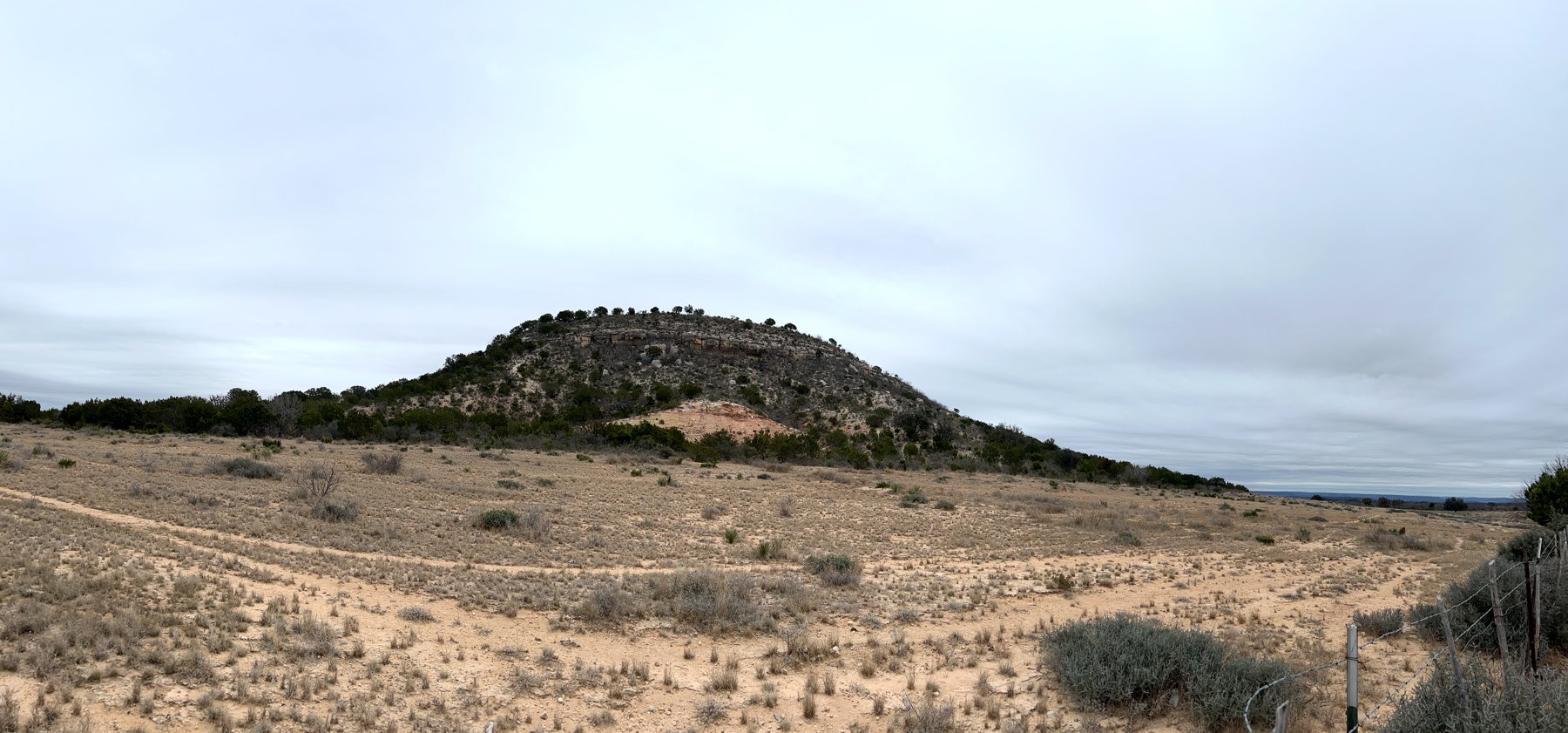
There aren’t even two vast and legless trunks of stone in this desolation.
As is often the case with geographical rather than architectural features, the Reichenau Gap marker is more interesting for what it invokes than for what it is. The Reichenau Gap marker is just past London on the way to Junction, and it’s a view of… hills. Whether the Gap is through the hills visible from the highway, or U.S. Route 377 itself was built where the Gap was, I don’t know. But it’s a desolate place now far from anything—much like London itself.
Reichenau Gap
For more than 100 years, travelers followed the road from Mason to Junction through this pass. The earliest known Anglo settlers in the area were the Frank Putman family, who settled approximately one mile northeast from Reichenau Gap. The geographic feature was named for Adolph A. Reichenau, a German emigrant who purchased the improved land from Frank Putman and settled in the Big Saline Valley in 1862. Reichenau moved from the area after losing over forty horses in three separate raids by Native Americans in 1868 and 1869. Reichenau lived the remainder of his life in the Simonsville community in Mason County, and is buried, along with his family, in the Reichenau Cemetery near his home there.
(1966, 2008)
One might guess from the wording that Route 377 does not follow Reichenau Gap, because if it did, travelers would still be following the road from Mason to Junction “through this pass.”
“The Big Saline Valley” is a wonderful name for a location that richly evokes the old west. The valley is defined by the Big Saline Creek (yes, there is also a Little Saline Creek in a nearby valley).
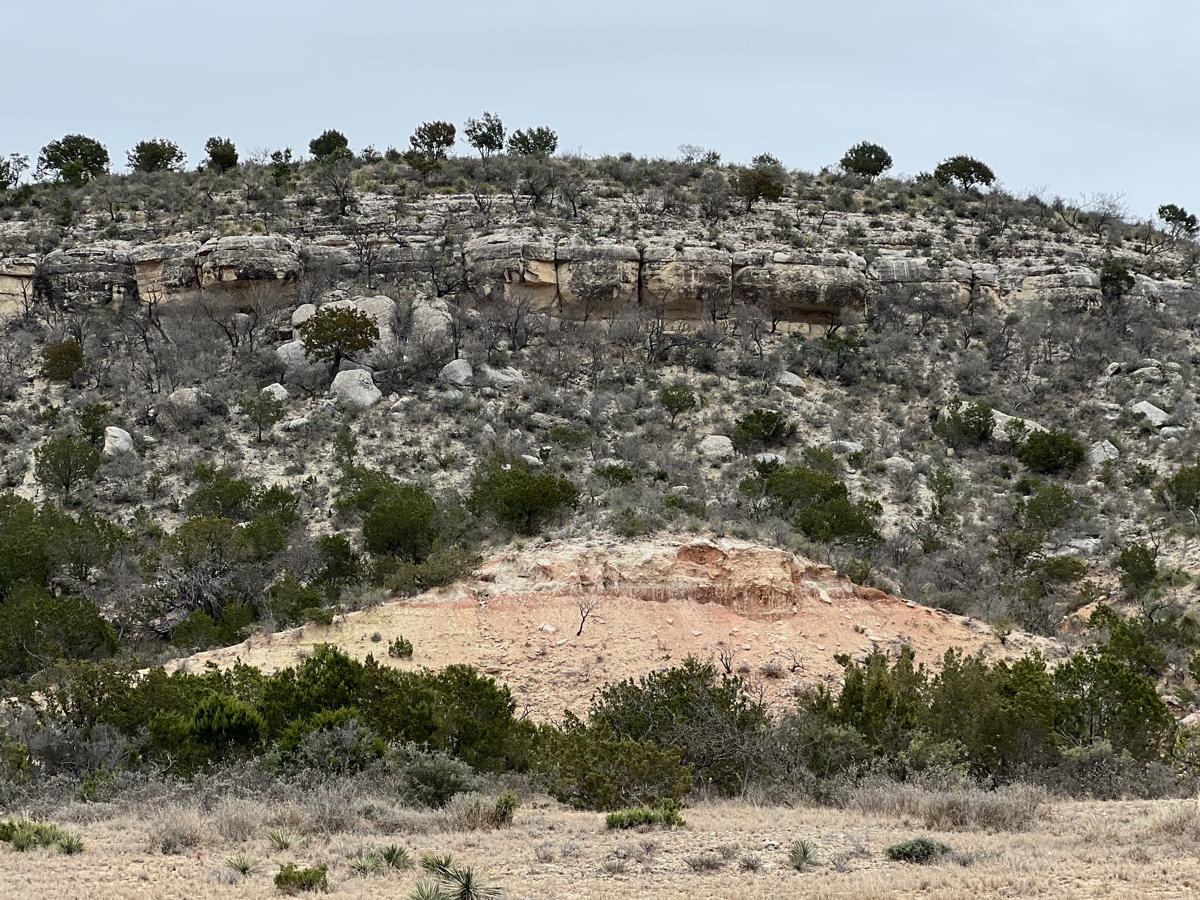
There is a lot of geological history in these hills, too.
A lot of history passed through Reichenau Gap, but today it is known mainly for the marker itself. Of the six books on the Internet Archive that mention Reichenau Gap, four are various editions of a guide to Texas historical markers! Even that guide, for most of its life, gave the Gap a Douglas Adams-style “Mostly Harmless” entry:
LONDON (Kimble Co.)
Reichenau Gap
Travelers between Mason and Junction passed through this gap, named for a German emigrant who settled nearby in 1866.
I suspect this is merely the wording of the original marker, because a later edition replaced that text with a slightly longer version (two sentences instead of one) that uses phrasing very similar to the newer marker that was put there in 2008.
For more than 100 years, travelers followed the road from Mason to Junction through this pass. Named for Adolph A. Reichenau, a German emigrant who settled near pass [sic] in 1860 as an early landholder in nearby Big Saline Valley. He moved in 1866 because of Indian depredations.
However, that edition was 2005, and the new marker is dated 2008, so in further echoes of Douglas Adams, who copied whom may be in question.
The Reichenau family has not been as prominent with their reunions as the Kothmann family, but their reunions did occasionally make the news
MASON COUNTY
Reichenau Reunion
Early days in Mason county were recalled by the children of the late Mr. and Mrs. Adolph A. Reichenau, who met Sunday with their children and grandchildren for a family reunion at Camp Mason on the Llano. Five of the six living children were present.—Mason County News
That’s from the July 30, 1936, Llano News of Llano, Texas.
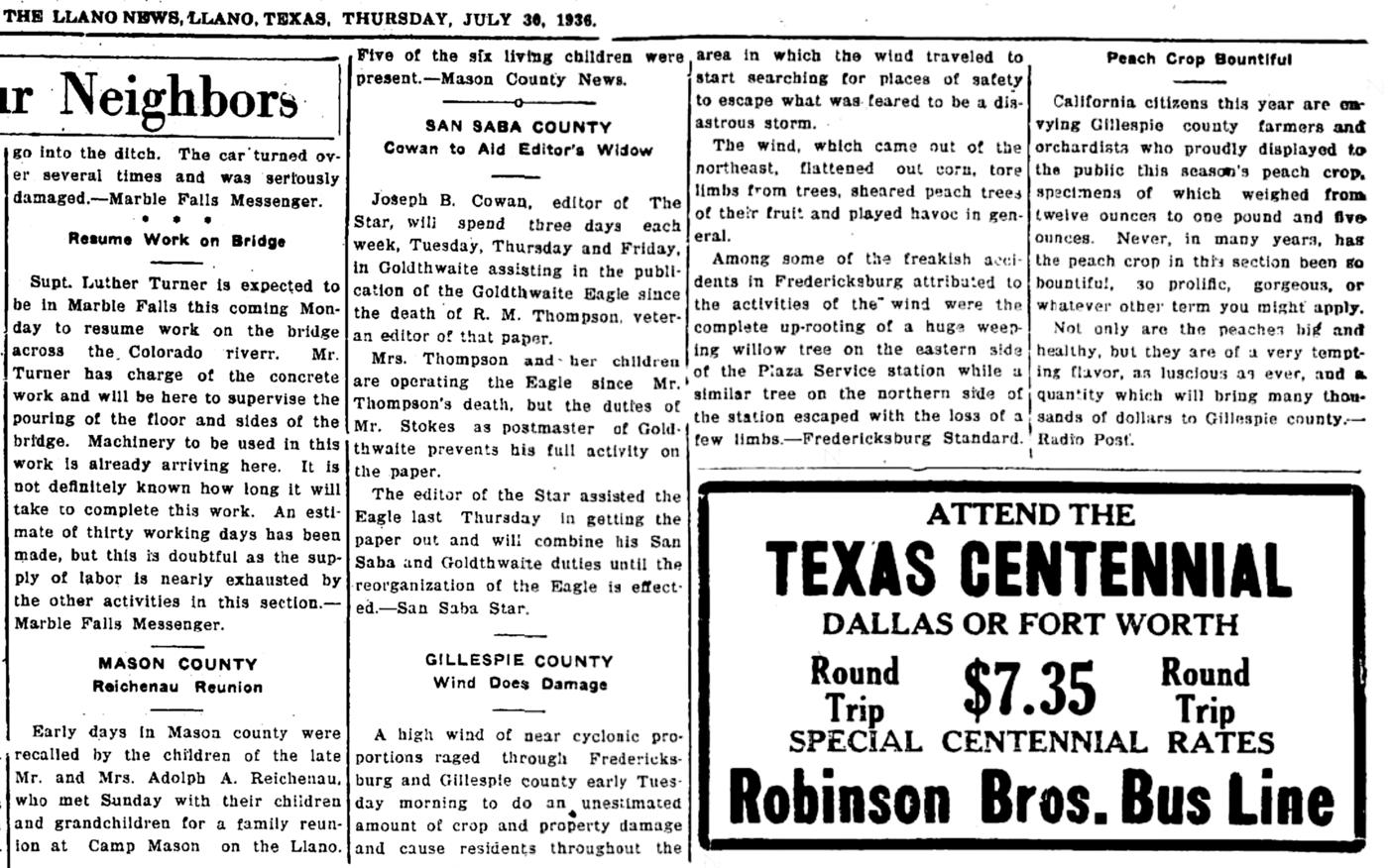
Was their reunion related to the Texas Centennial celebration?
Reichenau and his family lived a very pioneer life, as can be seen by the text on the marker. Adolph Albert Reichenau was born around 1822 or 1824 in Germany and lived into the twentieth century. He was a Texas Ranger and fought in the Mexican War. He was friends with some American Indians in the area and fought with others.
He had a large family with two successive wives. He married Katherine Arhelger in 1848; she died nearly thirty years later in 1877. They had nine surviving children, three of whom lived into the 1950s. Daughter Emma Katherina lived to be a hundred and died in 1957, still in Mason County.
Two years after Katherine’s death, he married Johanna Wilhelmina Moldenhauer. Like Adolph and Katherine, Johanna had been born in Germany, in her case in 1849—a year after Adolph and Katherine married. She and Adolph married in 1879, and had three surviving children, one of whom lived to a hundred and one, to die in 1983! Hugo Robert Reichenau, too, is buried in Mason.
Johanna herself lived to 1943.
The family has spread enough to now have two completely different pronunciations of the last name. Those who remained in Mason pronounce it “Rag-en-aw”; those who moved to far Fredericksburg pronounce it “Reich-en-au”, which is how I’ve been pronouncing it, too.
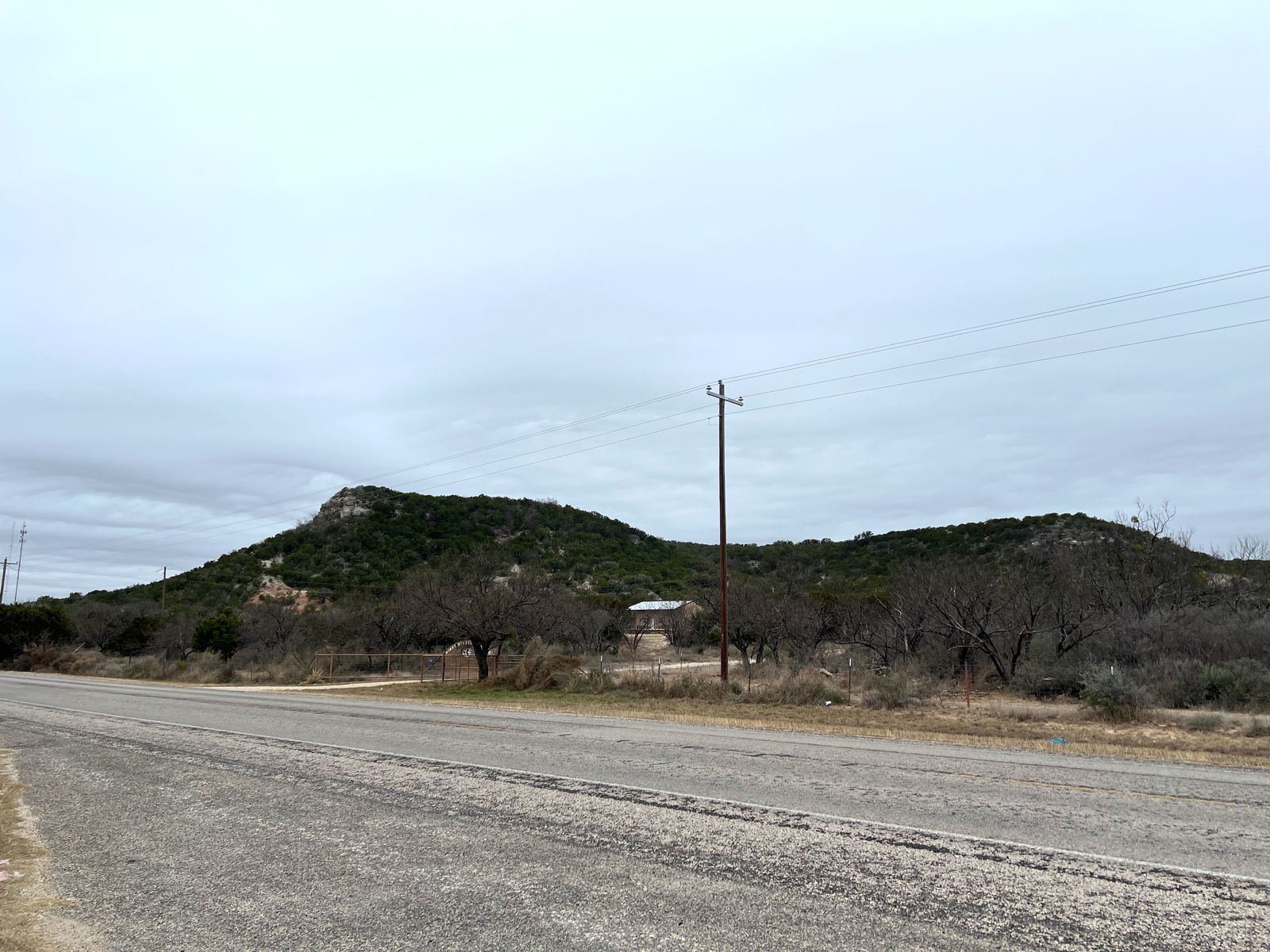
Texas State Highway 29 at the Reichenau Gap marker.
Biographies: |
|
|---|---|
Books: |
|
Graves: |