


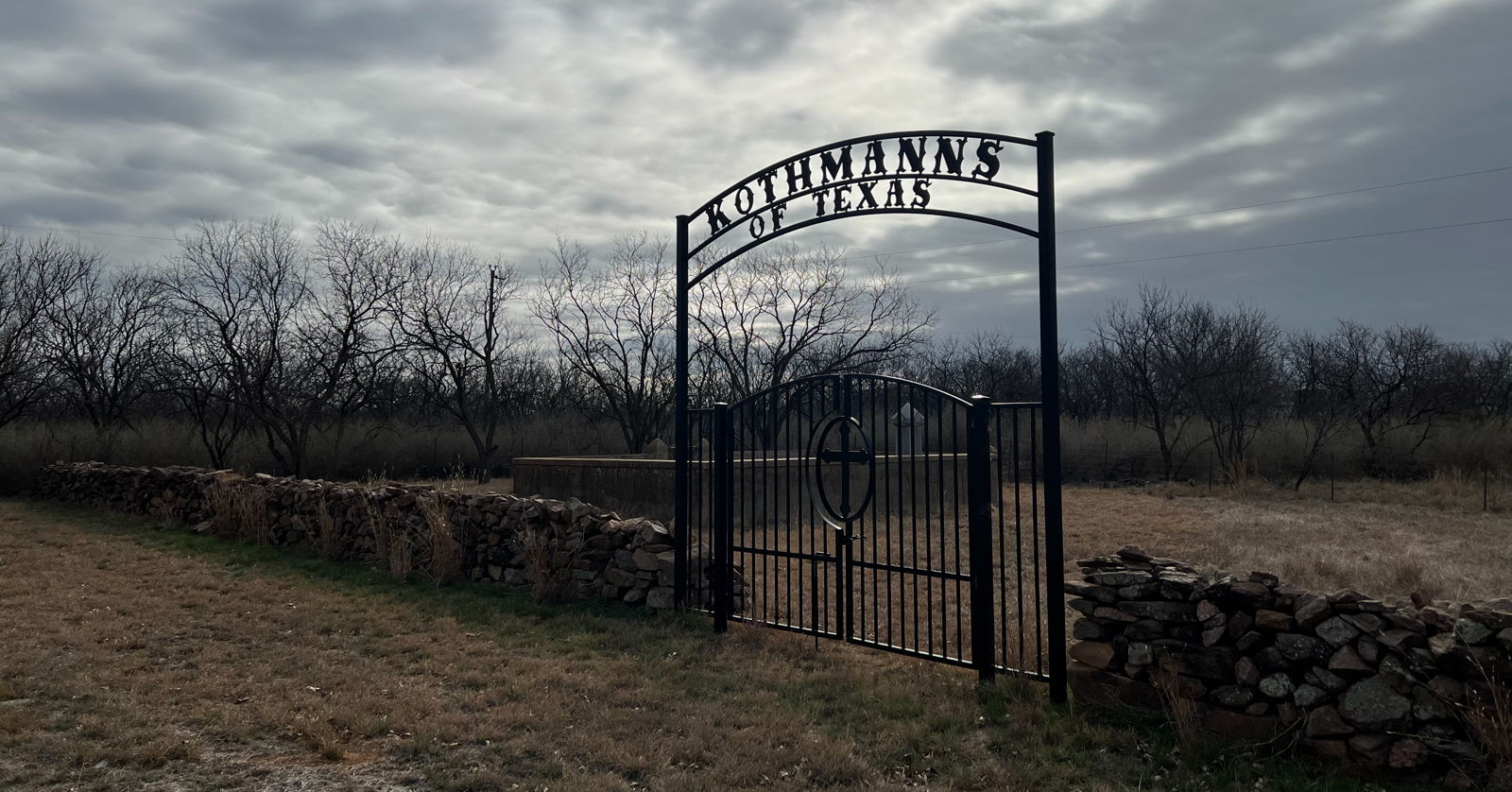
The map and the sign for the Kothmann Homesite both indicate that it’s in a place called Art. If there is any such place, the only evidence of it I saw was two businesses with “Art” in front of their name that don’t appear to ever be open. If you’re looking for a nearby town to help you get to this marker by way of navigation, it’s just before Mason when going west on Texas 29.
There are not a lot of opportunities to get lost in this part of Texas. State Highway 29 goes where it goes, and if you choose to go off of 29 you will know it immediately.
Kothmann Homesite is possibly the most fascinating of the sites I visited on this road trip. The Liberty Hill Cemetery is filled with old tomb markers, and somewhat overwhelming because of that. The Kothmann Homesite and Cemetery is a low stone fence and a tiny enclosed cemetery in the middle of nowhere (or, perhaps, the middle of Art) on a lonely stretch of road on the drive between U.S. Route 183 and Interstate 10. Bertram, Burnet, and Llano are far behind you, and the promised oasis of Mason is still ahead.
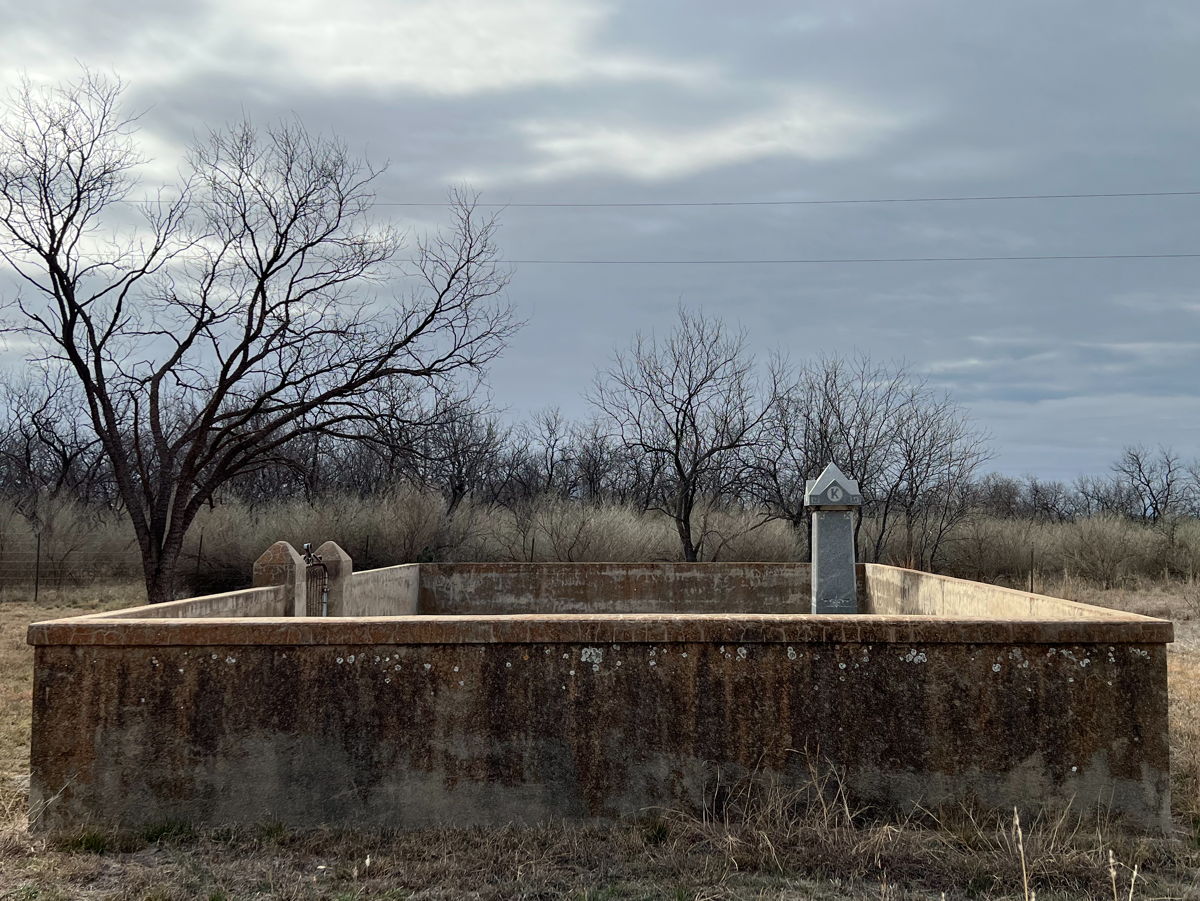
It’s a small cemetery surrounded by a low stone wall.
Kothmann Homesite and Cemetery
Heinrich Conrad Kothmann (1798-1881) and his wife Ilse Katherine Pahlmann (1810-1905) and their family sailed from Germany to Indianola, Texas in 1845. Among the first families to settle in Fredericksburg, the Kothmanns were issued a 640-acre land grant in Mason County in 1848. In 1856 they moved to Art and were among the first immigrant families in this area. A trained cabinetmaker and musician, Kothmann began ranching and acquired another 640-acre tract of land.
Located on their former homestead, the Kothmann Cemetery is all that remains of the original ranch site. Containing only five graves, all of Kothmann family members, the graveyard began with the burial of Heinrich Conrad Kothmann in 1881. His wife Ilse is buried beside him. Their son Karl, the first of their family born in Texas, is buried here along with his wife Katherine (Hoerster) Kothmann. A fifth unmarked grave is thought to be that of a grandchild.
Though most of the land was sold after Ilse’s death in 1905, the family retained one acre including the cemetery property. The concrete wall and slab were constructed after 1937 to provide protection and ease in maintenance for the five graves. The family maintains the cemetery.
(1996)
There is a lot of story in those three paragraphs.
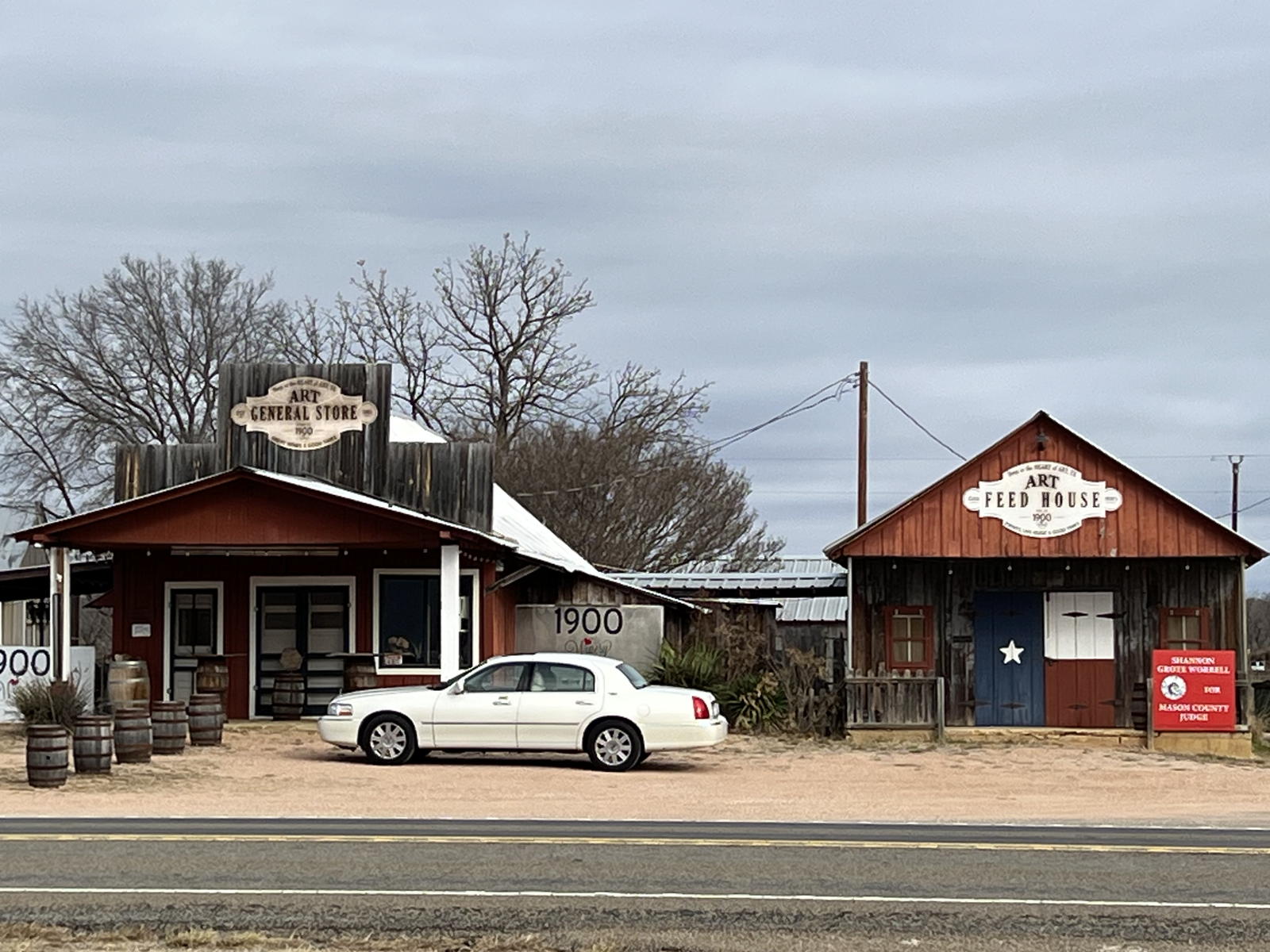
Is this Art?
The Kothmann family has, at least until recently, held regular or semi-regular reunions. These large reunions fascinated people outside of Texas at least as much as people inside Texas. The first mention of their reunions that I found was a very simple entry in the Richmond (Virginia) News Leader of July 19, 1929:
HUGE FAMILY REUNION.
MASON, Texas, July 19.—(AP)—If past gatherings are any criterion, the three-day family reunion of Heinrich Kothmann’s family will be a monster one. About 500 attended the last two reunions, during which the women slept in a barn and the men under a large tent.1
There’s a similar blurb in the July 11, 1935, LLano News which noted that this was “their tenth annual reunion” and would be held in “Koehler Park, San Antonio” but that previous reunions were “heretofore held in Mason”.
[They] have attracted national attention, because they afford an example of family solidarity.
San Antonio, it is reported, is planning an official welcome to the Kothmann clan. Visitors will be greeted by Mayor C.K. Quin, State Representative Pat Jefferson, and James A. Gallagher, Jr., general manager of the Union Stock Yards company.
The Kothmann clan were well established in the Texas livestock industry, which likely explains the presence of Gallagher. The Hondo Anvil Herald of June 26, 1942, included this in their obituary for J. W. Kothmann:
J.W. Kothmann Sr., 79, pioneer San Antonio cattleman and last of the original commission agents on the San Antonio live stock market died at his home… Sunday, June 21. Mr. Kothmann founded the J. W. Kothmann & Sons Livestock Commission Agents in San Antonio in March, 1893, and has been prominent in the cattle business of South Texas every since.
J.W. Kothmann, Sr., will appear again in a few paragraphs.
The Fredericksburg Standard of July 18, 1935, the day of the event, wrote that “The first Kothmann came to Texas with Prince Salms-Braunfels and finally settled along the Colorado River, near the Llano, shortly after 1845… Seven generations of the family were represented.”
The reunions continued for decades. The next reference I found was in the May 26, 1967, Hondo Anvil Herald.
Over 300 Attend Family Reunion
Approximately 350 of the 1500 living descendants of Heinrich Conrad Kothmann attended the annual Kothmann reunion Sunday at Hondo City Park.
Present was the only living direct descendant of the third generation of the family who is 85-year old Mrs. Lillie Kothmann Hoerster of Mason. She is the daughter of the late Diedrick Kothmann.
They made plans to return in 1968, though I found no reference to it in that year. By 1971 the reunion had moved to Lady Bird Johnson Park in Fredericksburg, according to the May 5, 1971 San Antonio Express and News. “Between 300 and 400 members of the Kothmann family are expected to attend…”
Heinrich Conrad Kothmann, his wife, Ilse Katherine Pahlmann Kothmann, and children left their home in Wedelheine, Germany in September 1846 and landed in Texas in December of the same year. They settled in the Hill Country.
“The Kothmanns of Texas 1845-1951,” a book on the family, listed 1,164 Kothmanns at that time.
A report at the 1969 reunion showed that since 1951 the total had grown to 1,557, of whom 1,133 were living direct descendants of the original family.
The first reunion was held in 1926, with J.W. Kothmann as the first chairman. He was the founder of J.W. Kothmann Commission Co. at the Union Stock Yards in 1893. This is the oldest commission company in the nation operating continuously under one family.
J.W. Kothmann is likely the J.W. Kothmann Sr. who helped establish the Kothmanns in the Stock Yard industry.
Finally, the Llano News of May 22, 1975, reported that the Kothmann reunion would again be held at Lady Bird Johnson Park, on May 25, “for the 27th Kothmann family reunion… bringing with them antique household articles which were cherished by Heinrich Conrad and his children… to pay homage to the plucky emigrant from Hanover who had, indeed, planted his roots deep in Texas soil—the land of his choice.”
On September 26, 1845, Heinrich Conrad Kothmann of Wedelheine, Hannover, Germany, his wife and five children departed from Bremen on a three-masted sailboat, the B. Bohlen, biding farewell forever to the land of their fathers. The fair-haired, blue-eyed German immigrant landed on Texas soil 130 years ago, becoming the founder and father of the “Kothmanns of Texas”.
The May 29 Llano News expanded that history:
The Heinrich Conrad Kothmanns arrived at Galveston, Dec. 20, 1845 after a perilous three months voyage. From there they were towed to Indianola, the final destination being the “German Emigration Company Land Grant.”
The “Company” had brought [sic] a large tract of land on the Colorado River between the Llano and San Saba, which, later learned, was a region held entirely by Indians and so far removed from the more settled districts that it was an utterly impractical location for a new colony.
The overland trip was made during a year of excessive rainfall, making the roads almost impassable. At the end of the three weeks of un-accustomed hardships and perils, the immigrants finally arrived in New Braunfels. Since this station was overcrowded with earlier colonists, it was necessary to move on to the land grant.
On April 23, Heinrich Conrad and his family, together with 120 men, women, and children accompanied by eight soldiers, left for Fredericksburg with 20 wagons and two-wheeled Mexican carts drawn by oxen.
When the caravan reached the south side of the Pedernales River, they were surprised to see Indians approaching, making signs of peace and appearing friendly. The Indians belonged to a tribe of Delawares camped nearby.
On Friday, May 8, 1846, the caravan of weary colonist [sic] reached the site of Fredericksburg. However, no sign of civilization was present except a tiny unfinished log hut left by the pathfinders. Settling in an unenviable position, as the Delaware Indian village was very close by.
Without the saving grace of the Almighty, Saxon perseverance and dire necessity, the colonists would not have stayed. But stay they did, beginning one of the most colorful, friendly and thriving little towns in Texas—Fredericksburg.
In 1856, Heinrich Conrad and family, together with four other pioneering families, the Jordans, Hasses, Hoersters, and Dannheims, moved to a place in the Land Grant known as Upper Willow Creek (now called Art, in Mason County). It was wild, virgin country which they entered, land yet untrod by the white man’s foot. Yet, here is where Heinrich Conrad established his permanent home.
As a cabinetmaker by trade, he built his home of logs which were cut, hewed, numbered, fitted and joined in such a way so that no cracks were left, each joint fastened with a wooden pin.
When the house was completed, the family (now seven children) cleared the land, planted crops and raised stock. Cattle and hog were accumulated in great numbers.
During the winter, it was not unusual to butcher 75 to 100 hogs at time, hauling the hams, bacon, and lard to the markets in Austin or San Antonio by ox-teams.
It was here in Mason County that Heinrich Conrad developed: his faith, his land, a large family and as a prominent citizen of Texas.
Heinrich Conrad had left his fatherland to establish roots in the rich Texas soil—and roots he did establish. From his humble and perilous beginning, the family has now increased to 2,430 “Kothmanns of Texas.” Many of his descendants are still residing in and around Mason, Gillespie and Menard Counties. However, there are “Kothmanns of Texas” now residing in many areas of Texas, in 48 other states and five foreign countries.
Today there are 29 families (households) who are descendants of Heinrich Conrad residing in Llano County.
If you visit this marker, you should continue into nearby Mason. Mason has at least two wonderful antique shops, from the ramshackle but comprehensive Mason Country Collectibles to the elegant Underwood Antiques.
And if you enjoy donuts, I cannot stress too highly how wonderful the apple fritters at Mason Donuts are. When I’m traveling through the area to get to I-10, I will stop at Gude’s in Burnet for boudin kolaches, but I will specifically wait until Mason to get those wonderful sweet and crunchy apple fritters.
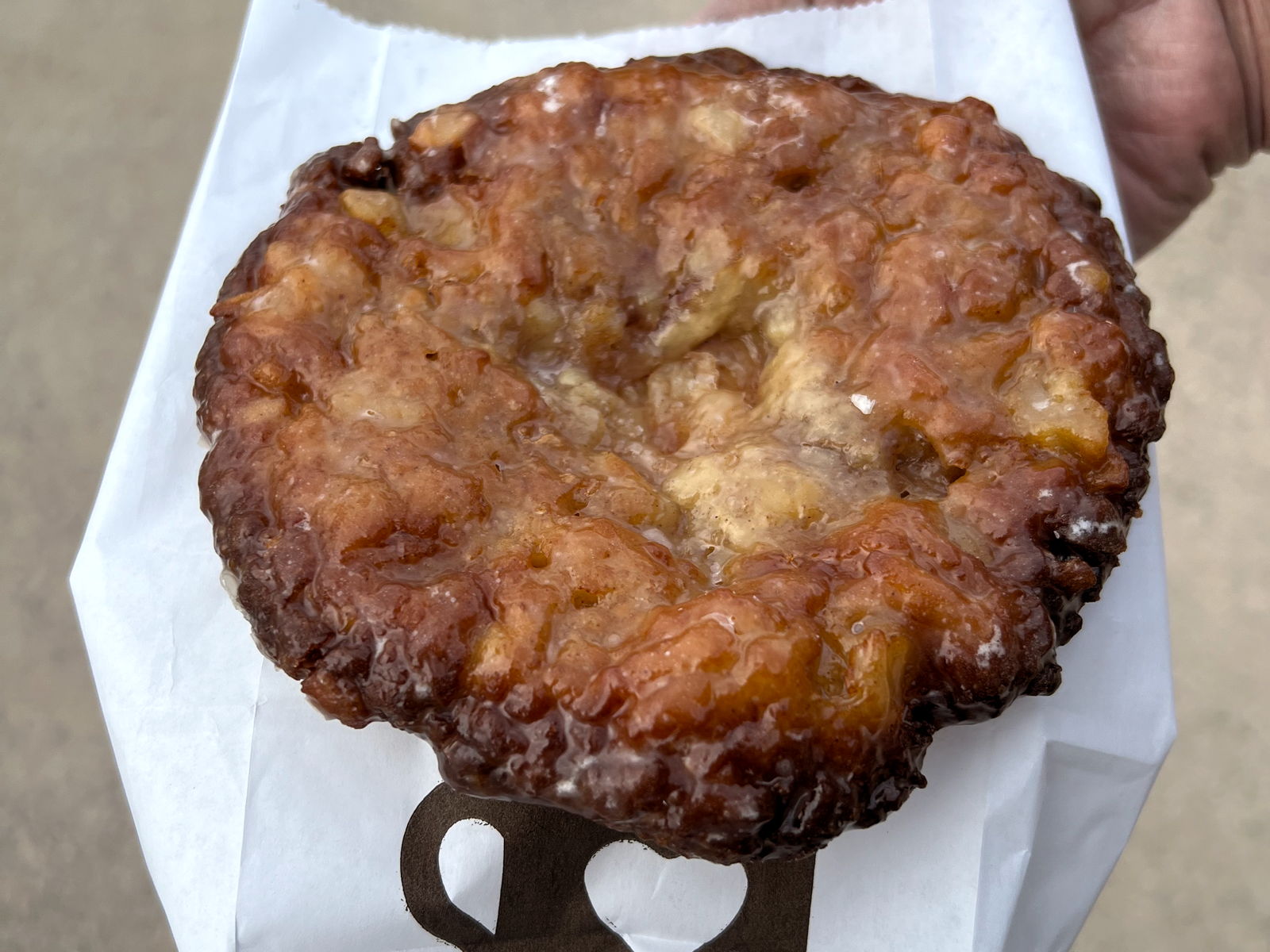
The best fritters I’ve had in Texas are at Mason Donuts.
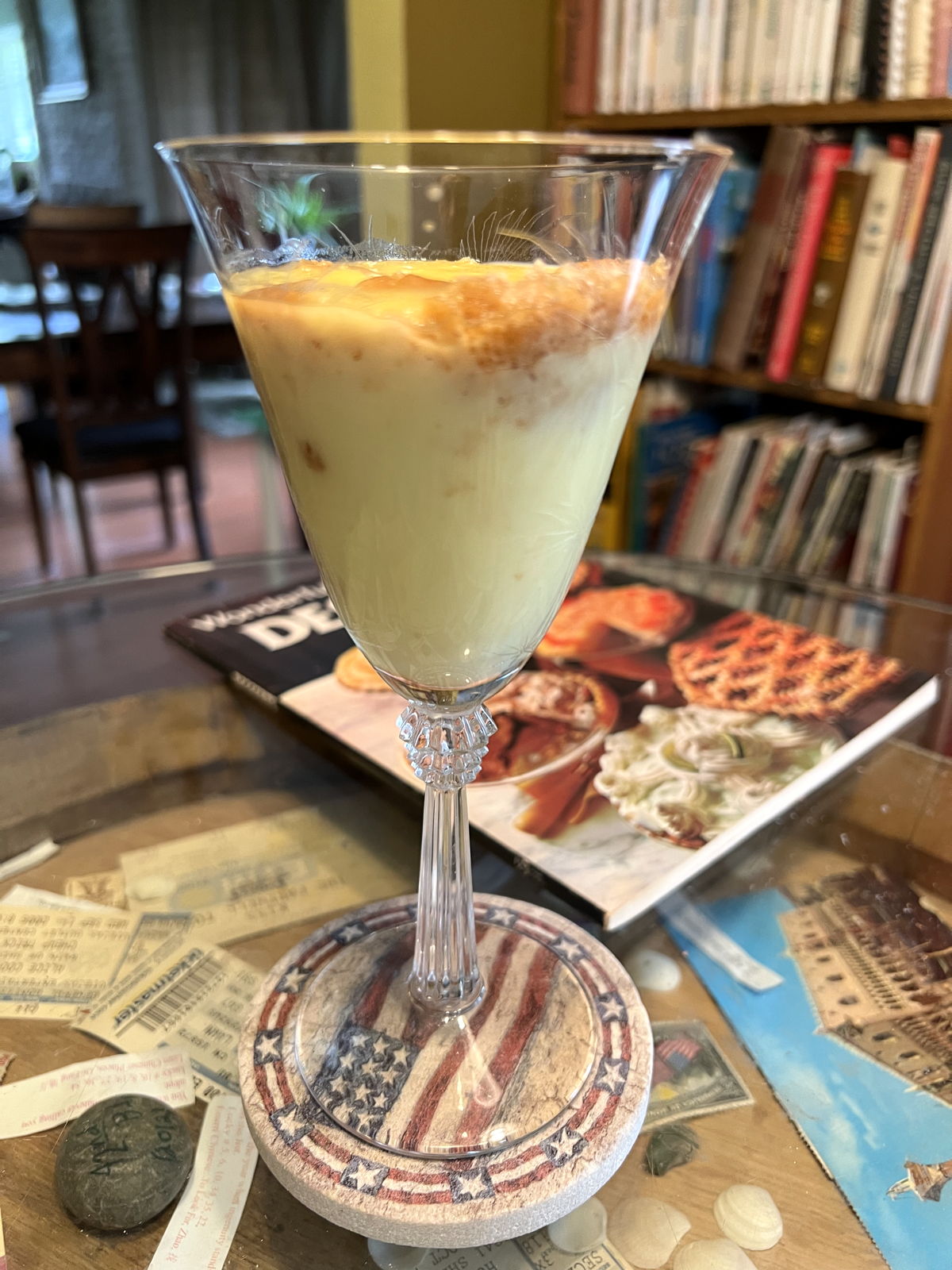
Coconut Cream Pudding from the Wonderful Ways Desserts volume, purchased at Mason Country Collectibles.
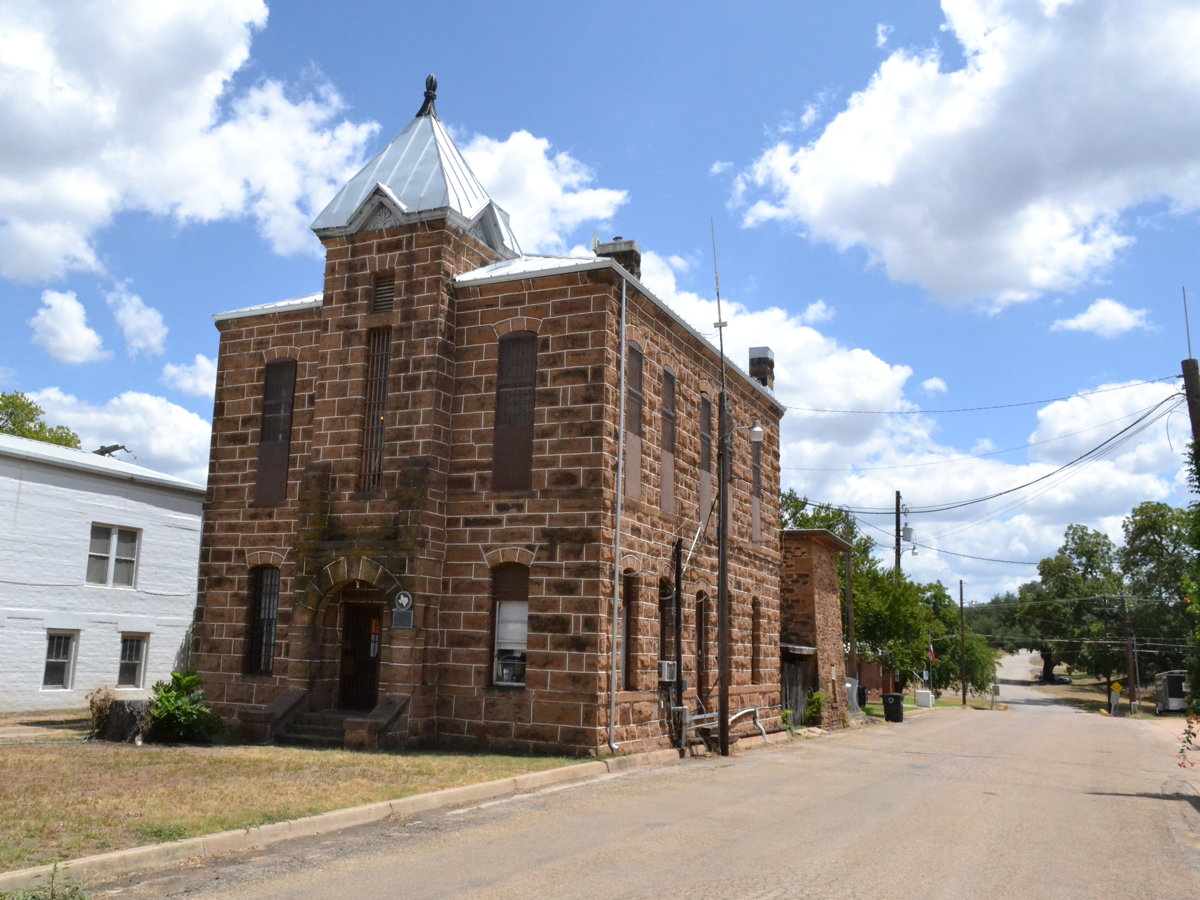
The Mason County Jail is on the other sound of the town square from State Highway 29. (25or6to4, CC BY-SA 4.0)
In what I am assuming is a Richmond News Leader typo, the original says that the men slept “under a large ten.”
↑
Antiques: |
|
|---|---|
Food: |