


- The Rifleman at Bennington to the British Granadiers—Wednesday, August 12th, 2026
-
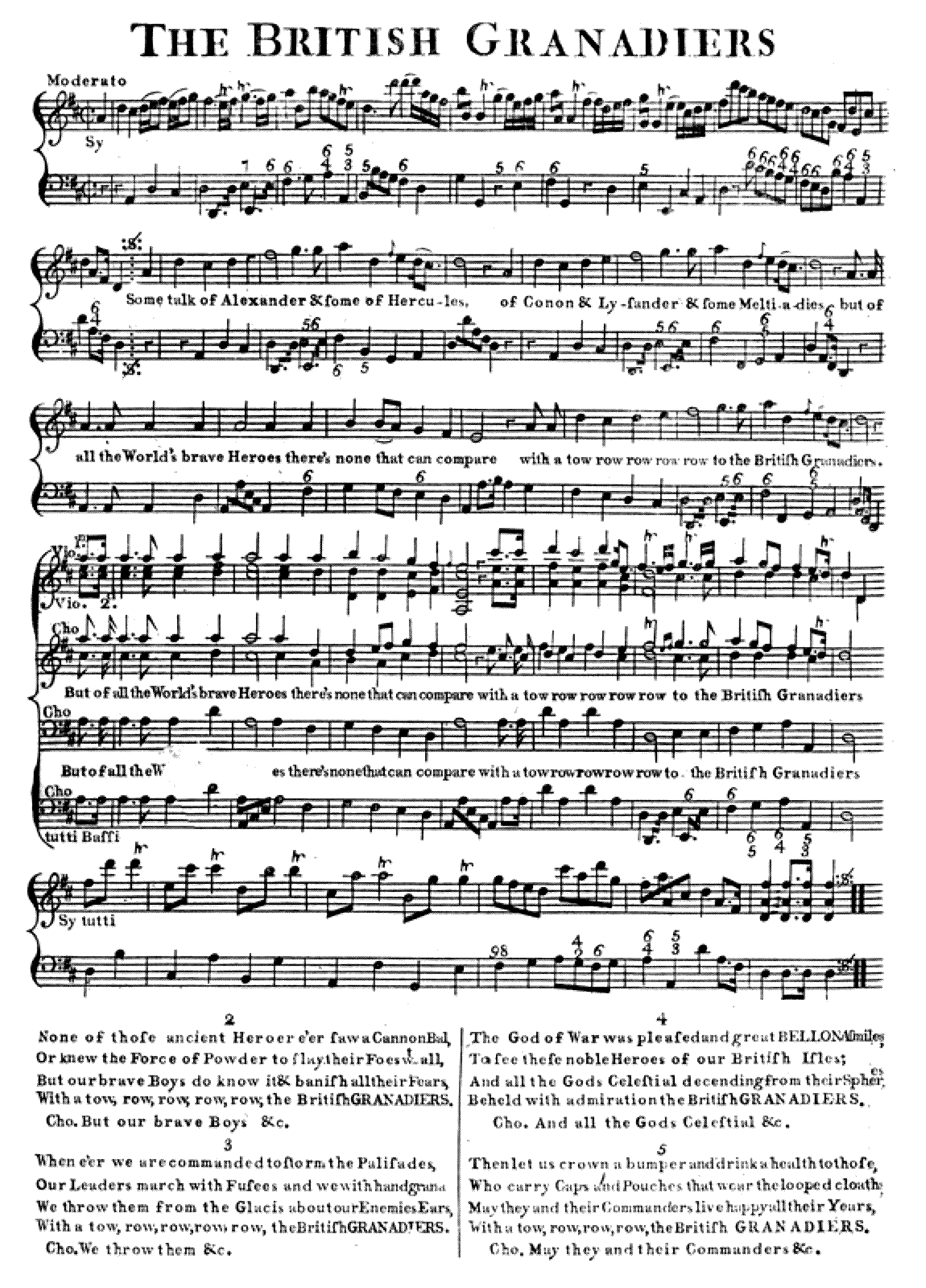
You can use this popular melody for The Rifleman’s Song at Bennington.
Sunday is the 199th anniversary of the 1777 Battle of Bennington. I marked the 198th last year, in the run-up to 2026, with Samuel B. Young’s 1819 commemoration speech. I first ran across the battle, however, unknowingly: from a song called “The Rifle” in Jerry Silverman’s How to Play the Guitar. It’s a rousing song and a striking demonstration of how Americans have always celebrated new technologies. And that’s what I meant to write about last year, before I discovered that the song was more commonly attributed to the Battle of Bennington.
So for me, at least, it’s fitting to bookend my Sestercentennial Year with Bennington, by finally getting a period melody down for this wonderful song. This is the end of the Sestercentennial celebrations on my blog, although not in my personal life.
This is also the official end of the Padgett Sunday Supper Club’s centennial-ish recipes. Some will continue throughout the year, and beyond. There are so many wonderful recipes in those centennial and bicentennial books, as well as in American Cookery and Thomas Jefferson’s Cook Book. But they’ll be there because they’re great recipes, not because they’re great centennial recipes.
Some of the founders were very much techies. I already wrote about how Jefferson incorporated technology into his kitchen. But one of the most relevant new technologies during the revolution was the rifle. Rifled barrels had much greater range than smoothbore muskets, at least twice—and up to three times—the range of older long guns. The rifle’s precision shooting was very suited to the tactics of America’s Indian-style wilderness fighters such as Francis Marion.
- Flowers o’er the Tory grave: Disney’s Francis Marion—Wednesday, May 20th, 2026
-
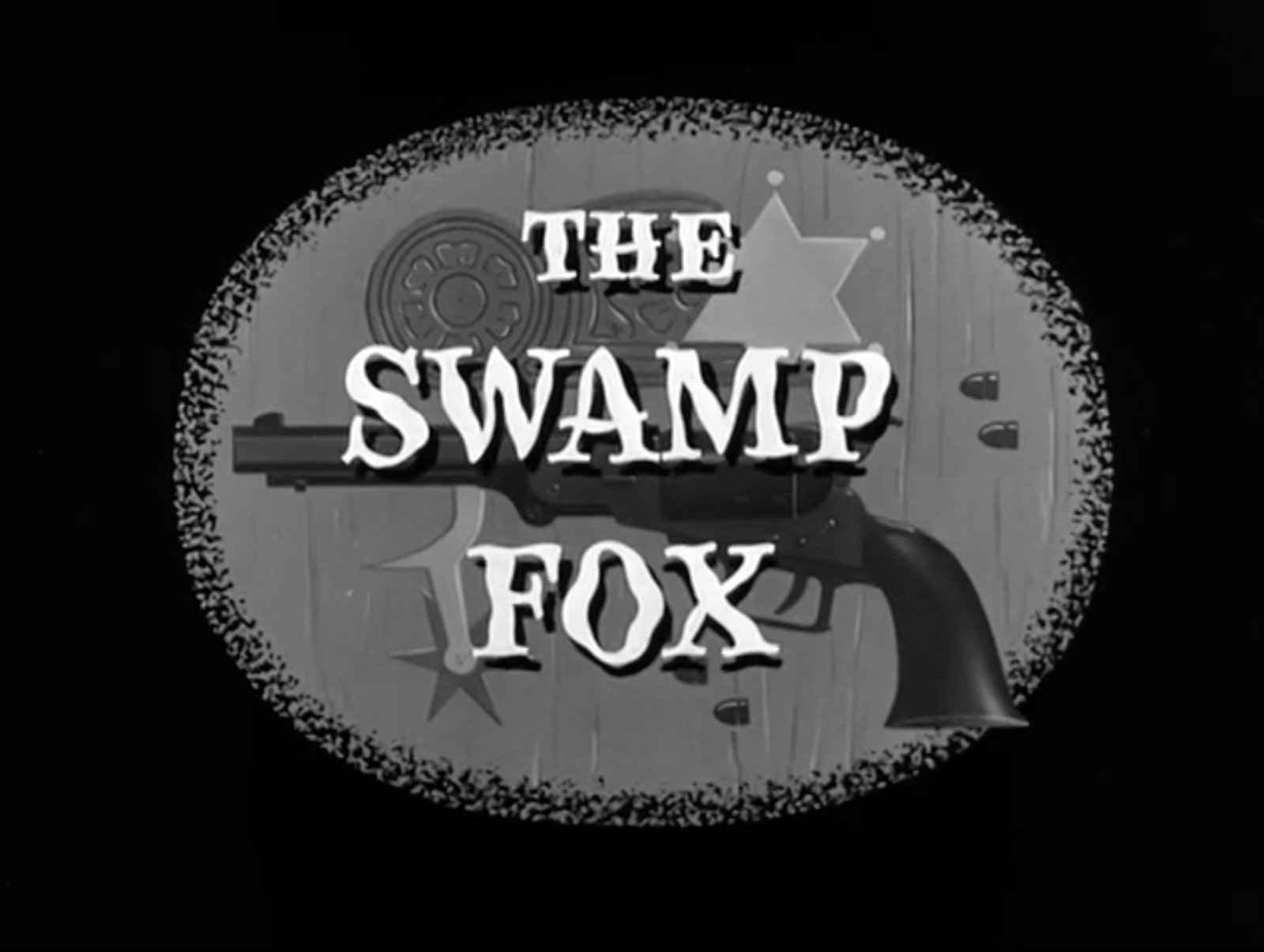
Logo for Disney’s Swamp Fox miniseries on Walt Disney Presents. The background represents “Frontierland” at the newly-created Disneyland.
If poetry and music were the main pop culture mediums of the nineteenth century, television was the pop culture medium of the second half of the twentieth. Francis Marion was in on television from the beginning. He had a television series, sort of, in the fifties. Walt Disney Presents: The Swamp Fox was based on the Robert D. Bass book Swamp Fox: The life and campaigns of General Francis Marion.
- Mock the Wind and Sing of Marion’s Men—Wednesday, May 6th, 2026
-
May 12, Tuesday, is the anniversary of the capture of Fort Motte by Patriot forces under General Francis Marion and Lieutenant Colonel “Light-Horse” Harry Lee in 1781. “Fort” Motte was in fact a plantation mansion commandeered by the British a year earlier. The siege, which began on May 8, is famous not for the siege itself nor for the famous military figures who took part but for the patriotism of its real owner, Mrs. Rebecca Brewton Motte. Mrs. Motte famously supplied the exotic arrows used to set the mansion on fire and drive the British out.
The siege was otherwise a fairly standard military operation, not at all the backwoods guerrilla warfare that General Marion was famous for. I’ve been fascinated by Marion ever since hearing a song about him in a library record back during the celebration surrounding the Bicentennial. We lived a few blocks from the local library, and I checked out Dallas Corey’s 1973 The History of the American Revolution several times to listen to it on our record player.
Corey’s album is a combination of short introductions and epilogues about the American Revolution, surrounding songs that highlighted various people and events. One of the songs on the album is The Swamp Fox. The name is evocative—and similar to that of the Marvel Comics superheroes I’d recently started reading about from the local grocery store’s spinning racks.
I didn’t yet own a cassette recorder, so I never recorded the album. I just kept checking it out whenever I felt like listening to it again, until I couldn’t find it anymore. It took almost fifty years to acquire a copy of my own. It is a marvelous album.
- In Lexington
- The center of revolt against the King
- The colonists were trying hard to bring
- An independent way of life to this, their promised land
- It was there, in Lexington, they made their stand.
“The American war for Independence had begun.”
Corey sings of Lexington, and then of Bunker Hill, on into both the signing that we’re celebrating this year and the entire campaign of 1776, two hundred and fifty years ago. Then it’s off to Brandywine and Saratoga and into The Swamp Fox before Corey wraps up the Revolution by counting the cost.
In Corey’s telling, the Swamp Fox stands at the pivot of the Revolution.
- This Food Can Death Destroy—Wednesday, April 1st, 2026
-
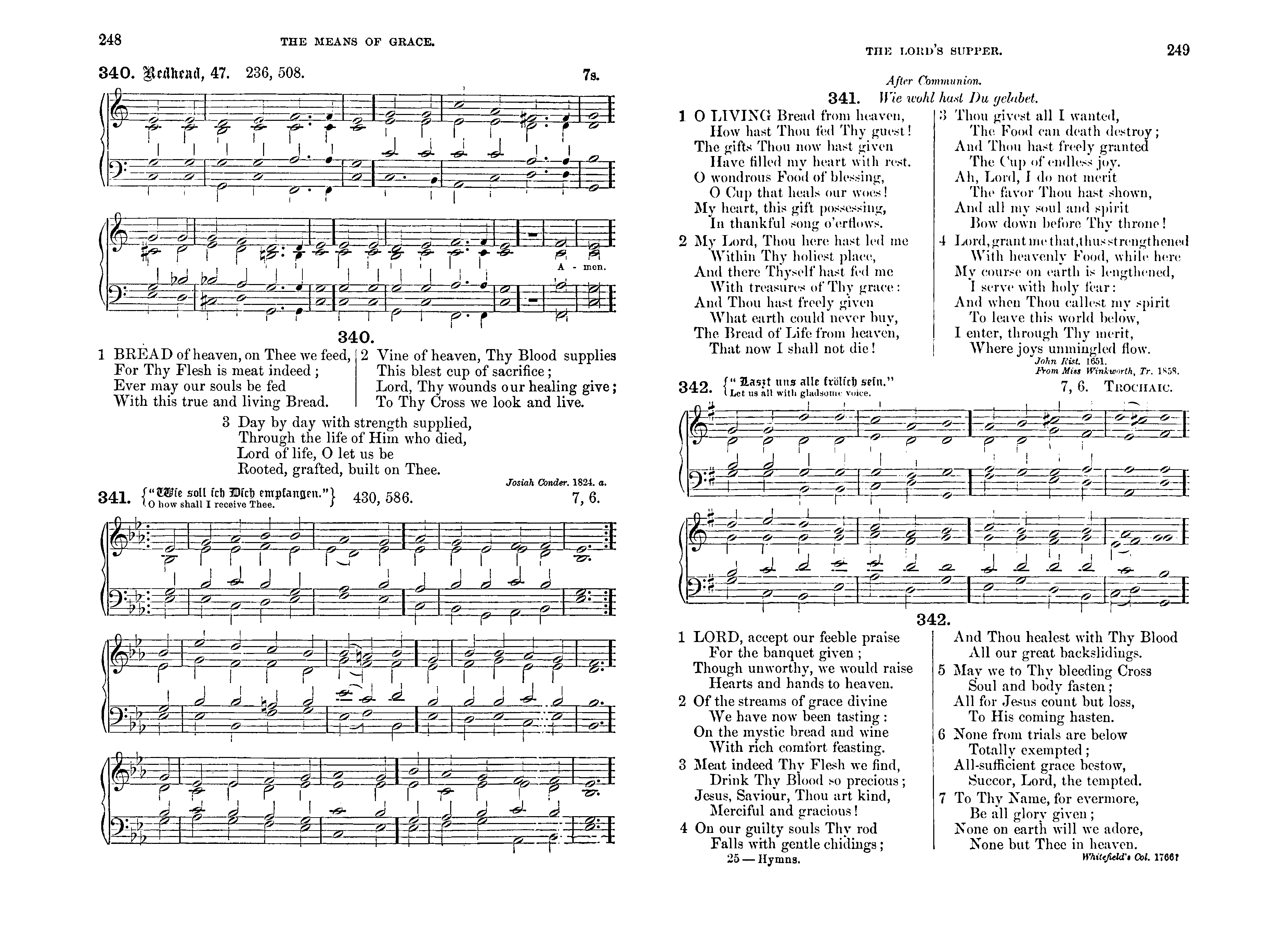
Lyrics for “O Living Bread from Heaven” ca. 1872.
Samuel Sebastian Wesley’s Aurelia is used as the melody for a hundred songs, literally, and more. Hymnary.org lists 188 songs that use this melody. They range from soaring (The Day of Resurrection) to vivid (No Seas Again Shall Sever) to timeless (O God, the Rock of Ages).
It rings in the new year with Another Year is Dawning, guides us through the years with The Sunday Bells are Calling, and sings the year (and mortal life) out with The Year is Swiftly Waning.
It’s all the more amazing because it is, for church music, relatively recent. Wesley wrote it in 1864. He wrote it for John Mason Neale’s 1849 Jerusalem the Golden, itself a wonderful song with a wonderful history. Jerusalem the Golden is a very loose translation of a relatively few lines from a much older and much longer Latin satire, Bernard of Cluny’s 12th century De contemptu mundi.
Here, for example, are what I think are Cluny’s Latin lines which inspired Neale’s second verse as reprinted in The Invalid’s Hymn-Book:
John Mason Neale Bernard of Cluny - They stand, those halls of Syon,
- Conjubilant with song,
- And bright with many an angel,
- And all the martyr throng:
- The Prince is ever in them;
- The daylight is serene;
- The pastures of the blessed
- Are decked in glorious sheen.
- Sunt Sion atria coniubilantia, martyre plena,
- Cive micantia, principe stantia, luce serena.
- Sunt ibi pascua mitibus afflua praestita sanctis.
My very rudimentary Latin says that this is a very loose translation. It’s really more of an inspired by than a translated from.
- The Battle of the Kegs—Wednesday, December 31st, 2025
-
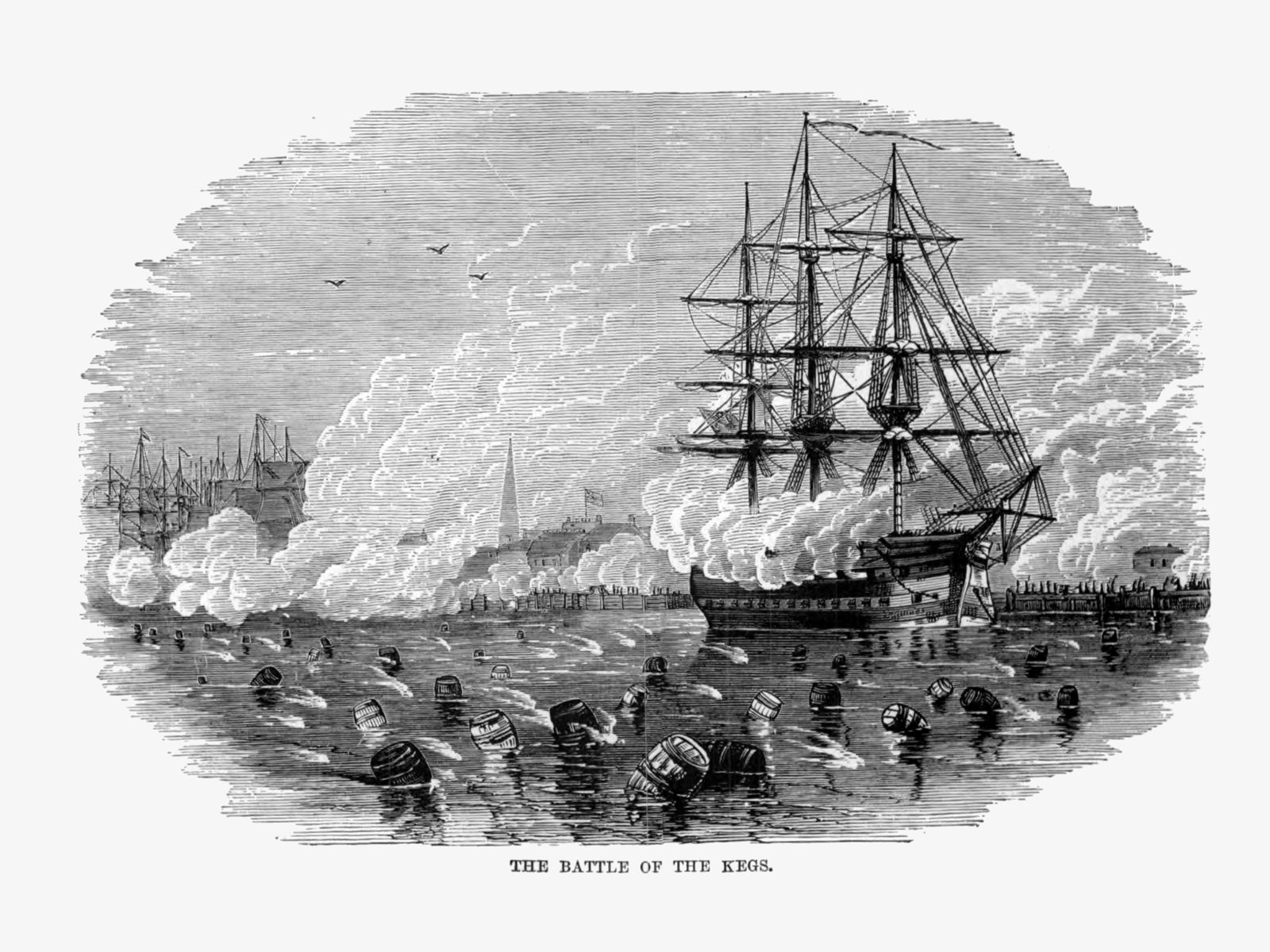
The Battle of the Kegs, as depicted in John Gilmary Shea’s 1872 A Child’s History of the United States.
You may know Francis Hopkinson as one of the less-prominent signers of the Declaration of Independence. But he was much more than a Founder. He was also a poet. I’ve included his wonderful “For a Muse of Fire” in The Padgett Sunday Supper Club Sestercentennial Cookery, which will be the next post in this series. And— he wasn’t just a poet: he was also a satirical poet. This Sunday, January 5, marks the 248th anniversary of the battle that provided him his finest hour as a writer. If there’s a second thing that Hopkinson is remembered for, it is his darkly humorous account of The Battle of the Kegs in rhyme.
- The World Turned Upside Down—Wednesday, October 15th, 2025
-
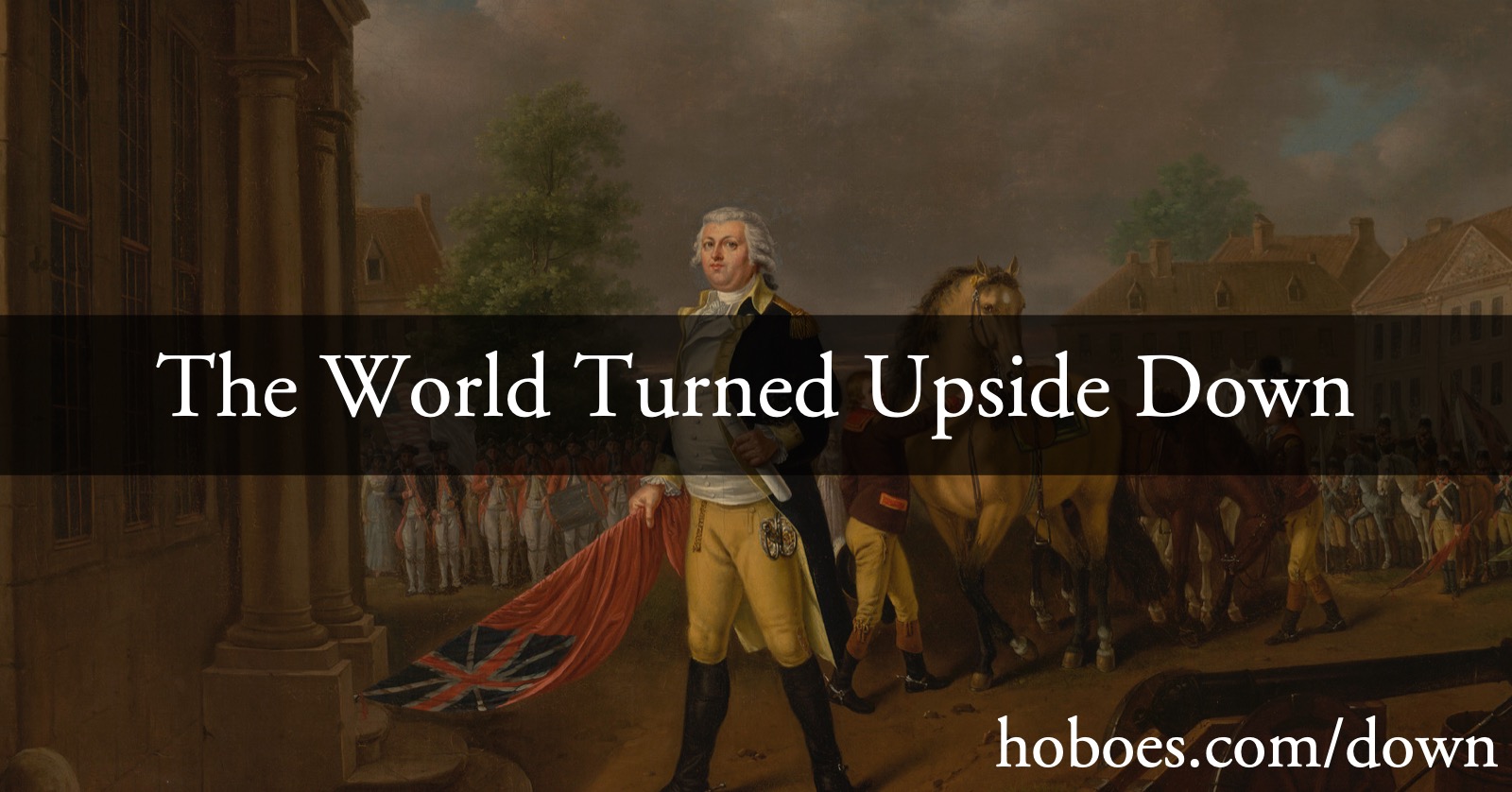
And of course I used the piano script from 42 Astounding Scripts to create a MIDI file and then GarageBand to make a slideshow of the Revolution.
One of the most enduring stories about the American Revolution is that of Lord Cornwallis’s surrender to George Washington at Yorktown on October 19, 1781. It was the beginning of the end of the revolution; all that was left were long negotiations for a peace treaty. As the British Army left the field on October 19, their band showed their confusion and dejection at having been beaten by a bunch of wild colonial boys by playing the then-popular song “The World Turned Upside Down (PDF File, 560.9 KB)”.
- Songs of the American Revolution—Wednesday, October 15th, 2025
-
Various songs, and the history of the songs, that made the Revolution—sometimes decades later.
- Light a candle for Christmas hymns—Wednesday, February 7th, 2024
-
Christmas certainly has its share of bowdlerized hymns, some of them more consequential than others. But even the less consequential changes show a severe change in theology. O Little Town of Bethlehem, for example, has changed from humans to everything:
- For Christ is born of Mary,
- And gathered all above,
- While mortals sleep, the angels keep
- Their watch of wond'ring love.
- O morning stars, together
- Proclaim the holy birth!
- And praises sing to God the King,
- And peace to men all on earth.
Belying the claim that these are merely modernizing the lyrics, the new bowdlerized lyrics retain “thee” and “thy”.
Looking up the new lyrics, I ran across an interesting article from 1986 about Methodists making a new hymnal. O Little Town of Bethlehem fared better than Onward Christian Soldiers and Battle Hymn of the Republic, which were removed completely. Fortunately, actual Methodists complained loudly enough that these powerful—and, in one case, anti-slavery—hymns were restored before publication.
Complaining about bowdlerization does occasionally work, as we’ve also discovered at my church.
Hark the Herald Angels Sing has seen a similar change. The ever-popular replacement of all mankind with “we” is a weird one. It’s as if the editors of hymnals are uncomfortable with spreading the word of God throughout the world, and want to confine it only to people who have already been graced with it.
- Hail, the heav’n-born Prince of Peace!
- Hail, the Sun of Righteousness!
- Light and life to all he brings,
- Ris’n with healing in his wings.
- Mild he lays his glory by,
- Born that man we no more may die,
- Born to raise the sons of us from the earth,
- Born to give them us second birth!
I’ve also seen the version “Born that all no more may die”.
The funniest of these I’ve seen recently is not a Christmas song at all. I Am the Bread of Life is filled with references to mankind as a whole.

Mimsy Were the Borogoves
Music: Are you ready for that? Driving your car down a desert highway listening to the seventies and eighties rise like zombies from the rippling sand? I hope so.