


Using search engines to guess cookbook years
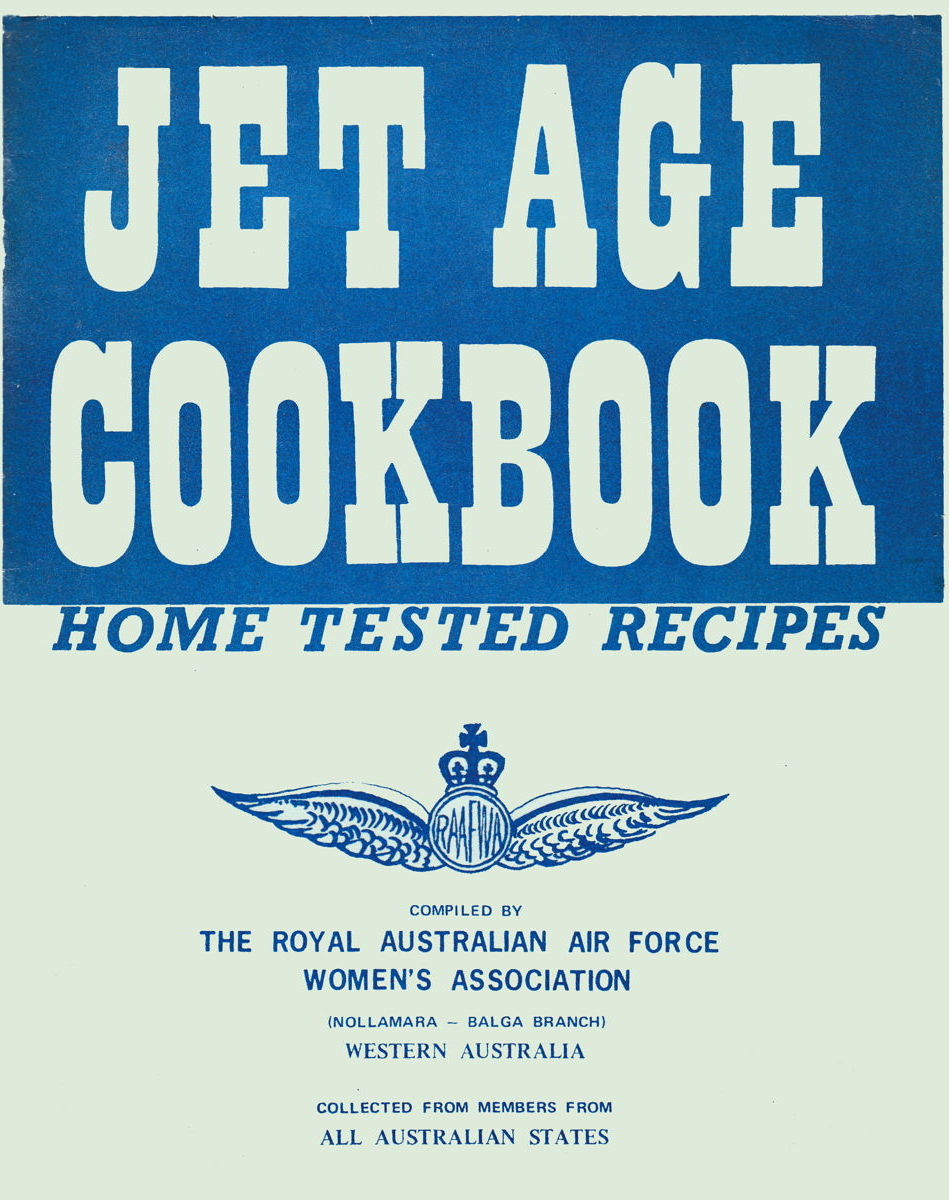
This Australian cookbook is deceptively old-fashioned.
Community cookbooks are notorious for not including any indication of when they were printed. I’ve just published a list of cookbooks on the Padgett Sunday Supper Club where I’ve had to guess at the year. This is both to help others who might have the same cookbook and wonder when it was made, and in the hope that someone may remember when the book was published either because they’re in it or an ancestor was in it—or they were part of the organization that published it. If you’re among the latter, please write!
This list should automatically update. Whenever I’ve had to guess what year a book was published, that book should automatically show up in the list.
Many people attempt to use graphic design clues as a guide to a cookbook’s date. I see Glen Powell do this all the time, for example, and while I understand that his extensive experience gives him a better sense than I about the relationship between era and design, I never trust that kind of estimate. Changes in style can take decades to completely spread across North America and the United Kingdom. There were some people still typing their cookbooks well into the seventies and the eighties, and others producing what appear to be quality, modern finished products as early as the thirties.
I have an Australian community cookbook, for example, that looks to me like it was from the fifties, maybe early sixties, and possibly even earlier. The graphic style, the writing style, even the measurements and oven “temperatures”, all scream mid-twentieth century. But it has advertisements from businesses that weren’t in business at their advertised location until 1969. From the advertisements, I’m dating that book between 1969 and 1976.
Reprints can also cause problems with dating. I have a Pennsylvania Dutch cookbook from Culinary Arts Press that lists itself as being from 1936; I am nearly certain it’s a facsimile reprint, but it might not be. Culinary Arts Press is one of those organizations that was often ahead of its time in graphic design—and then kept using a similar design aesthetic well into the fifties. Of course, if it is a reprint, I have no idea when it was reprinted. I can only hope that it’s a facsimile reprint so that the date of 1936 at least can be reasonably applied to the recipes.
In this business, you never really know.
Formats and art styles can also come back in style. Organizations and businesses might decide to make their book look old-fashioned, like that prized book from Grandma’s kitchen. Books with “old-fashioned” in the title will of course often be given an old-fashioned design. Even the term “old-fashioned” is old-fashioned. I have a golden syrup cookbook from about 1910 that uses “old fashioned” to describe brown sugar in their recipes.
Community cookbooks are often easier to date than promotional books.1 They include advertising from local and national sponsors, they include a variety of contributor names, and some even provide a list of the officers of the organization that produced the cookbook. Some of those lists include the years of their terms. Very likely, such a cookbook was published within that term or the year after.
Even when the list of officers does not provide a year for when they served, you can often use the name of the President, or Chair, or whoever the face of the organization was, to find that person’s term of office online. For example, Treats from Arkansas Kitchens was dedicated to Mrs. Robert Phillips as the President of the Arkansas Federation of Garden Clubs. She was not the Federation’s president in 1961; she was the president in 1963. This puts a lower bound on the date—that is, the lower limit of the book’s date is 1961. It has to be from 1961 or later. Probably later, because it’s unlikely that they put out a dedicated book the moment she took office.
Treats from Arkansas Kitchens provides a good example of another method to date these books. Like most community cookbooks it lists contributor names. Obituaries are ubiquitous online, and if you have access to a newspaper archive, they also often have obituaries. Keep in mind that people can move, so you’ll need to see some mention of where the person has lived to match them to the cookbook; it’s even better if their obituary also lists the organization or at least the pastime it represented. In Treats, two of the contributors almost certainly died in 1965. So it’s a good bet that the book was published between 1963 and 1965, inclusive.
Deaths can sometimes provide a lower bound. I have another book called Minuet, which appears to be a fundraiser for the Wylie, Texas, High School Band. It’s a strange book because most of the recipes came from a community of elderly women in or around Brooke County, West Virginia. The book was dedicated “to the memory of Gladys Litten Sinclair”. I’m fairly certain that she died in 1984. Gladys is also credited with “arranging” the book.2 This likely means that it was published soon after her death, 1984 or 1985.
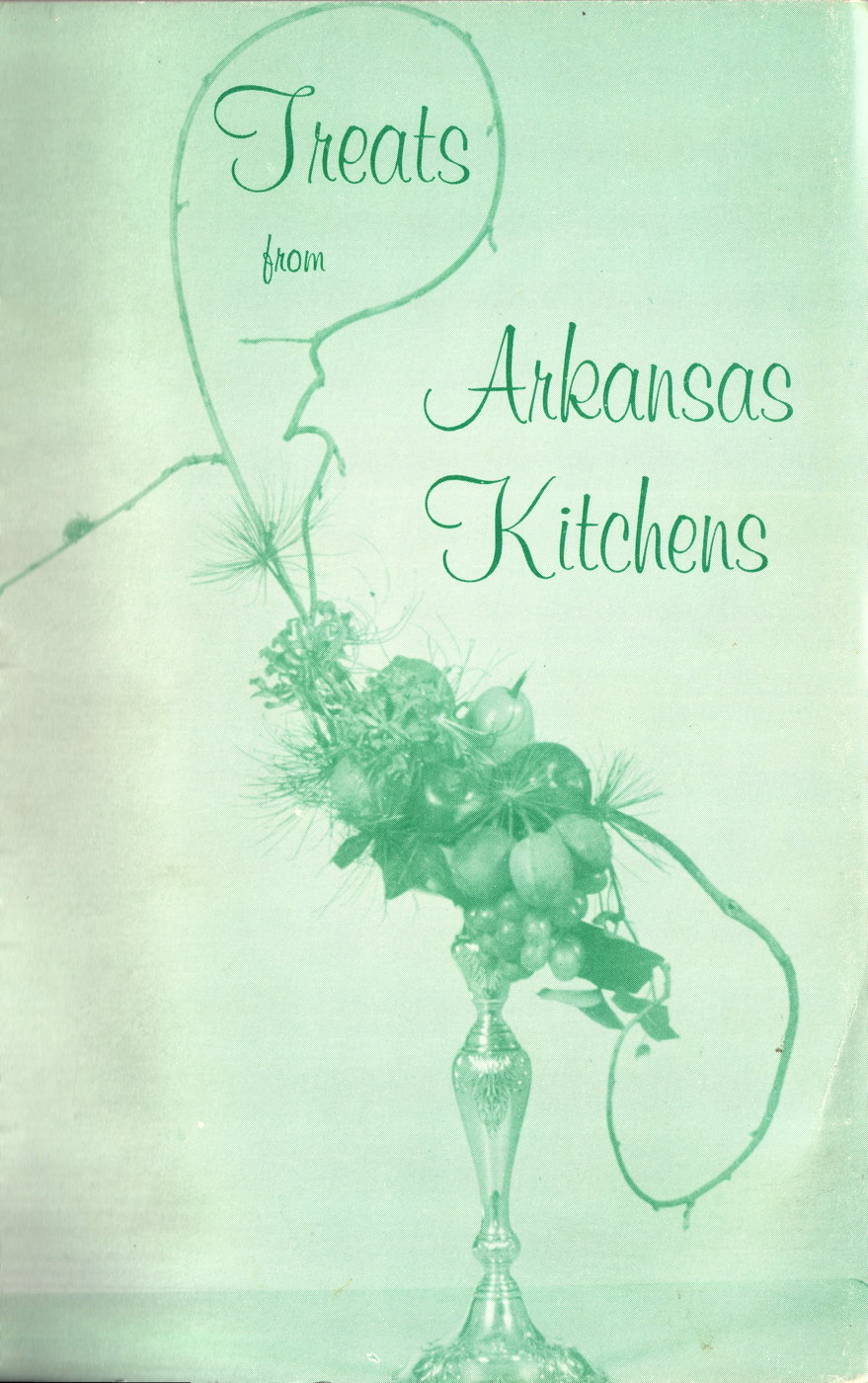
“Lovingly dedicated to our fellow gardener and State President.”
Marriage years are often mentioned in obituaries and can also be found in newspaper searches. They can provide either a lower bound or a potential upper bound, sometimes in fun ways. Traditionally, women change their name when they get married. This isn’t always true, which means that marriages are better at providing a lower bound than an upper bound—a woman might continue using the same name after marriage for several years, or forever. But if she is using a married name in the cookbook, her contribution came after she was married.
This is where the bulk of dating a community cookbook comes from: slogging through dozens of names and collecting years of birth, death, and marriage to zero in on a smaller and smaller range for the cookbook. When I’m in this stage of dating a cookbook, I’m running through these searches so quickly and so mechanically that I’m often asked by whatever search engine I’m using if I’m a robot. At that point, I’m never sure. But there are gems in these searches.
The Mineola, Texas, Town and Country Cook Book has one or two contributors named “Mrs. Alaine Castloo” and “Mrs. T.F. Castloo”. That could be two different contributors, but it could also be one contributor, with Alaine being her name and T.F. being the initials of her husband. When searching for Alaine Castloo, however, I found this in her obituary:
On January 25, 1950, Alaine Aaron and Tommy Castloo eloped with the help of Tommy’s grandmother Willie Downing. It’s amazing how God allows us opportunity to see His Love and His light. Alaine and Tommy had three children.
Given that notice, it’s very likely that both of those names refer to the same Mrs. Castloo. This dates Town and Country to after 1950 in a far more interesting backstory than most such name changes!
Contributor names can provide more basic information, too. Some community cookbooks don’t even list the state, just the city. Best in Cooking in Westfield, for example, doesn’t say which Westfield it’s in. It does say that it was made by the Women’s Auxiliary of St. Paul’s Church—also not exactly an uncommon name. But searches on contributor names brought up mostly people from and around Westfield, New Jersey.
The businesses that advertise in community cookbooks are often listed in state registration databases. These often provide not just when the business started (as far as the state is concerned), they list a business’s various name changes and address changes and when they happened. I was able to date The Art of Cooking in Shreveport almost certainly to right around 1977 because Ristorante Firenze was in business from 1977 to 1987, and Dethloff, Hudson & McClure Inc. was in business from 1974 to 1977.
I also verified that 1977 fell into the same range as other businesses in Art of Cooking in Shreveport. You never want to stop searching just because you find something that looks definitive. These databases don’t necessarily record when a business started; they record when the business registered with the state. When a business was incorporated isn’t necessarily when it started.
There is an industry for researching banks, too. Pioneer Bank & Trust, according to bankencyclopedia.com existed from 1945 to 1994 and usbanklocations.com listed the National Bank of Bossier as from 1953 to 1994.
And, again, business startups and closings often show up in newspaper articles. An online article on the Deli Casino Sandwich Shoppe mentioned a previous business of owners Samuel and Dayle George:
Before opening Deli Casino in 1979, the couple owned Glenwood Grocery. The business operated for about six or seven years on Line Avenue in Shreveport, Dayle said.
This put a range for George’s Glenwood Grocery—and The Art of Cooking in Shreveport—as 1972 to 1979.
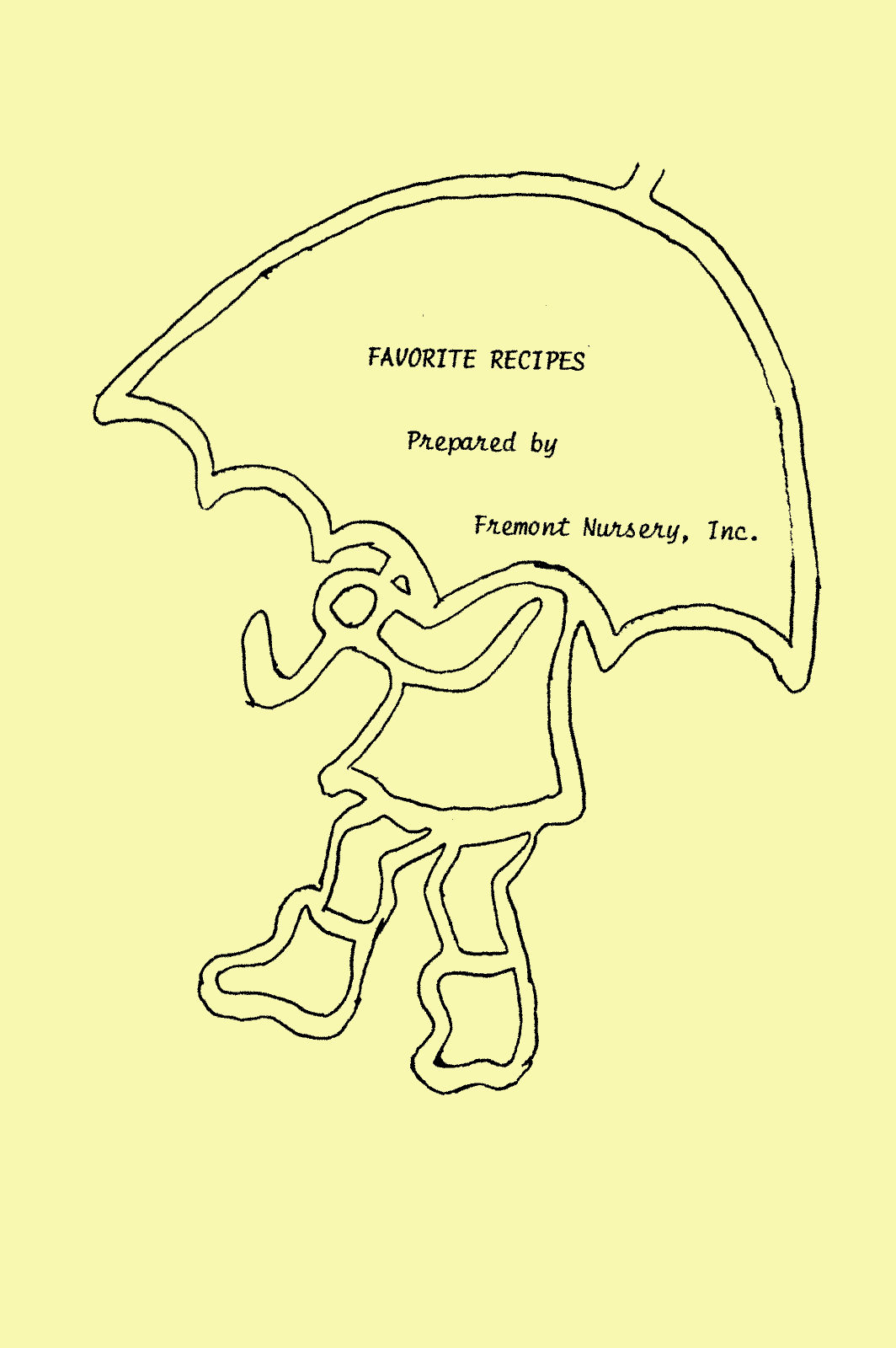
Many community cookbooks are related to schools, and states often have databases for schools. Corroborating the above dating for the Shreveport book, Louisiana listed Sentry Schools as having existed from 1972 to 1998. And when trying to find the date for Favorite Recipes Prepared by Fremont Nursery, Inc., a book I bought one town over from Fremont in White Cloud, Michigan, one of the results for “Fremont Nursery” was on Michigan’s Department of Education web site. The school actually had “Inc” in its name, which meant that it was incorporated. Their incorporation date was 10/2/1964; they notified Michigan’s DOE of their name change away from the “Fremont Nursery” name on September 27, 1983.
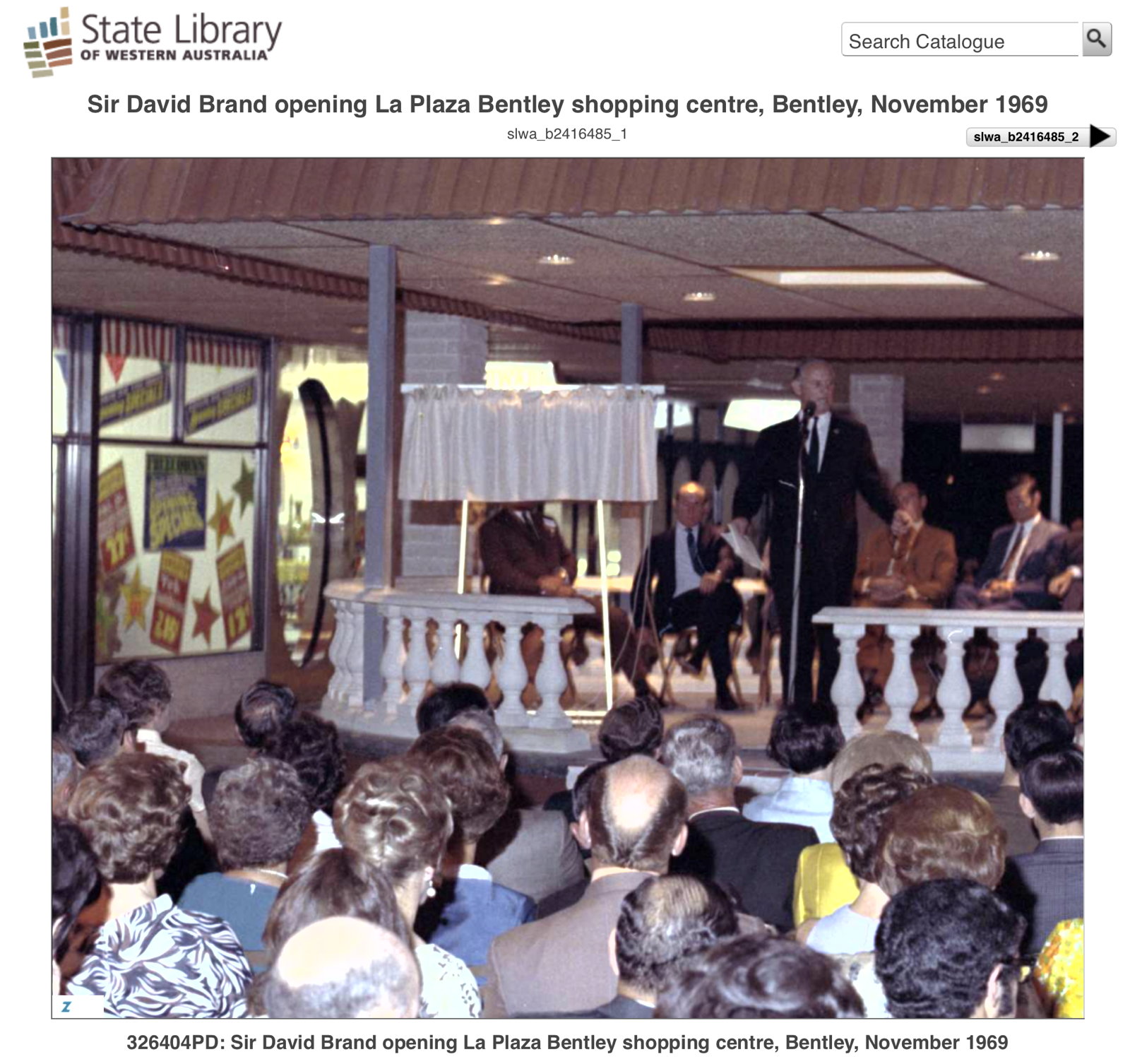
Several businesses in Jet Age Cookbook list their address here.
From 1964 to 1983 is a pretty wide range, but it helps.
Michigan also publishes a list of documents released by Michigan trade organizations. Beans Grown in Michigan appeared in their documents list in 1971.
Businesses advertising in The Royal Australian Air Force Women’s Association’s Jet Age Cookbook included businesses with addresses in the La Plaza Bentley Shopping Centre. The State Library of Western Australia has many photos from the Plaza’s November, 1969, opening.
Promotional pamphlets often have only one address—the address of the business producing the product the pamphlet promotes. Even those change, especially in their early years. I have a Horsford Cook-Book from the Rumford Chemical Works. Rumford apparently published several books over the years with that name. My copy lists one distributor’s address as 104 Reade Street in New York. That distributor appears to have only been at that address from 1876 through 1879, after which they either expanded or moved and started listing their address as 100 and 102 Reade Street.
Don’t discount margin scribbles by previous owners. A giver or receiver will often write the date a gift was given on the inside front cover or on the back cover. I have a Burns, Oregon Burns’ Treasure of Personal Recipes inscribed as a gift of January 1954. This puts an upper bound on the publication date—the book must have been published in or before January 1954.
All of these results can be found through simple general searches on a search engine. There’s no need to go to all these different sites directly: search engines index them for you. A general name search will usually find many obituaries, newspaper articles, and state registration databases. All you need do is search by business name, personal name, or street address.
When searching on names, less common names are best; otherwise you’ll be swamped by irrelevant results.
In the next installment I’ll provide advice on how to go beyond general searches and use newspaper and magazine archives to date your cookbook.
- Cookbook publication year estimates I have made
- Using search engines to guess cookbook years ⬅︎
- Using archives to guess cookbook years
- Using ingredients to guess cookbook years
Until then, here’s a peanut crisp from the marvelous Jet Age Cookbook.
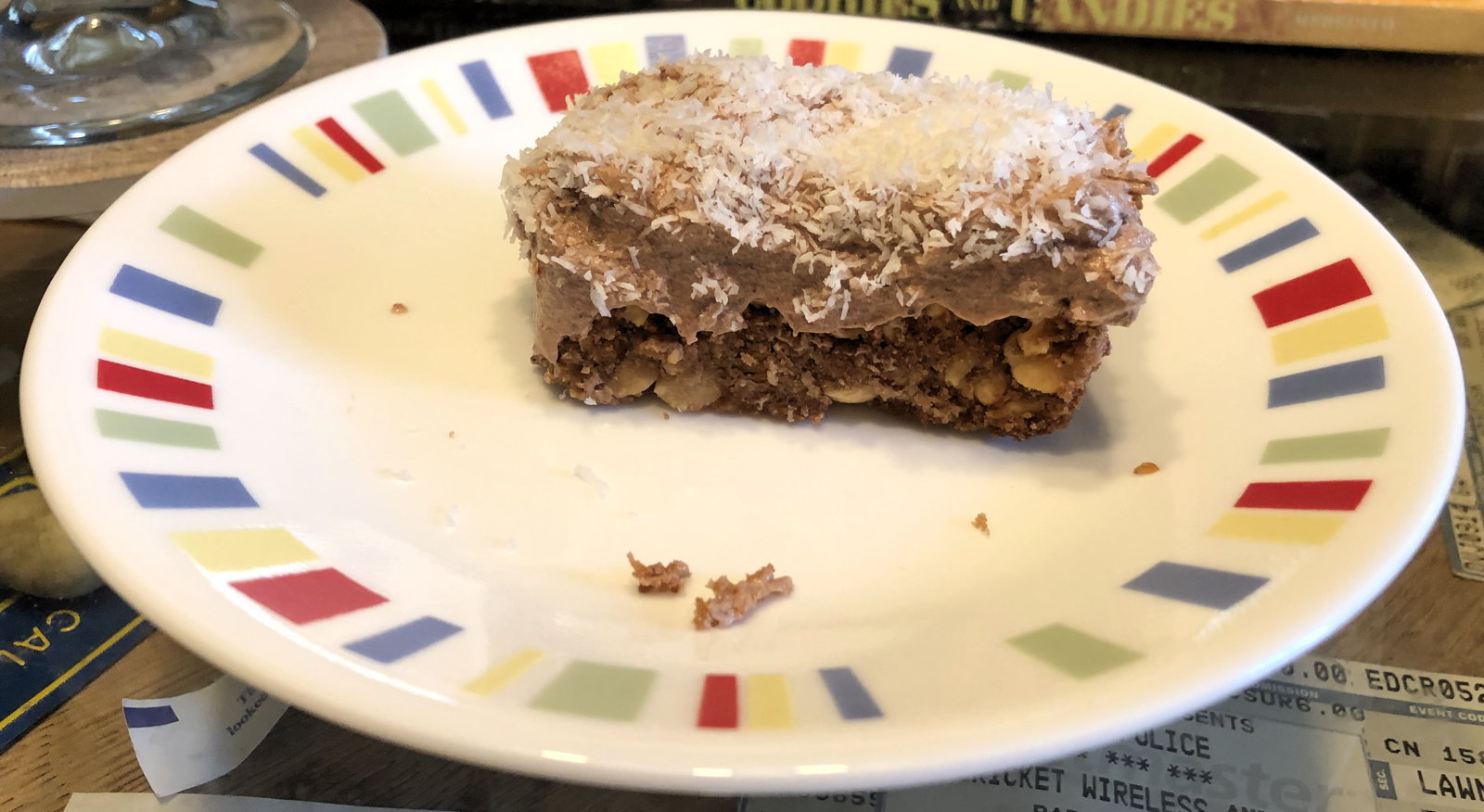
Chocolate Peanut Crisps
Servings: 24
Preparation Time: 45 minutes
Review: Jet Age Cookbook
Ingredients
- 1 cup flour
- ½ cup sugar
- 3 tsp baking powder
- 2 tsp cocoa
- ½ tsp salt
- 3 tbsp shredded coconut
- 1 cup chopped salted peanuts
- ½ cup butter, melted
Steps
- Sift flour, sugar, baking powder, cocoa, and salt into a bowl.
- Mix in the coconut and chopped nuts.
- Pour melted butter over and mix in.
- Press into greased 8x8 pan and bake at 350° for 30 minutes.
- Cut in bars while still warm.
- When cool, top with chocolate, mocha, or caramel icing and sprinkle more shredded coconut on top to taste.
In response to Vintage Cookbooks and Recipes: I have a couple of vintage cookbooks queued up to go online.
- February 25, 2026: Using ingredients to guess cookbook years
-
The first reference to “homemade” granola in my collection.
Many recipes in community cookbooks call for ingredients by company and brand name. Eagle Brand Condensed Milk, for example, and Pet Evaporated Milk are very common ingredients. Not only are those names used in a generic manner—you’ll often see condensed milk called Eagle Milk and evaporated milk called Pet Milk, despite both companies producing the other product—a product name obviously won’t be used before the product was introduced to the market.
A brand name isn’t likely to be used in an ingredient list unless that one brand is the only such ingredient on the market, or it has had time to become the semi-generic term for the ingredient. Product debuts can thus provide a lower bound for the year of publication when a recipe calls for such a product.
Jell-O is a very good example of a brand name that has become a generic name or nearly so for the ingredient. A recipe after Jell-O’s rise in popularity is as likely to call for “jello” as it is to call for “gelatin”, especially if the gelatin called for is a flavored gelatin.
Sometimes, the way an ingredient is referred to can provide a hint to the age of the cookbook. In Favorite Recipes Prepared by Fremont Nursery, Inc. there is a great recipe for “Homemade granola” from Joy Dykman. Why would it be called “homemade” granola? One likely reason is that the first mass-market granola came out in 1972, and the recipe’s title contrasts itself with commercial granola. That narrows the range for the cookbook’s publication considerably. It almost certainly came out after 1972. While I can find granola recipes in cookbooks before 1972, none that I’ve seen call themselves “homemade”. Homemade was the only kind of granola before 1972 and didn’t need to be noted.
Here’s a list of products commonly found in community cookbooks, and their debuts under that name. This list is mainly ones that I’ve used or tried to use to help date cookbooks in my collection:
- January 28, 2026: Using archives to guess cookbook years
-
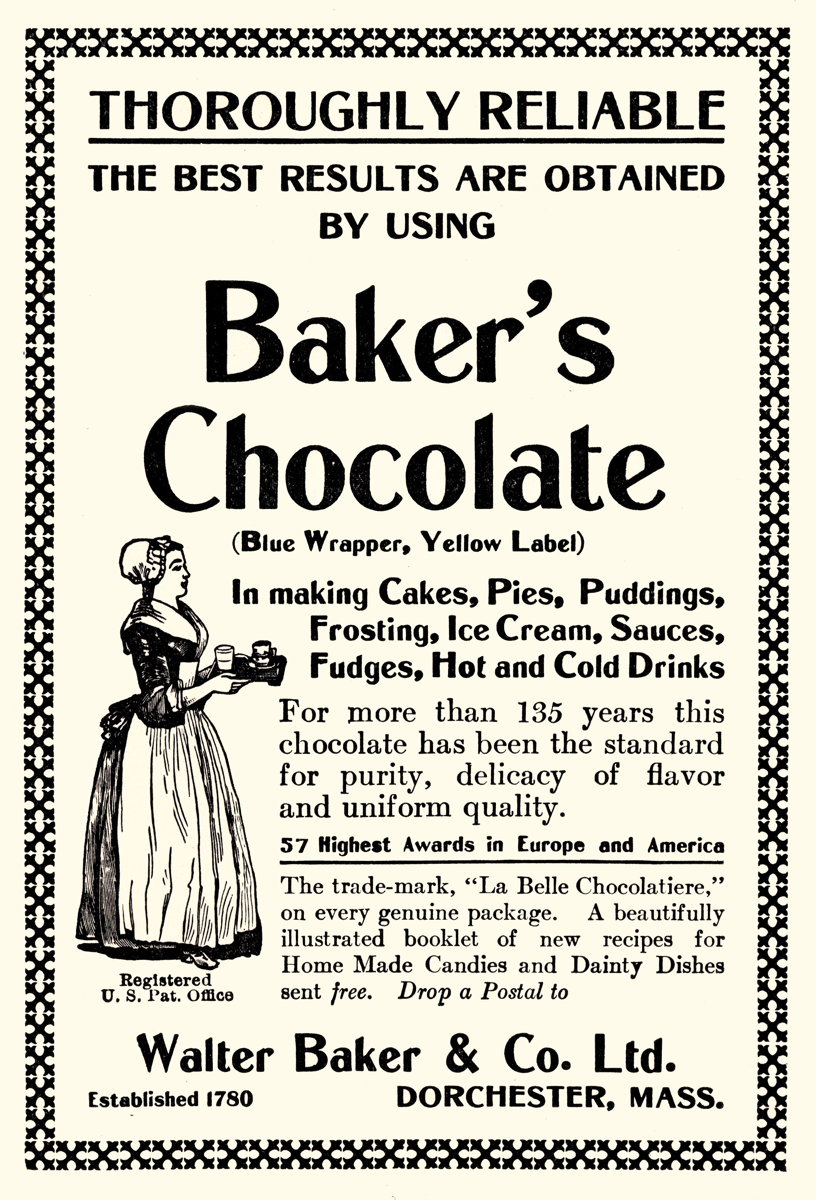
You can tell by the phrase “more than 135 years” that this ad was placed in 1916 or thereabouts. Walter Baker updated their ad copy every year.
While general searches can provide a lot of information about a cookbook, specialized newspaper and magazine archives will also be helpful. Many old periodicals aren’t indexed in general search engines. Check your local library to see if you have access to online newspaper and magazine archives. My library provides access to newspapers.com, so that’s what I use. The Internet Archive has many old magazines, such as Good Housekeeping, McCall’s Magazine, and The Ladies’ Home Journal. These are especially helpful for looking up old advertisements, in order to see product packaging or design1 and compare them to ads in the undated cookbook.
Advertising pamphlets regularly go through multiple printings and whether the year is included on a particular printing can seem completely random. This means that finding versions of a pamphlet on the Internet Archive can help you date that book even if your copy is not on the archive.
For example, The Quaker Oats Wholegrain Cookbook went through at least five printings. I have the fifth printing, listed as from 1979. The Internet Archive has two printings. One is labeled First Printing 1978 and the other has no printing number or year at all. That space on the back cover is blank. All three of the printings appear to be exactly the same other than that back cover line (or lack thereof).2
Why is there an undated version? Is the undated version at some point after the fifth printing when they decided they were never going to change it so why bother? Is it a zeroth printing, and the first printing is really a second printing? Or did they produce a printing after the first where they removed that line, and then added it back later?
The answer, of course, is “who knows?” But knowing that the first and fifth printings came out in 1978 and 1979 also means that the second through fourth printings came out in that range.
From here on I will include the product manuals that are also cookbooks in the term promotional cookbooks; the refrigerator manuals I love are all as much for promoting the product as for providing instruction on how to use it.
↑The term “arranging” could mean that she did layout for the book; it could also mean that she arranged for her community to provide recipes.
↑
book reviews
- Review: Favorite Recipes Prepared by Fremont Nurseries, Inc.: Jerry Stratton at Jerry@Goodreads
- This Fremont, Michigan community cookbook features granola, pineapple crunch, beef and noodles, and Michigan-style Texas hash.
- Review: Jet Age Cookbook
- “Home Tested Recipes by The Royal Australian Air Force Women’s Association”. Great recipes for tomato relish and peanut crisps.
- Review: Treats from Arkansas Kitchens: Jerry Stratton at Jerry@Goodreads
- A green cookbook for green thumbs of Arkansas, and dedicated to Mrs. Robert Phillips, State President.
estimating cookbook dates
- Cookbook publication year estimates I have made
- When I acquire a cookbook without a publication or copyright year, I use the advertisements and contributors to make a stab at the likely year of publication. This page provides those guesses in case it helps you date your own books.
- Using archives to guess cookbook years
- Many cookbooks, especially community cookbooks and often advertising pamphlets, leave off the year. Online newspaper and magazine archives can help to narrow down when the book was published.
vintage cookbooks
- Franklin Golden Syrup Recipes
- Golden syrup has a wonderful caramel flavor. This ca. 1910 promotional cookbook from the Franklin Sugar Refining Company really shows off that flavor.
- Glen & Friends Cooking: Glen Powell
- “We are food people… We grow our own gardens, we pickle, we make jam, we start with base ingredients… FOOD!”
- Revolution: Home Refrigeration
- Nasty, brutish, and short. Unreliable power is unreliable civilization. When advocates of unreliable energy say that Americans must learn to do without, they rarely say what we’re supposed to do without.
- Vintage cookbook reproductions, and gold cakes compared fifty years apart
- I’m going to start producing facsimiles of some of the vintage cookbooks I’m covering here, because some of them are wonderful, and also because it’s easier to read them in a larger format.
More estimating cookbook dates
- Using ingredients to guess cookbook years
- Community cookbooks often call for brand name products and tools. That can provide a lower bound for what year a book was published, but rarely an upper bound.
- Using archives to guess cookbook years
- Many cookbooks, especially community cookbooks and often advertising pamphlets, leave off the year. Online newspaper and magazine archives can help to narrow down when the book was published.
- Cookbook publication year estimates I have made
- When I acquire a cookbook without a publication or copyright year, I use the advertisements and contributors to make a stab at the likely year of publication. This page provides those guesses in case it helps you date your own books.
More food history
- Using ingredients to guess cookbook years
- Community cookbooks often call for brand name products and tools. That can provide a lower bound for what year a book was published, but rarely an upper bound.
- Hot ovens: Bakers were once the slaves of time
- We have chained time in our kitchens. Our refrigerators stop time from destroying food, and our ovens lash it to the oars for baking. And we have forgotten that it was ever any other way.
- Using archives to guess cookbook years
- Many cookbooks, especially community cookbooks and often advertising pamphlets, leave off the year. Online newspaper and magazine archives can help to narrow down when the book was published.
- Padgett Sunday Supper Club Sestercentennial Cookery
- The Sestercentennial Cookery is a celebration of American home cooking for the 250th anniversary of America’s Declaration of Independence.
- Table and Kitchen: Baking Powder Battle
- The Royal Baking Powder Co. was a very combative entrant in the baking powder wars. But that kind of competitive spirit can also mean great recipes.
- 28 more pages with the topic food history, and other related pages