

The New Colossus Breathes Free
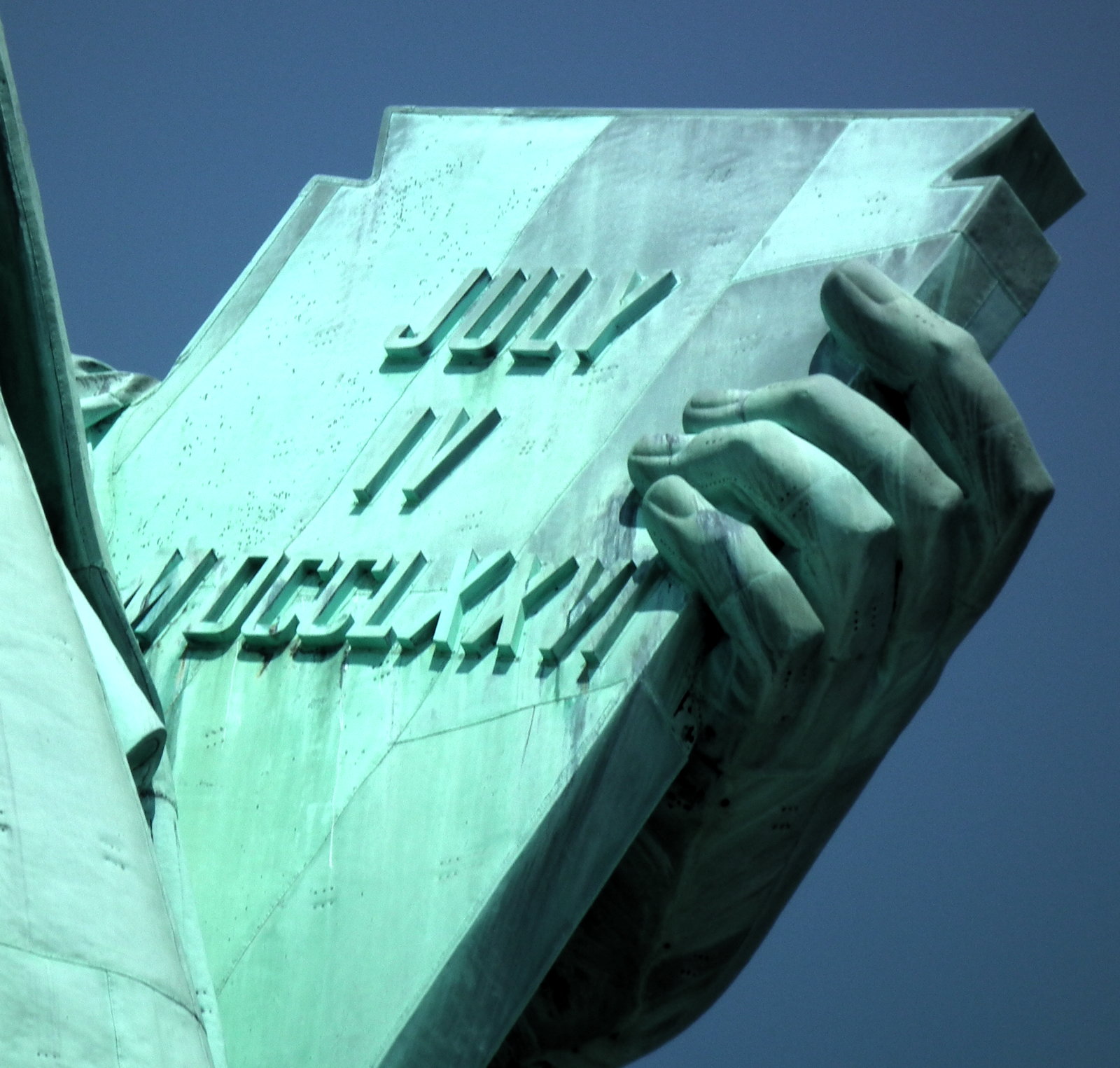
Independence Day. (Erik Drost, CC-BY 2.0)
On March 13, 1881, Tsar Alexander II, Emperor of Russia, was assassinated in Saint Petersburg by literal bomb-throwing anarchists. This led to one of the most enduring and universal symbols of Independence Day and American freedom, known throughout the world. She holds not just the torch of freedom but a tablet inscribed with “July IV MDCCLXXVI”, celebrating the American revolution. She is synonymous with the United States and with freedom.
If you want to say “America” in a visual medium, you show Lady Liberty. If you want to say “America has fallen”, you show Lady Liberty fallen. The Statue of Liberty has been featured in countless movies, from Planet of the Apes to Superman to Cloverfield. I’m pretty sure every Marvel superhero from the sixties and seventies has flown, swung, or walked by her at least once. In DC Comics she even granted superpowers to the World War II era hero Miss America.1 I first ran across Miss America in the pages of the wonderful Martin Pasko/Gerry Conway/Bob Rozakis comic Freedom Fighters, initially published during the Bicentennial celebrations of 1976.
Marvel Comics had their own Miss America, in Roy Thomas’s wonderful The Invaders, also published in the runup to and during 1976.
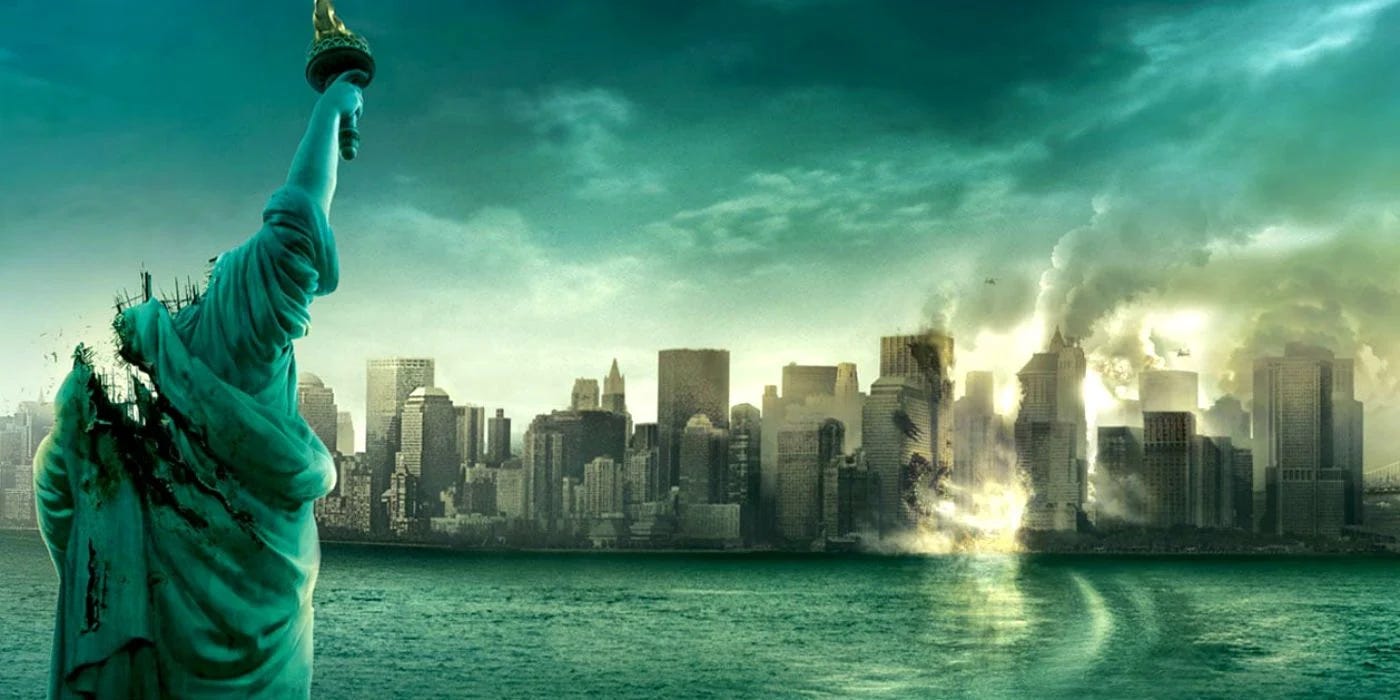
Cloverfield, 2008. Horror.
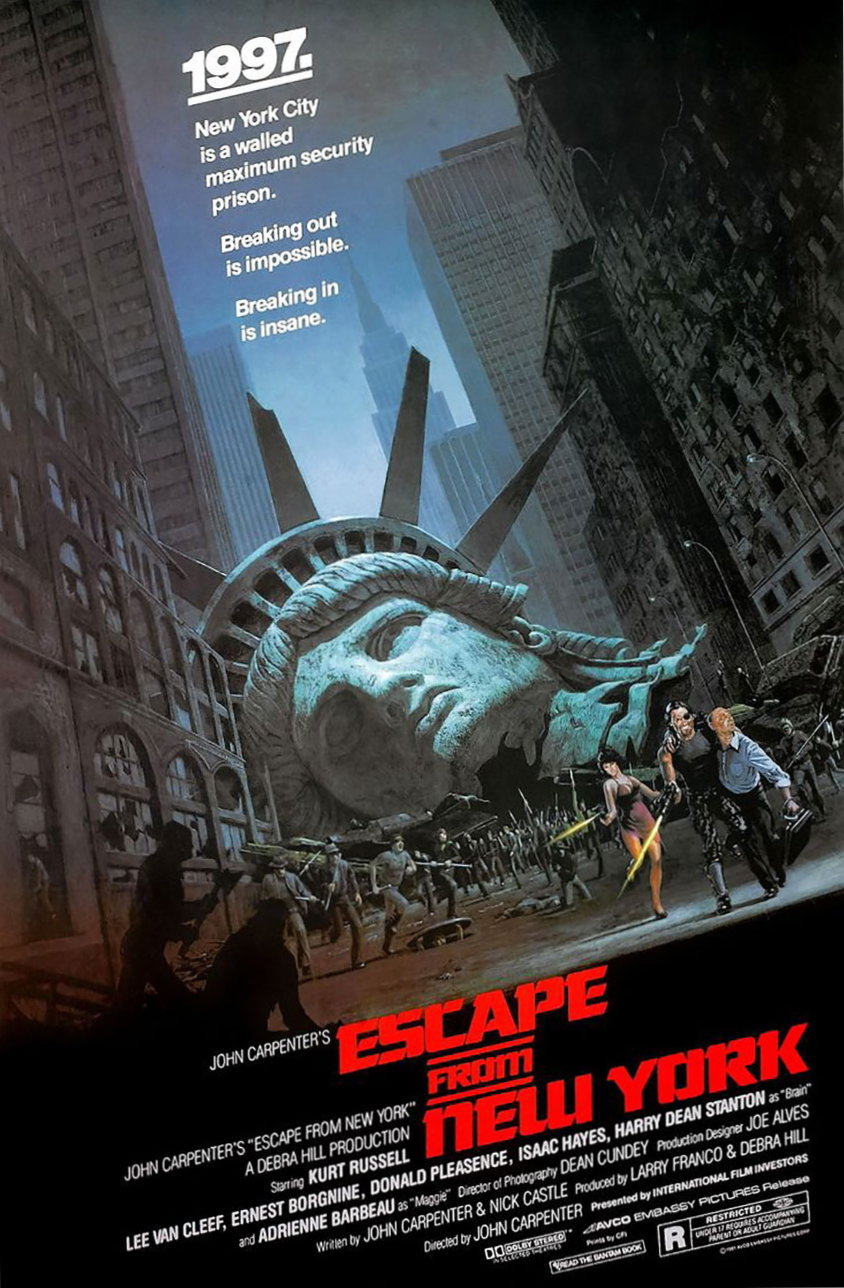
Escape from New York, 1981. Dystopian.
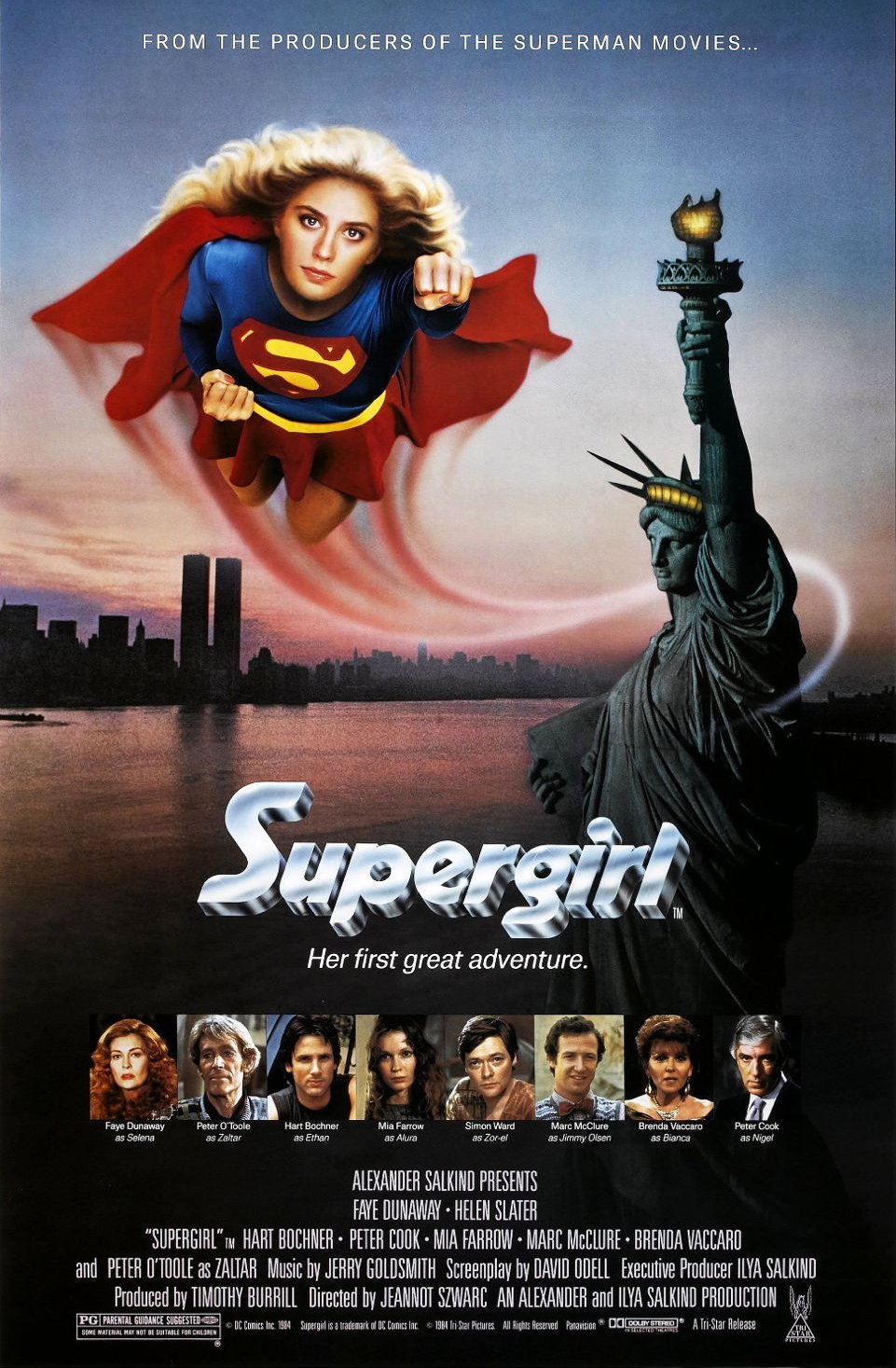
Superman’s cousin got into the Statue of Liberty action, too.
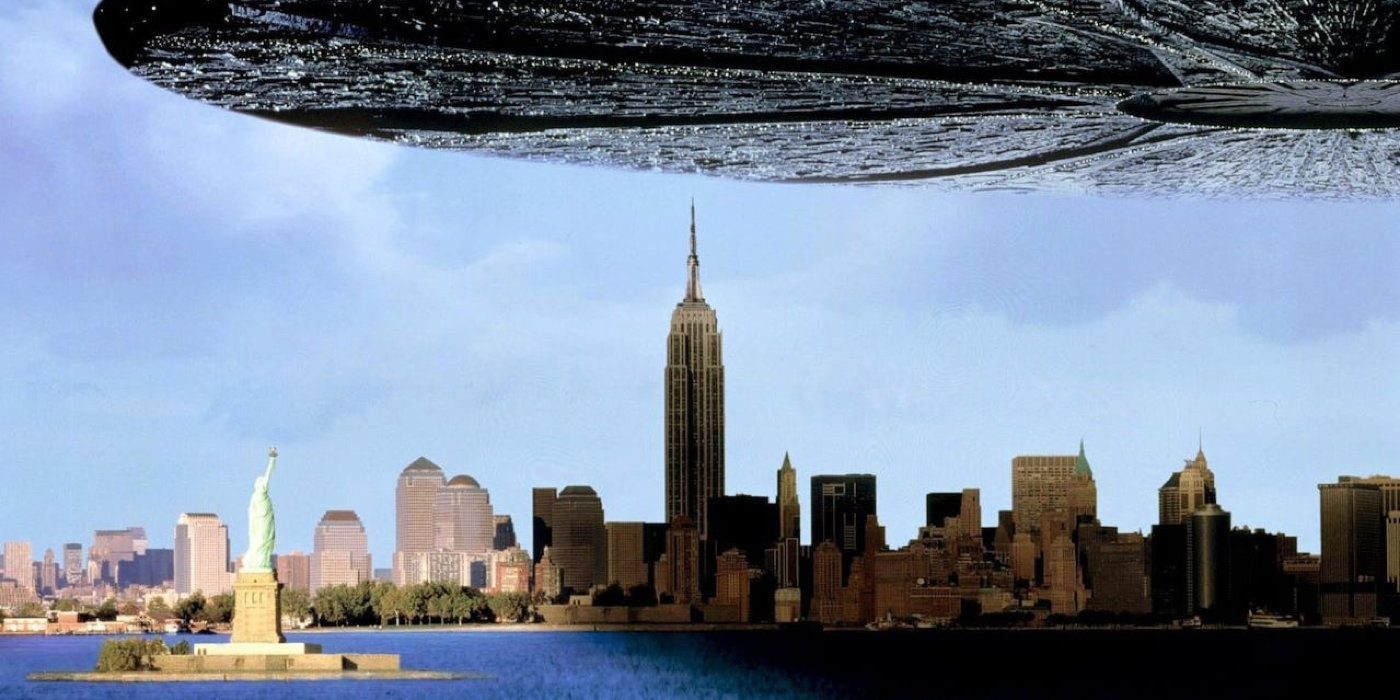
Independence Day, 1996. Science Fiction.
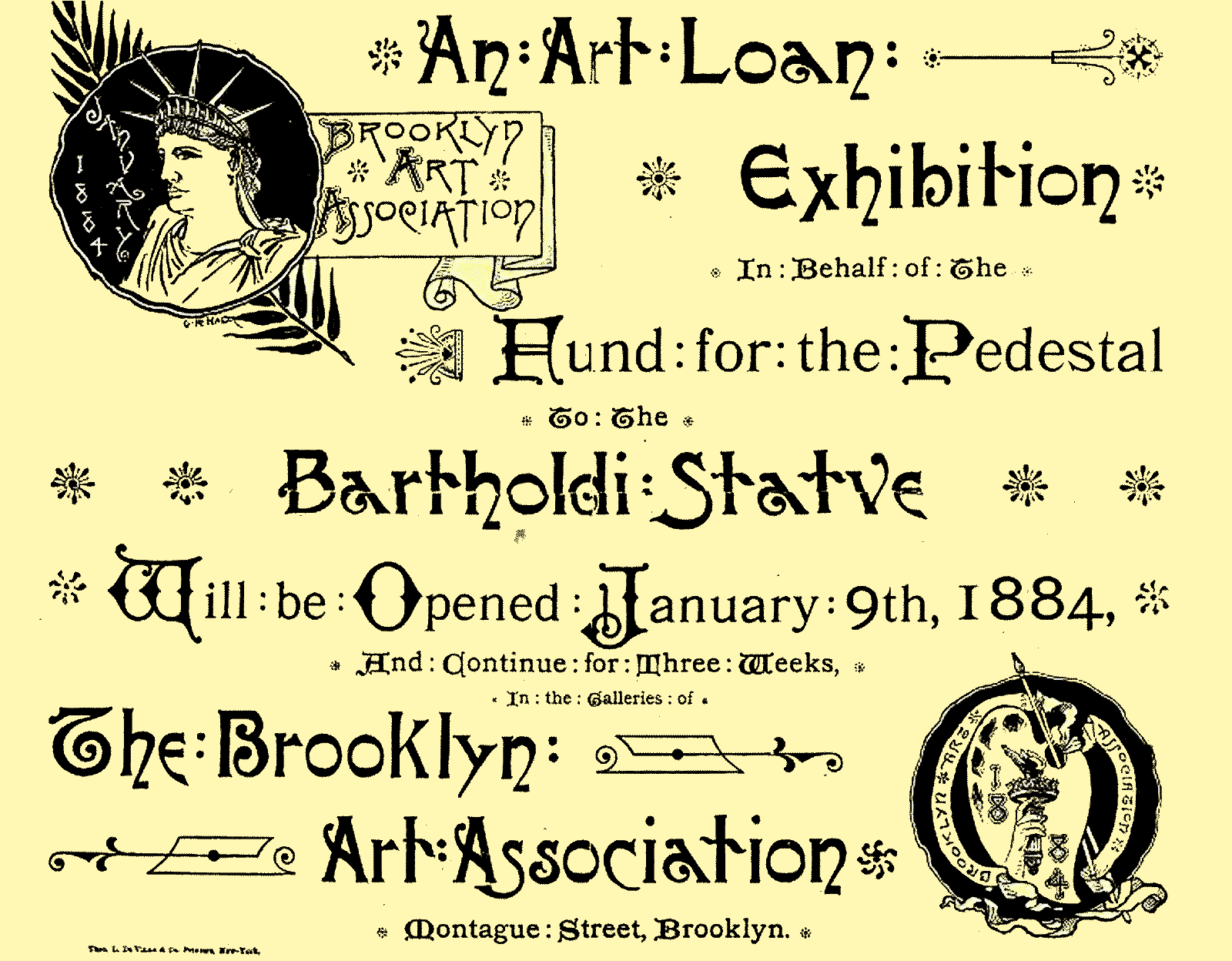
“Fund for the Pedestal.” (The Brooklyn Art Association)
To many people, Lady Liberty is also synonymous with Emma Lazarus’s short poem, inscribed on a plaque inside the pedestal of the Statue of Liberty. Sadly, “The New Colossus” gets a lot of flack from conservatives. I’ve seen it called “that execrable poem” and worse in the comments sections of various blogs. One of my favorite commentators, Mark Steyn, calls it that crappy poem or a truly lousy poem:
As I said at the Munk Debate in 2016, the French gave the Americans a great Statue of Liberty, and the Americans stapled a truly lousy poem to it and turned it into a Statue of Immigration…
It didn’t quite happen that way. Emma Lazarus’s poem gave us our great Statue of Liberty—or was part of the giving. That it’s posted inside the pedestal instead of adorning it is very appropriate. Emma Lazarus didn’t write the poem to adorn the statue. She wrote it to help fund the pedestal on which the statue would stand. Until they could be assured that we had a place to put it, the French weren’t going to give us the “great Statue of Liberty”.
The poem was part of an art auction to raise money for the pedestal. It was first read on November 2, 1883 as part of the publicity for the auction. The auction opened in 1884, and after it closed the poem was forgotten. It had done its job. It wouldn’t be added inside pedestal until May 5, 1903, when it was repopularized by a friend of Emma Lazarus long after Lazarus was dead.
I think a lot of conservative ire toward the poem comes from accepting the poem’s redefinition by the modern institutional left. The institutional left calls it the “huddled masses” poem. But it’s not about huddled masses. It’s about a very specific kind of huddled masses. As they’ve done with various amendments to the constitution, they’ve conveniently forgotten entire phrases and adjectives. They’ve deliberately forgotten the history of the poem and of its writer.
- Not like the brazen giant of Greek fame,
- With conquering limbs astride from land to land;
- Here at our sea-washed, sunset gates shall stand
- A mighty woman with a torch, whose flame
- Is the imprisoned lightning, and her name
- Mother of Exiles. From her beacon-hand
- Glows world-wide welcome; her mild eyes command
- The air-bridged harbor that twin cities frame.
- “Keep, ancient lands, your storied pomp!” cries she
- With silent lips. “Give me your tired, your poor,
- Your huddled masses yearning to breathe free,
- The wretched refuse of your teeming shore.
- Send these, the homeless, tempest-tost to me,
- I lift my lamp beside the golden door!”
This poem is about “huddled masses yearning to breathe free”, those willing to brave the tempest to reach that great golden door—at the time, Castle Garden and, when that filled up, Ward’s Island—and take part in the great American experiment in freedom. Lazarus’s exiles were exiles who “yearn to breathe free”. Her exiles are a far cry from criminals massing through the border and yearning to breathe… murder, rape, and more crime.
These modern Maryland Dads are, in fact, what Emma Lazarus’s exiles were yearning to escape. Lazarus was born Jewish in New York, but it wasn’t until the assassination of Tsar Alexander II on March 13, 1881, that she began to take her heritage seriously.2 In the wake of the Russian and Eastern European pogroms which followed the Tsar’s assassination, Emma Lazarus chose to first learn more about her Jewish heritage and then work hard for the aid of Jewish refugees. In the immediate aftermath of the assassination, she wrote a poem, “Sic Semper Liberatoribus”, as if nothing would change:
- Well, it is done! A most heroic plan,
- Which, after myriad plots succeeds at last
- In robbing of his life one poor old man,
- Whose sole offense—his birthright—has but passed
- To fresher blood, with younger strength recast.
By April of 1882, however, she had begun writing forcefully about the atrocities. An editorial in the April 28, 1882 American Israelite highlighted her work publicizing Russian atrocities against Jews:
Too much praise can hardly be bestowed upon Miss Emma Lazarus’ paper in the May Century: “Russian Christianity versus Modern Judaism.” This answer effectually disposes of Madame Ragozin’s accusations against her Jewish countrymen and her apology for the Russian atrocities. Miss Lazarus writes in a judicial and moderate tone, and her article, which is crouched in admirably clear English, can not fail to exercise a most salutary influence upon non-Jewish readers.
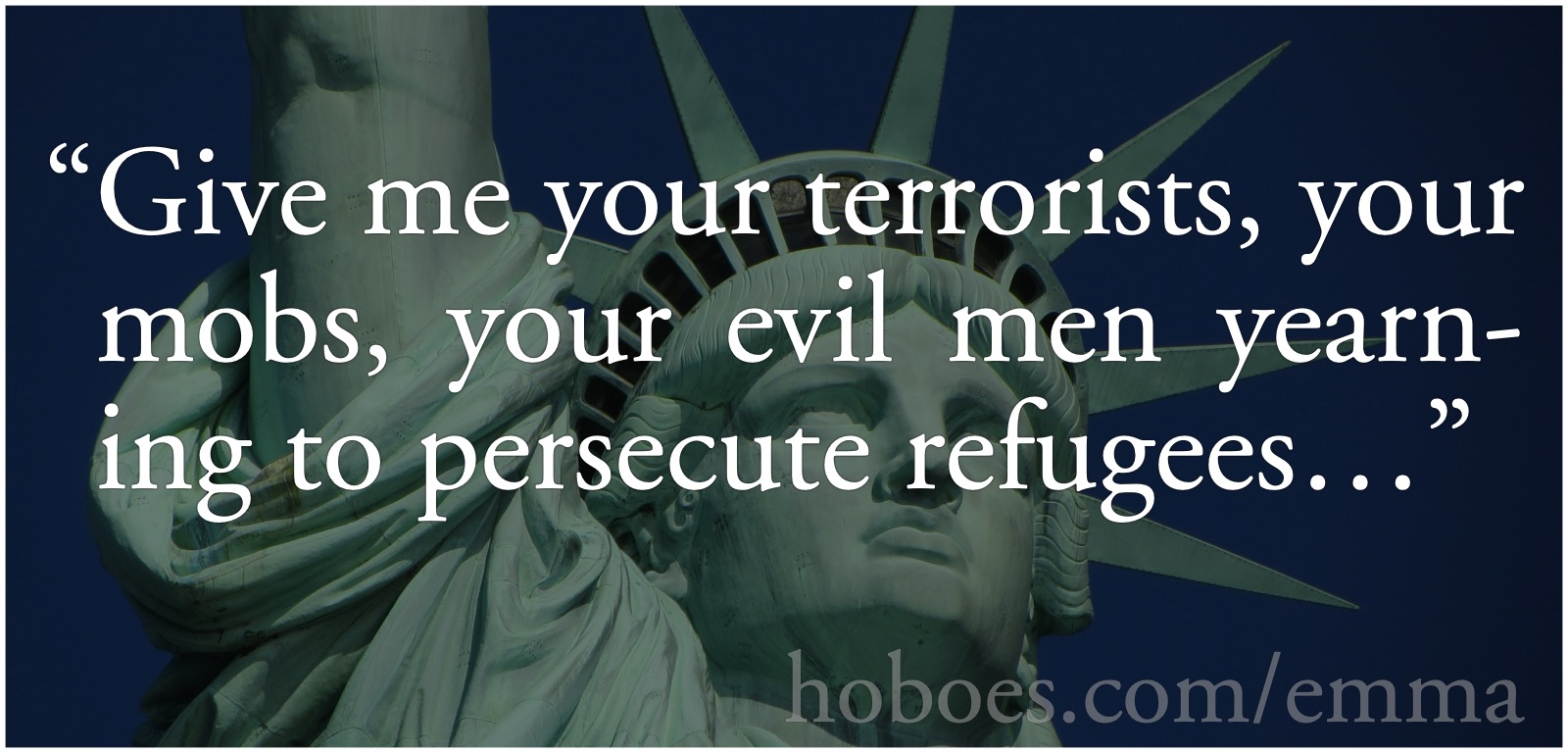
What Emma Lazarus did not write.
And by November of 1882 she was writing poetry about the “stripes and scourgings, death and shame” suffered by the people of Israel “scattered broadcast o’er the lands”. Her poem “The World’s Justice” ends with:
- Half the world adores their God,
- They the living law proclaim,
- And their guerdon is—the rod,
- Stripes and scourgings, death and shame.
- Still on Israel’s head forlorn
- Every nation heaps its scorn.
The June 9, 1882, Tipton, Indiana, Advocate reported, quoting the Brooklyn Eagle:
“In March, 1879, nine Jews in Russia were brought up for trial in the Caucasus on charge of having slain a Christian child and tapped its blood for Passover. This same hideous fiction, according to Emma Lazarus, was revived simultaneously in several districts, invariably leading to riot, pillage and murder. From that time to the present one hundred thousand Jewish families in Russia have been reduced to homeless beggary, and eighty million dollars’ worth of property has been destroyed. ‘Men have been cruelly murdered, women brutally outraged, children dashed to pieces or burnt alive in their homes.’ Such has been the result of the recent Jewish persecution, and thousands of these unfortunate people have become exiles from the land of their birth.”
The modern left’s definition of refugees that includes the persecutors of refugees would have appalled the person who publicized the tempests endured by those exiles.
There is a huge difference between yearning to breathe free and yearning to be free. A man may yearn to be free to… do good, do evil, or do nothing and live off the dole.
But the man who yearns to breathe free, to inhale the essence of freedom into themselves and to exhale freedom into their new community… that’s the kind of person this poem is welcoming.
It’s the kind of person our insane immigration system literally keeps out: those who wish to take part in the great American experiment are limited to tiny numbers. Those who wish to be free only in themselves, for whom laws only matter when they restrict others but are eager to break the law themselves, those we let in in the millions.
As long as you’re willing to prove that the law doesn’t apply to you, the beltway class wants you in unlimited numbers.
That’s why the horrific crimes of a Kilmar Albrego-Garcia don’t horrify them. His crimes aren’t the point, or, more specifically, his crimes show that he merely wants to be free himself. Like the beltway class he has no desire to breathe freedom. He has no concept of what that even means, literally to the point of demanding freedom for himself when the law catches up to him for trafficking in the slavery of his victims.
The institutional left has redefined what it means to be an exile, what it means to welcome exiles, what it means to brave a tempest, what freedom is.
Conservatives accept the left’s redefinitions and then say, oh, what a horrible poem. It’s not a horrible poem unless you accept the redefinitions that make it horrible. Emma Lazarus wrote a poem about America. Her poem embraced industry, embraced striving, and rejected tyranny.
Her poem was about yearning to breathe free in all those realms.
That “air-bridged harbor”? What still today bridges that harbor first bridged it then. The magnificent Brooklyn Bridge was completed in 1883, the same year Lazarus finished her poem. It was a work of American industry, and her inclusion of it in the poem was a deliberate celebration of American industry. At the time the Brooklyn Bridge was built, it was the longest bridge in the world. It was nearly a third of a mile long and stood twelve stories tall. This was a bridge that literally soared into the air. It’s still an amazing sight today among all the modern skyscrapers and lights on both sides. It must have been awe-inspiring in 1883.
And that wasn’t all. The torch’s “imprisoned lightning” was, specifically, electricity. The Statue’s torch was an electric light shining across the harbor and the city. We had trapped lightning in a bottle—or in a torch—sixteen feet tall and a hundred feet high, and three hundred feet from the ground.
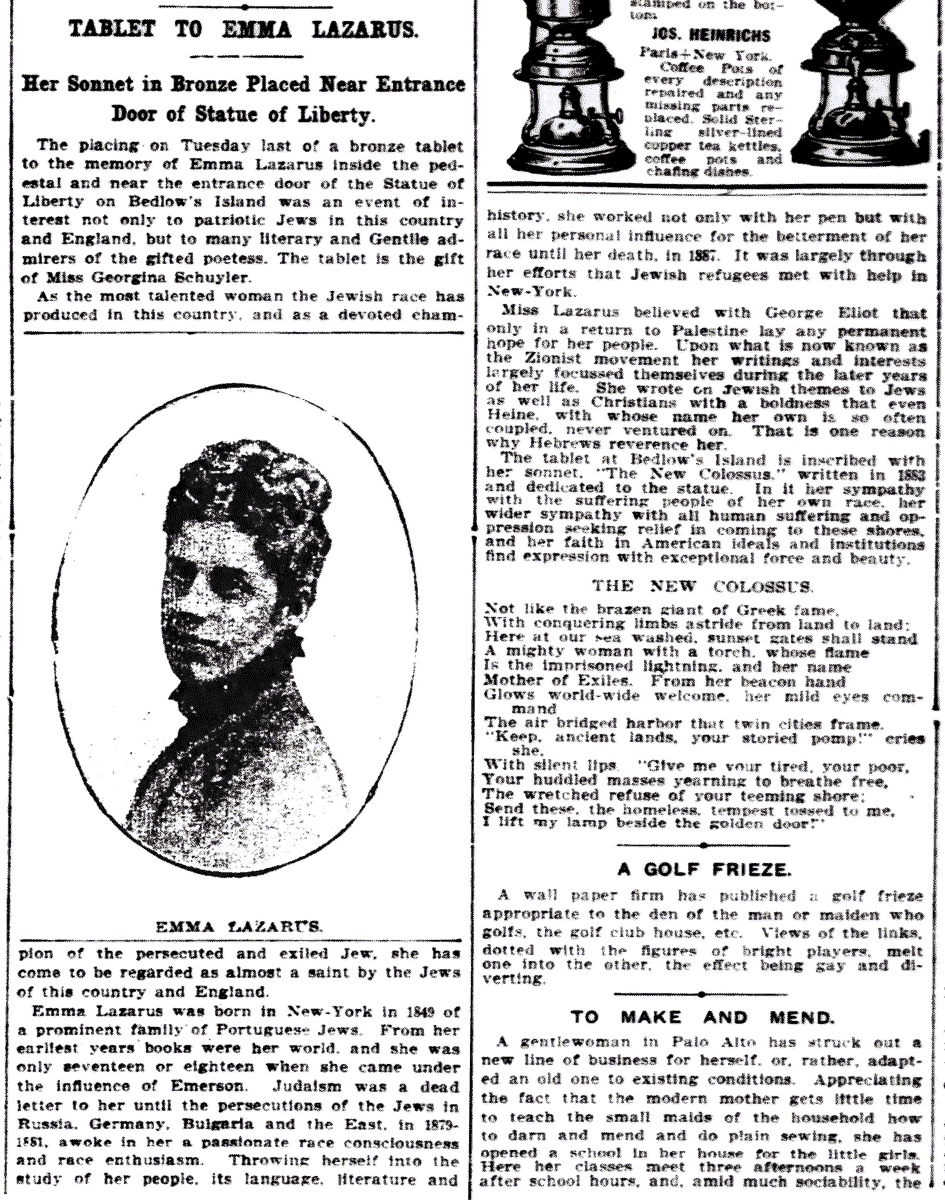
“In The New Colossus her sympathy with the suffering people of her own race, her wider sympathy with all human suffering and oppression seeking relief in coming to these shores, and her faith in American ideals and institutions find expression with exceptional force and beauty.” (New York Tribune, May 10, 1903.)
That, too, must have been an awe-inspiring sight in 1886 when the statue went up. And it would have been fresh in Lazarus’s mind in 1883: New York had only just gotten its electrical grid, the first in the United States, in 1882. These were monumental achievements—literally—of American industry.
It was no accident that she chose to use space in her very short poem to highlight these very technical achievements. She advocated for and helped found institutions of technical and scientific training for the Jewish refugees she was writing about.
The other part of the poem is its contrast with the old world. The Statue of Liberty was very blatantly a celebration of the American revolution. The “brazen giant of Greek fame” highlighted that revolution. Lazarus contrasted the Statue of Liberty, the “new colossus” with the old colossus, the Colossus of Rhodes, dedicated in 280 BC to the sun god Helios. The Colossus of Rhodes was built to commemorate that island’s victory against the besieging navy of Demetrius I of Macedon. The Colossus of Rhodes had its own dedication at the base:
- To thy very self, O Sun, did the people of Dorian Rhodes
- raise high to heaven this colossus,
- then, when having laid to rest the brazen wave of war,
- they crowned their country with the spoils of their foes.
- Not only over the sea, but on the land, too,
- did they establish the lovely light of unfettered freedom.
- For to those who spring from the race of Heracles
- dominion is a heritage both on land and sea.
While the Colossus of Rhodes had collapsed over two thousand years before Lazarus’s poem, the reference would have been clear to any late nineteenth century American schoolboy or schoolgirl, whether schoolhouse-taught or self-taught. In 1883 the West knew its history. And so did Emma Lazarus.
Our “New” Colossus was taller by a half. Our Colossus was not dedicated to some pagan god, but to liberty itself, and not to unfettered freedom but to the very breath of freedom.
The people of this new Rhodes were not sprung from the race of Heracles, but were exiles from the tyrannies of that ancient world. People who had braved the tempest to arrive to America, in a time when intercontinental travel was far more dangerous than today.
People who had survived tempests as their governments turned against them and destroyed their homes, their jobs, and their lives.
These were, as Ken Cucinelli might have said, freedom-loving people who knew how to stand on their own two feet. Emma Lazarus knew this, which is why she worked for their technical training.
When Emma Lazarus wrote about “exiles” she meant the people the institutional left wants to keep out nowadays: Jews and others who faced persecution from the ruling powers of the day. While she wrote the phrase expansively she specifically had the Jewish refugees she was working to aid in mind. It is, sadly, not a concern that has disappeared from the world, as we saw on October 7, 2023, and in the reaction to it in universities across the country and across the world.
An exile is a very distinct thing, very different even than a refugee. To be an exile is to have been exiled. To have been driven from a home and a land you have every right to own and inhabit. To have been persecuted in collusion with the authorities, to the point of homelessness, leaving no hope of return.
She could just as well have meant Christians fleeing pogroms in the Middle East, Germans fleeing imprisonment for homeschooling, Englishmen fleeing imprisonment for bringing their child to better health care, writers exiled for too-truthful tweets, little girls in Rotherham, or thirteen year old Scottish girls arrested for protecting their twelve year old sister from sexual assault.
Or, of course, Jews fleeing the antisemites that Europe is welcoming and the United Nations is encouraging.
Exiles from the land of their birth.
She did not define exiles, as the institutional left today does, as the persecutors, the human traffickers, the gang members who cross the border and then continue to terrorize the victims who thought they were fleeing such tyranny. Her exiles were no Maryland Men seeking freedom for themselves and slavery for others.
Emma Lazarus’s exiles were exiles in the real sense of the word: people who had been exiled. They were not the people who caused the exile of others. But they were people who understood what happens when the ruling class encourages hate-filled mobs to target their enemies.
The addition of the poem inside the pedestal was widely reported, but mostly far into the interior of newspapers. Most of the column space was taken up by the poem itself. Here, sans poem, is how the May 10, 1903, Brooklyn Citizen reported it on page 17:
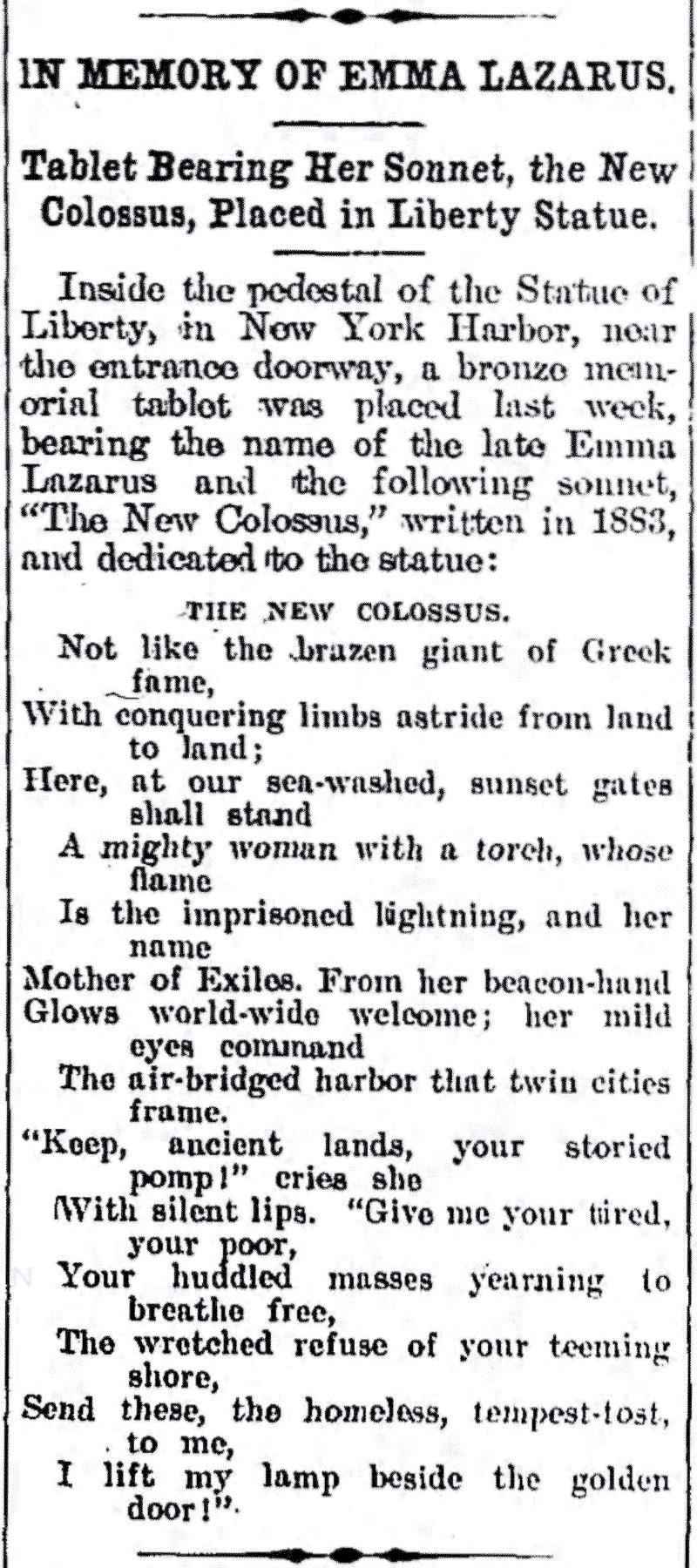
“In Memory of Emma Lazarus.” (American Israelite, May 21, 1903.)
“THE NEW COLOSSUS”
Tablet to Memory of Its Author, Emma Lazarus, Placed in Liberty Statue.
A voice from the dead is recalled by the memorial tablet to the late Emma Lazarus of New York, which was placed inside the pedestal of the Statue of Liberty on Tuesday, and which bears a sonnet written by her about the statue.
Her sympathy with the exiled Russians, in 1880 and 1881, her own people, and her belief in American institutions and ideals are expressed in her sonnet.
Not all notices chose to gloss over who those “exiled Russians” were, nor who “her own people” referred to. She received two columns on page 21 of the May 10, 1903, New-York Tribune, which included this description of Lazarus herself:
As the most talented woman the Jewish race has produced in this country, and as a devoted champion of the persecuted and exiled Jew, she has come to be regarded as almost a saint by the Jews of this country and England.
Emma Lazarus was born in New-York in 1849 of a prominent family of Portuguese Jews. From her earliest years books were her world, and she was only seventeen or eighteen when she came under the influence of Emerson. Judaism was a dead letter to her until the persecutions of the Jews in Russia, Germany, Bulgaria and the East, in 1879-18813, awoke in her a passionate race consciousness and race enthusiasm. Throwing herself into the study of her people, its language, literature and history, she worked not only with her pen but with all her personal influence for the betterment of her race until her death, in 1887. It was largely through her efforts that Jewish refugees met with help in New-York.
The author of that article recognized exactly who the “Mother of Exiles” was Mother to:
The tablet at Bedlow’s Island is inscribed with her sonnet. “The New Colossus,” written in 1883 and dedicated to the statue. In it her sympathy with the suffering people of her own race, her wider sympathy with all human suffering and oppression seeking relief in coming to these shores, and her faith in American ideals and institutions find expression with exceptional force and beauty.
It’s one of those things that would have gone without saying in 1883: when a poem says to send your homeless and tempest-tossed, there’s no need to add “but keep your rapists, your murderers, and your slavers. Keep your evil men who destroy homes and create the homeless.”
Given her focus on government-sponsored mob violence against Jews as what was forcing them into exile, it would likely have amazed her that “Human traffickers and pedophiles need not apply” would need to be specified a century later. Gang members, terrorists, and thieves were what the homeless, tempest-tossed she was writing about were trying to escape.
I can’t help but think that Emma Lazarus would have been appalled at the use of her poem today to let the roving gangs in—not just along with the exiles, but as the exiles, often instead of the victims they persecute. She would have been appalled at the continued persecution of exiles in their new communities in America by the very people they were trying to escape. The justification of honor killings as just their culture by the left would have been incomprehensible to her. That her poem would be used as an excuse to ignore the human trafficking of women and children would have been incomprehensible to her.
In many ways the institutional left’s embrace of that level of racism and slavery is incomprehensible to me. Emma Lazarus gave us a poem about yearning to breathe free. The institutional left has redefined it into a poem about licentiousness and dependence, of slavery both physical and spiritual. It’s a shameful act that should not be allowed to stand.
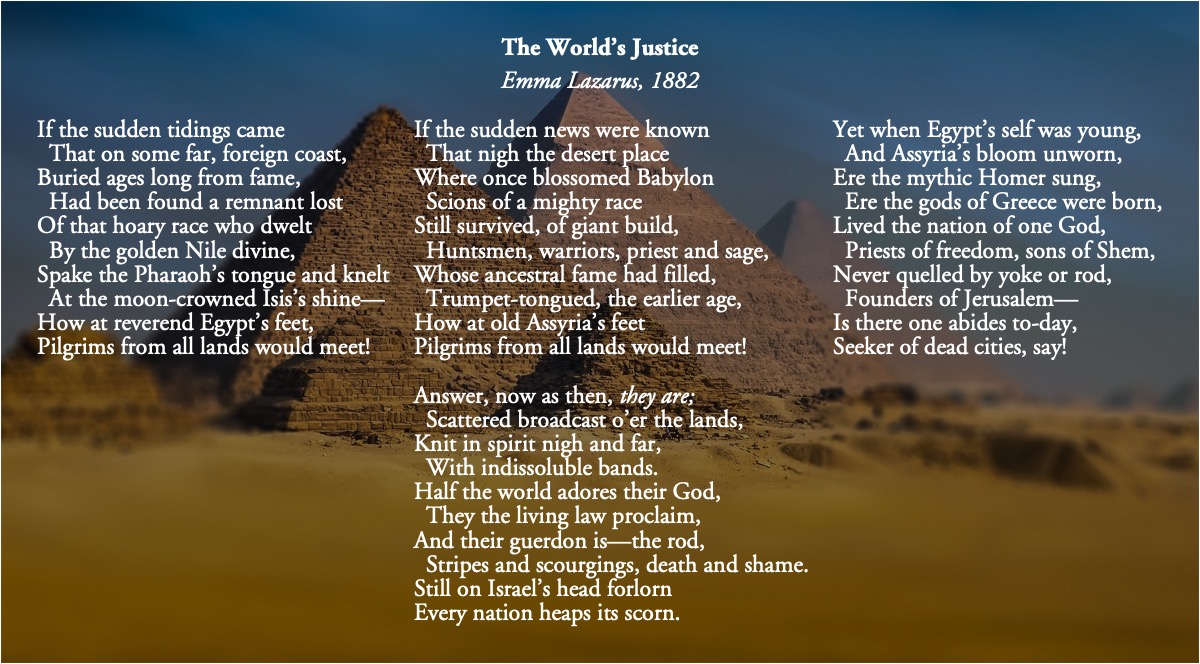
“The World’s Justice”, from the November 23, 1882 Independent of New York City.
DC’s Miss America was originally from Quality Comics, but transferred to DC when DC bought that company.
↑She did do an interesting series of poems, around 1880, on “Raschi of Troyes” which touched heavily on Jewish scholarship, but much more lightly on antisemitism.
↑Except for the afore-noted Raschi series, more historical than religious I haven’t found any evidence of Lazarus having a “passionate race consciousness” before the Tsar’s assassination. I don’t know what this New York Tribune writer was referring to by the years 1879-1881. Those years may be a typo; or it may be that her awakening did come sooner, and that history and historians like to assign concrete events to such awakenings and the Tsar was a useful event for that.
↑
criminals
- Famed “Maryland Dad” Kilmar Albrego-Garcia Arrested; Will be Deported to Uganda: Ace at Ace of Spades HQ
- “His lawyer is crying ‘but he doesn’t even speak the language!’ The most-spoken language in Uganda is… English.”
- The Great Big Convoy: Mark Steyn at Steyn Online
- “There is nothing ‘good’ about turning a blind eye to rape gangs, or stringing along with the idea that child rape is a mere ‘cultural difference’.”
- Our Cybernetic Future 2023: Entropy in Action
- Studying the past, we can improve the future. Studying the futurists of the past, we can learn the tools to improve the future.
- There is no sanctuary without walls
- Sanctuary isn’t sanctuary if you let everyone in. If we don’t have borders, we cannot provide sanctuary. The left’s definition of sanctuary means denying sanctuary for people who need refuge. Letting in both the people escaping violence and the people causing violence is to deny refuge to refugees. There is no sanctuary without walls to protect it.
- Tongue Got Your Cat?: Mark Steyn at Steyn Online
- “Give me your tired, your poor, “Your huddled masses yearning to be human traffickers, jihadists, “Fentanyl dealers, gang rapists, unlicensed drivers, mail-in voters, Covid fraudsters, decapitators of American ducks…”
Emma Lazarus
- Bad Poems Make Verse law: Mark Steyn at Steyn Online
- “When Shelley said ‘Poets are the unacknowledged legislators of the world’, he didn’t intend for you to take it literally, as apparently half the population of America now does.”
- Give me your tired, your poor: Mara Koschnitzke
- “As Emma’s own career and influence blossomed, reaching its height in the 1870s and 1880s, she became aware of heightened antisemitism. Her concern for the plight of fellow Jews around the world crystallized after theassassination of Tsar Alexander II set off a wave of pogroms (anti-Jewish riots) throughout the Russian Empire. The consequent surge of immigrants to the U.S.would become the focus of her work from then on.”
- Mark Twain and Emma Lazarus: Two visions of the Statue of Liberty
- “‘The New Colossus’ was the only poem read at the exhibition. It was printed in the catalogue, in Art Amateur magazine, and widely reported in the press… But the poem faded from memory even before the statue was erected.”
- Tablet to Emma Lazarus (PNG, 322.4 KB)
- “Her Sonnet in Bronze Placed Near Entrance Door of Statue of Liberty.” From the May 10, 1903, New York Tribune.
exiles
- 13-Year-Old Scottish Girl Arrested for Brandishing Knife and Hatchet to Keep Foreign Man from Sexually Harassing Sister: Ace at Ace of Spades HQ
- “Why was this man so absolutely insistent on his ‘right’ to speak to 12- and 13-year-old girls on the street?”
- Ted Man Walking: Mark Steyn at Steyn Online
- “Graham Linehan is the creator of Father Ted, a truly beloved sitcom from the UK's Channel Four. But, because he is opposed to the notion that women have penises, he was forced out of TV comedy (as ruthlessly homogeneous a world as can be found) and then out of Britain itself.”
More immigration
- There is no sanctuary without walls
- Sanctuary isn’t sanctuary if you let everyone in. If we don’t have borders, we cannot provide sanctuary. The left’s definition of sanctuary means denying sanctuary for people who need refuge. Letting in both the people escaping violence and the people causing violence is to deny refuge to refugees. There is no sanctuary without walls to protect it.
- Senator Marco Rubio and the National Press Club
- Senator Marco Rubio appeared before the beltway press on Tuesday to talk about reforming Social Security and Medicare before they go bankrupt.
- Secure borders in three easy steps
- If our goal is to secure our borders, we can do it in three easy steps, and none of them draconian. If securing our borders means keeping terrorists out, we need to stop wasting time on workers and prohibition violators.
- Nobody wants immigration reform
- “Immigration is not a problem to be solved.” A confident and successful electorate could understand that issues are more important than who you hate. Unreasoning partisanship, however, is a problem that often seems as if it has no solution.
More misleading terminology
- The left’s hatred of business is a lie
- The left doesn’t hate business. They hate you and me.
- Pluto is not a planet, and other respectable murders
- If Pluto is not a planet, and tomatoes are not vegetables, then austerity can mean higher taxes and more spending.
- Economic misterminology: recessions that never end
- When we remove causes and effects from our descriptions of economic events, such as recessions, we lose our ability to change for the better.
- Austerity really means raising taxes
- When Paul Krugman claims that austerity is a failure, he defines it as cutting spending; but in fact, his examples are all of countries that raised taxes often along with raising spending.
- Austerity is not the only answer
- According to the Financial Times, Austerity is not the only answer to a debt problem. The other answer is a paywall.
- Five more pages with the topic misleading terminology, and other related pages
More A Sestercentennial Year
- Irish mashed potato pie for Π Day and Saint Patrick’s Day
- In this sestercentennial year, here’s a great triple-celebration pie. It’s from about 1876 and it can fill in for both Pi Day and St. Patrick’s Day!
- Padgett Sunday Supper Club Sestercentennial Cookery
- The Sestercentennial Cookery is a celebration of American home cooking for the 250th anniversary of America’s Declaration of Independence.
- The Battle of the Kegs
- The Battle of the Kegs took place on January 5 or 6, 1778. Soon after, Francis Hopkinson wrote this wonderful account of the debacle, including very personal details about the British General in charge!
- Cherry Valley: A Massacre of the Revolution
- Mel Gibson’s The Patriot is disparaged for the ruthlessness it portrays among the British. But such barbarity certainly did exist. One massacre by British troops is still remembered by the residents of Cherry Valley, New York.
- The World Turned Upside Down
- The legend of the surrender of Lord Cornwallis to Washington at Yorktown says that the band played “The World Turned Upside Down”. It probably didn’t. But we’re going to print the legend anyway.
- One more page with the topic A Sestercentennial Year, and other related pages
More Statue of Liberty
- Liberty enlightening the world
- On October 28, 1886, the Statue of Liberty was dedicated, and this poem inscribed.