


Magicare: The Quest for the Holy Bureaucrat
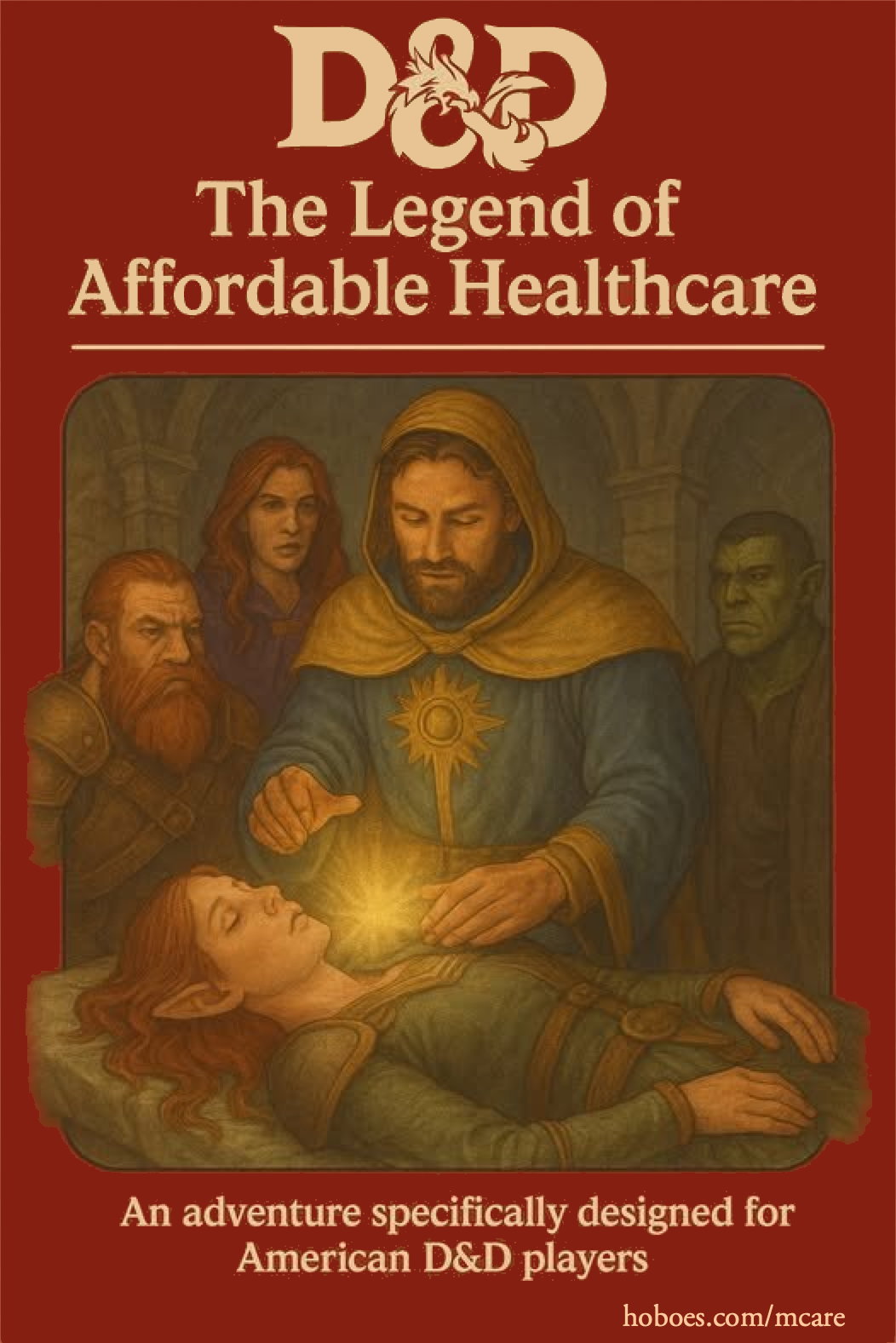
The Legend of Affordable Healthcare in America: If you want single payer, you must believe in magic.
I’ve written a lot about how science is becoming indistinguishable from magic in the minds of so much of the beltway crowd and the anointed—and not in the good science fiction way. Science is not something to be believed in, like religion, or voted on like politics. Science is the scientific method, nothing else. To paraphrase Feynman, if it disagrees with the scientific method it is wrong. That is the only key to science.
Science is not legislating the value of π or calling a council of the wise. That’s religion. Science is acknowledging the ignorance of experts, not their expertise. Every time you hear about science being “settled” or about a “consensus”, what you’re hearing is little more than a cargo cult religion wearing a cheap suit of scientific trappings and buzzwords.
One of the worst places for this substitution of magic for science is in medicine. Without the scientific method, medicine will kill both directly, through action, and indirectly by inaction. Nothing illustrates the cargo cult in medicine as clearly as this meme about health care that I ran across last year on a gaming group. The text specifically called out Americans:
The Legend of Affordable Healthcare: An adventure specifically designed for American D&D players.
To someone who both plays D&D and has done some thinking about health care and health insurance, the accompanying image is both profoundly weird and revelatory. For those not familiar with D&D’s iconography, the image pictured under the text “affordable healthcare” is of a priest—a “cleric” in D&D parlance—using magic to heal a sick or injured character.
Not a doctor. Not a scholar. A wielder of magic. This is neither an appeal to logic nor for better science. This is a religious tract.
It isn’t in any way necessary or even likely that a D&D-related affordable health care joke has to involve magic spells. D&D has had non-divine, completely non-magical medicine since at least the advent of its fifth edition, which was well over a decade ago. The skill “Medicine (Wis)” is literally on every character sheet. It’s on the character sheet of warriors and rogues as well as of wizards and priests.
A Wisdom (Medicine) check lets you try to stabilize a dying companion or diagnose an illness.
Any character in the game can use completely non-magical healer’s kits and not even have to take their chances with a non-magical skill roll. Each kit costs five standard coins and can be used ten times, no magic required.
But even though the premier fantasy roleplaying game no longer assumes magic is required for healthcare, this meme does. Or at least, it assumes that affordable healthcare requires magic.
Which is true if it’s equating “affordable” healthcare with government-managed healthcare. Making government-managed anything affordable will require magic. It doesn’t happen in the real world.
The thought processes behind this very professionally-made meme go a long way toward explaining our very totemistic approach to medicine in 2020 and, throughout every country that has government-run healthcare, today. There appears to be a large overlap between believers in totemic medicine—a belief in the efficacy of dollar-store masks and hankie bandanas, machines that ping rather than simple longstanding medicines—and backers of government-run and government-managed health care and health care payments.
These are people whose belief in the efficacy of the new COVID vaccines changed 180° when the presidency changed from Trump to Biden. The science didn’t change. Only the priest changed.
I covered this mindset before in my post on Canadian health care and the completely unscientific hope from its users that it can be easily fixed. They acknowledge that the system is clearly and completely failing them from their own perspective. Yet there is a class of people in each country who believe that some magic phrase or combination of totems will turn the Canadian health care system, or the United Kingdom health care system, or America’s ACA, into a functional system that actually helps sick people get well.
The solution is never the scientific, logical one, to roll back the program that fails. The solution is always the religions one, to double down on the program that fails. The system in the United Kingdom has gotten so bad that the state literally has to put armed guards around infants to keep their parents from taking them somewhere else. Canada has decided to solve their incredibly long wait periods by referring people who suffer from minor physical and psychological ailments to their MAID program, because it’s easier to kill people than heal them.
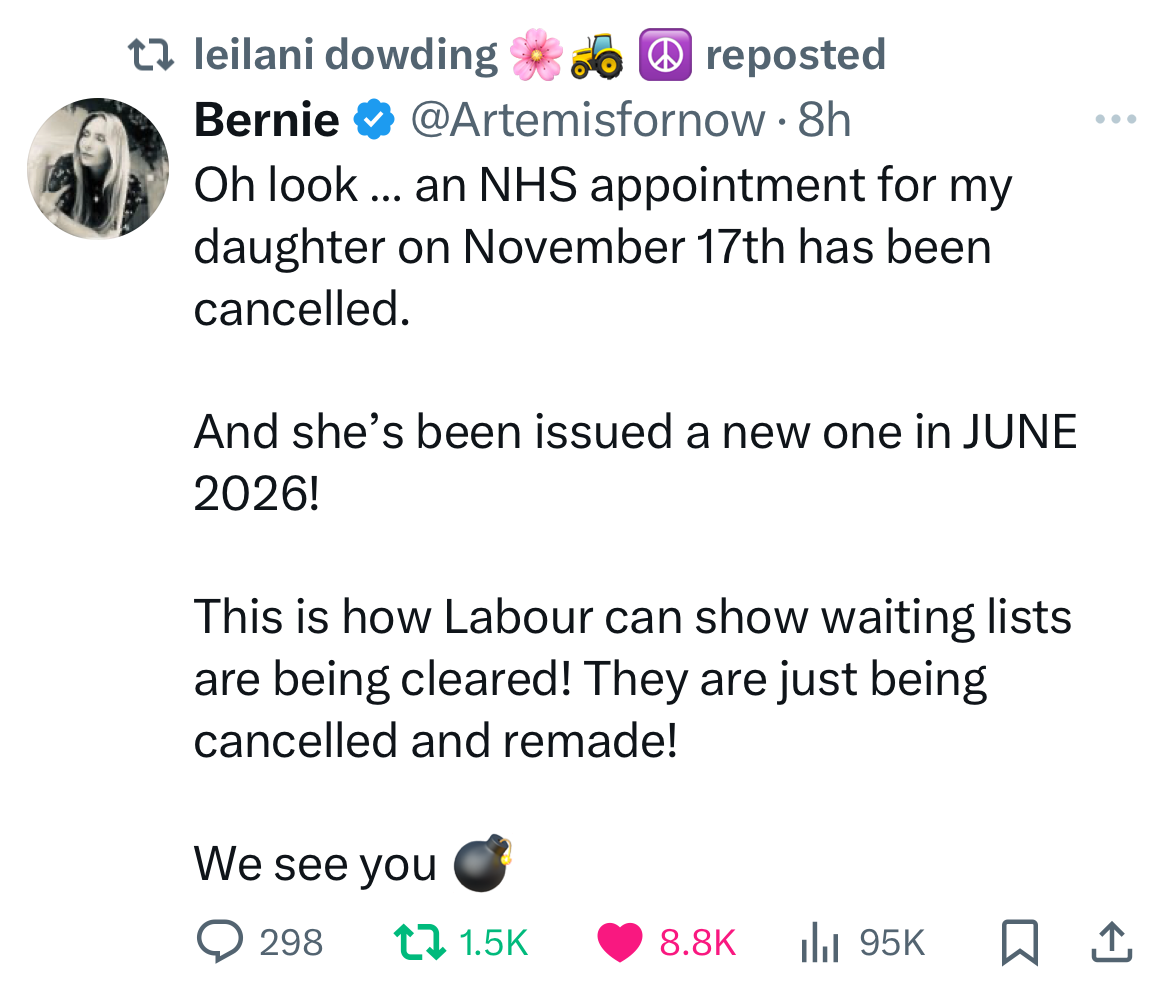
This appeared in my feed the day I made this post live.
Scratch that. It’s easier to kill people than to bother even addressing their concerns. Some of the people given the MAID option weren’t even known to be sick. They hadn’t even been able to see a doctor outside of the MAID system.
It will always be easier to kill other people than to heal them. It will always be easier to kill other people than to spend the time to listen to them. And killing other people will always be the end result of putting third-party bureaucrats, especially government bureaucrats, between the individual and their doctor.
Single-payer and its variations inevitably turns everyone into “other people”.
In the United States, health care has become very expensive, and this is mainly because health insurance has become illegal. One of the commenters in the gaming forum where I saw this meme wrote:
What’s not affordable about the $16,000 my wife and I pay for insurance every year.
(Understanding of SARCASM required to reply)
I was honestly interested in whether they were being sarcastic about the word “affordable”… or the word insurance. Unfortunately I didn’t get an answer before the post was pulled. Because I’m pretty sure that if he was paying $8,000 per year per person for “insurance”, that his payments were insurance in name only.
Most likely it was what most people’s “insurance” is in the United States: a payment plan that makes everyday health care ridiculously expensive, uncommon health care catastrophically expensive, and catastrophic health care impossibly expensive. Because under any sane system, $8,000 per year per person would be the individual’s insurance. Anyone who could put $8,000 per year per person into a health care savings account wouldn’t need any bureaucrats to manage their health providers.
Instead, what they have—what everyone using the unaffordable care act has—is a payment for medical services that funnels the money and the care through at least three layers of bureaucrats. There are government bureaucrats who define what is covered. “Insurance” bureaucrats who take the money and decide how to interpret the government bureaucrats. And finally the various medical providers’ bureaucrats who manage their care not for the benefit of the patient, nor who set their costs on what people are willing to pay, but rather play the other sets of bureaucrats against each other to maximize their own income and limit their own liability.
Maximizing income and limiting liability are great drivers of progress when the customer is the patient. But when it’s the bureaucrats who are their customers all it drives is more red tape and more deaths from it.
The ACA literally bans health insurance. I cannot buy insurance against cancer, or insurance against things I can’t afford. I can only buy “insurance” against literally anything that might happen, which is not insurance at all. Insurance is about protecting the insured against some unlikely, costly event. A system that pays for everything is not insurance, it’s a payment plan.
A payment plan with as many layers as government-run systems inevitably grow will always be expensive and unresponsive. The payment plan must pay for more than health care. It must pay for the government bureaucrats who funnel the payments. It must pay for the hospital bureaucrats who manage their relationship with the government and who prioritize that relationship over their relationship with the patient. It must pay for the paperwork at every level, paperwork that often does little more than get in the way of actual useful healthcare.
It must pay for the corruption that such impersonal systems always promote.
Only after every bureaucracy takes its share and stamps its often contradictory limits onto the approval slip does an actual doctor or other medical personnel get involved. And they’re not paid by the patient. They’re paid by the hospital bureaucrats who are paid by the “insurance” bureaucrats who are managed by the government bureaucrats who know nothing about and care nothing for the patient.
Strange bureaucrats sitting in offices distributing permission slips is no basis for a system of health care. Effective health care derives from a conversation between patient and doctor, not from some farcical bureaucratic ceremony.
In response to Why we must not ration health care: Rationing health care means fewer cures.
- Monty Python: The Machine that goes PING!
- From “The Meaning of Life”, 1983. “More apparatus please, nurse… get the machine that goes PING… Still something missing, though… hmm? Hmm… … PATIENT!”
- NHS appointment canceled at @Artemisfornow (Bernie)
- “Oh look… an NHS appointment for my daughter on November 17th has been cancelled. And she’s been issued a new one in JUNE 2026! This is how Labour can show waiting lists are being cleared! They are just being cancelled and remade!”
- Review: The Blade Runner: Jerry Stratton at Jerry@Goodreads
- Billy Gimp is a bladerunner, an black market provider of medical supplies to underground doctors.
- Throw Another Virgin Into the Volcano!: Sarah Hoyt at According To Hoyt
- “Voting for communists because you’re poor is roughly akin to throwing virgins into a volcanic caldera to stop an eruption.”
- What the f*** is wrong with Americans?
- Do you disagree with the left? Then there’s something the f*** wrong with you.
More health insurance
- Community health acts to improve Obamacare
- Democrats now want to talk about how to improve Obamacare. Here’s how to do it.
- Health insurance reform? What health insurance reform?
- The Truth About Republicans: they don’t want to repeal Obamacare.
- How many legs does the ACA have?
- If you call public assistance insurance, how many people have insurance? The left wants us to believe that, like Lincoln’s apocryphal dog, the ACA has five legs. But when you call a tail a leg, that doesn’t mean the dog can walk on it.
More ObamaCare
- Community health acts to improve Obamacare
- Democrats now want to talk about how to improve Obamacare. Here’s how to do it.
- Democrat Chris Murphy: Obamacare is “the end of health care”
- From the mouths of hypocrites, comes wisdom. It’s almost biblical.
- Health insurance reform? What health insurance reform?
- The Truth About Republicans: they don’t want to repeal Obamacare.
- Economies of scale and government-run health care
- Economies of scale only produce lower prices when people are allowed a choice of service providers—including the choice to forego the service. Government-run programs do not benefit from economies of scale—in fact, scaling up will cause increased prices when the industry is run by the government.
- A tale of two negotiators
- If you want to see how Republicans in Congress fail to pass successful reforms, compare the House Obamacare “repeal” with the White House’s budget.
- 17 more pages with the topic ObamaCare, and other related pages
More single-payer
- What the f*** is wrong with Americans?
- Do you disagree with the left? Then there’s something the f*** wrong with you.
- Public Citizen lies to its own supporters about single-payer health care?
- The biggest danger for supporters of single-payer is that the ACA is very, very close to single-payer, and they can’t face that it is causing a catastrophic rise in costs and a corresponding reduction in quality.