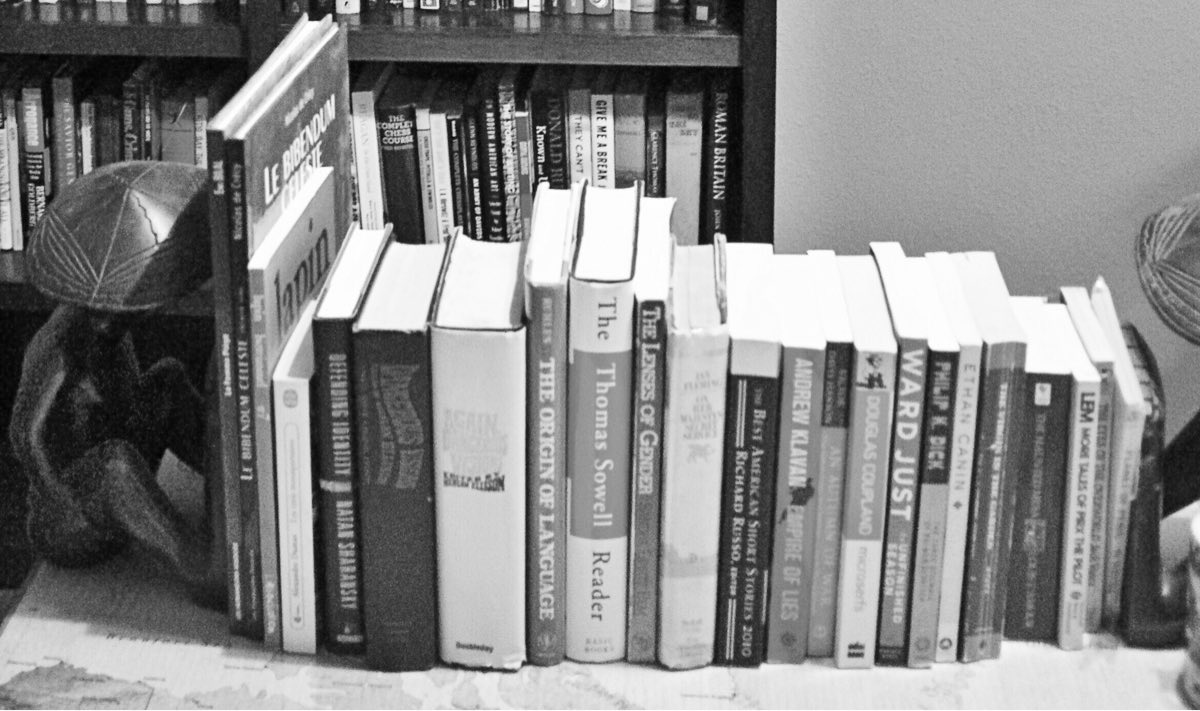


Recent purchases:
- There Will Come Soft Rains—Tuesday, August 4th, 2026
-
“In the living room the voice-clock sang, Tick-tock, seven o’clock, time to get up, time to get up, seven o’clock! As if it were afraid that nobody would.”
A little something for your August 4 enjoyment. Bradbury wrote this in 1950 for Collier’s, and then included it again in The Martian Chronicles of the same year. The story begins on August 4, 2026, and ends on August 5.
For the 1997 edition of The Martian Chronicles, Bradbury chose to increase the timelines by 31 years, changing this story’s date from 2026 to 2057. This, despite Bradbury often saying that he was not a science fiction writer. Given the retro nature of technology in his stories even for the time, this made no sense. It only served to make the stories less compelling by making the technology outdated instead of fantastic.
Wonderful story, nonetheless.
Ray Bradbury: There Will Come Soft Rains (#)
- The Rambling Face of V: V for Von Neumann—Wednesday, June 10th, 2026
-
Alan Moore’s best works provoke a lot of thought about the human relationship with social and technological progress. When I wrote The Five Faces of V I was also reminded quite a bit about what I wrote in Our Cybernetic Future. I ended up cutting most of those references because they didn’t really touch directly on the comics. But there are some very important questions in that crossover. One is the concept of the singularity. The other is the mentoring effect of the existence of the United States—or the idea of the United States—as a world power. The two are heavily related.
Much of Moore’s vision of progress could be said to combine John Von Neumann’s optimism—that for every technological problem an answer will be found—with Norbert Weiner’s entropy-inspired pessimism, that there will be a lot of degradation along the way.
- The New Colossus Breathes Free—Wednesday, March 4th, 2026
-
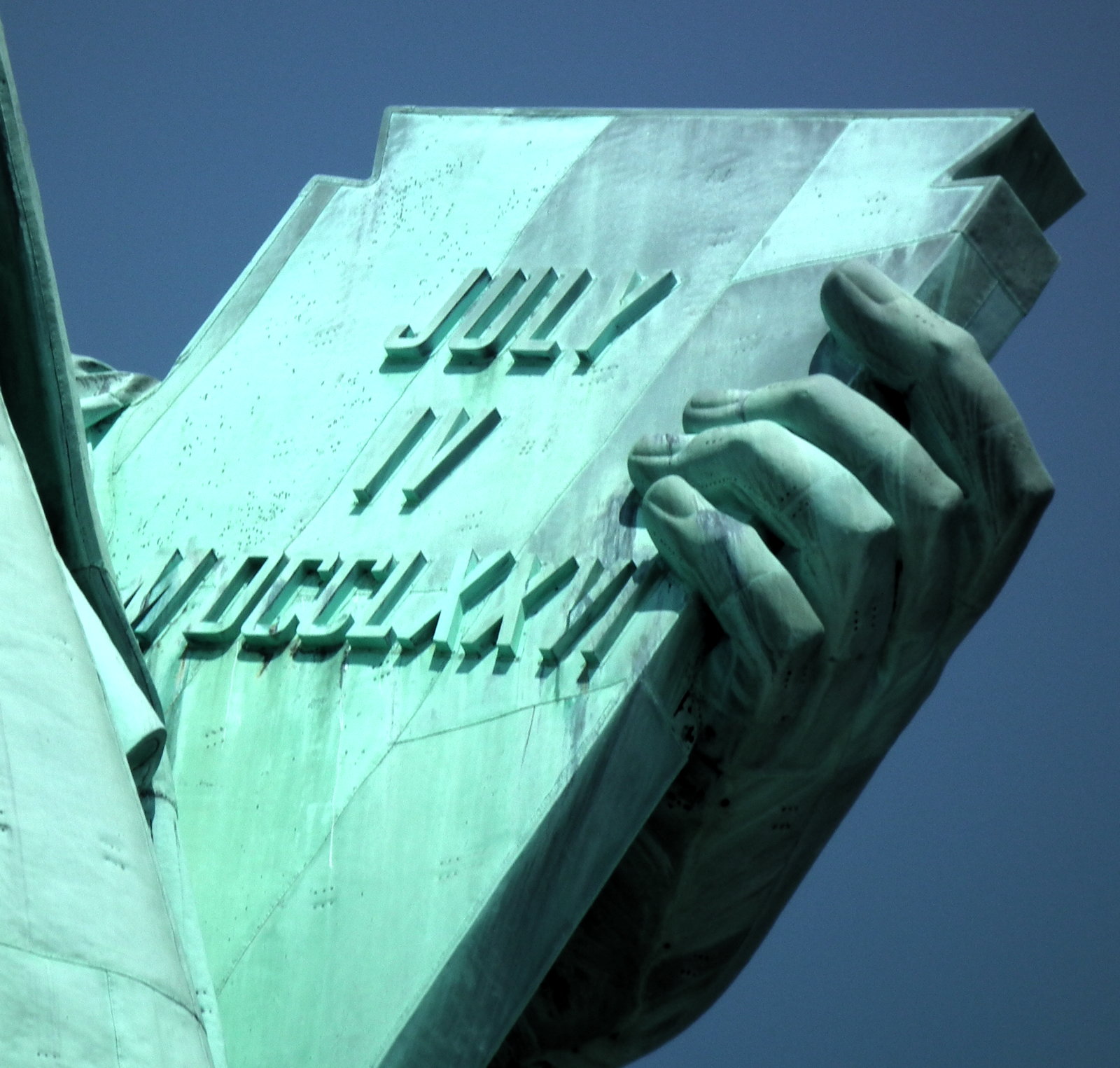
Independence Day. (Erik Drost, CC-BY 2.0)
On March 13, 1881, Tsar Alexander II, Emperor of Russia, was assassinated in Saint Petersburg by literal bomb-throwing anarchists. This led to one of the most enduring and universal symbols of Independence Day and American freedom, known throughout the world. She holds not just the torch of freedom but a tablet inscribed with “July IV MDCCLXXVI”, celebrating the American revolution. She is synonymous with the United States and with freedom.
- Dream of Poor Bazin audiobook—Wednesday, February 4th, 2026
-
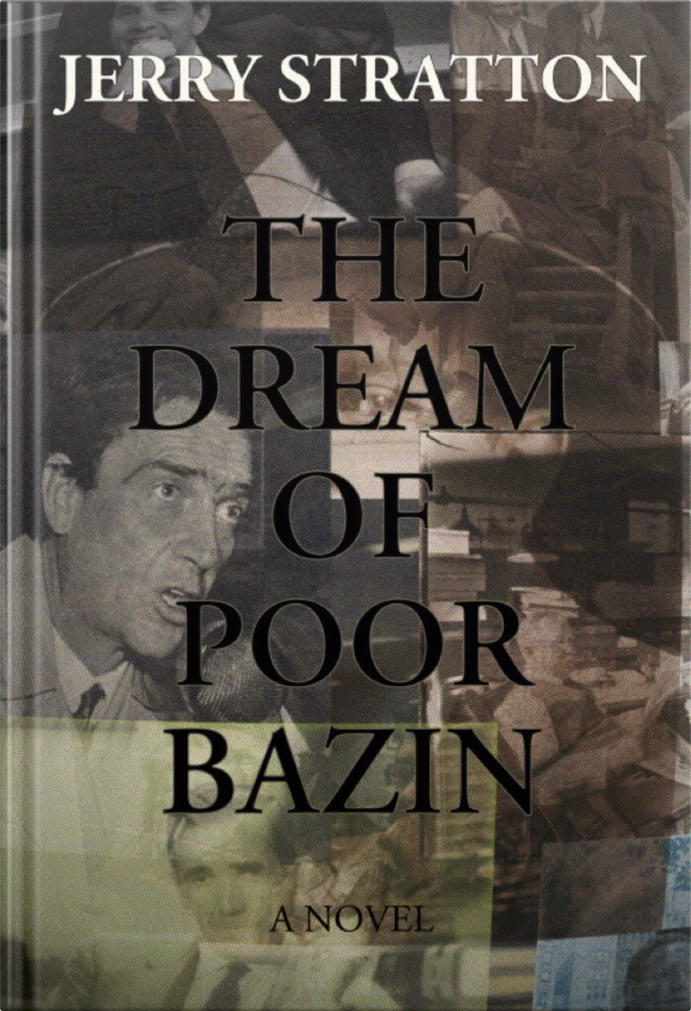
The Dream of Poor Bazin is now available as an audiobook on the Apple Bookstore. This is an experiment on my part, but also on Apple’s as near as I can tell. I had to do no more work than just approving the conversion; the reading was auto-generated by Apple using their artificial voice “Warren”, a “Baritone, American accent: Has characteristics typically associated with masculine voicing.”
Warren sounds like a typical pretentious but soft-spoken journalist of the NPR variety, albeit without the fake Brit accent. I’m not sure this voice would work nearly as well if The Dream of Poor Bazin weren’t a satire about pretentious journalists with delusions of public service.
I have not listened to the entire audiobook. I’ve only listened to the preview. Neither Apple nor Draft2Digital, who Apple is working with for this autogeneration experiment, have given me a free copy. I’m also afraid that if I listened to the book I’d want to re-edit the whole thing based on changes in journalism since I released the paperback in 2020.
I do not have time for that, and I also have a strong conviction that books are books of their time; re-editing them several years later can only diminish them. I can’t imagine re-editing It Isn’t Murder If They’re Yankees, and have put off republishing it for that reason. I immersed myself in a lot of folklore and Southern literature during the process of writing Yankees and I would not even begin to be qualified to edit it today. Even were I to try to replicate that immersion, it would be from a completely different perspective.
“Warren” is obviously a computer, but only barely so. It’s a little more deliberate than I’d like. It pauses at odd points and doesn’t treat commas as a human would, or at least as I would. That said, Warren is not at all robotic. It does a reasonable job of emphasis. It uses sotto voce mostly in the right places. It does not have quite the level of human understanding to know to emphasize “you are a Virginian” more strongly and “you are my son” more affectionately, but it does know that they need a different emphasis than the surrounding text. That alone is impressive.
- My Year in Books: 2025—Wednesday, January 14th, 2026
-
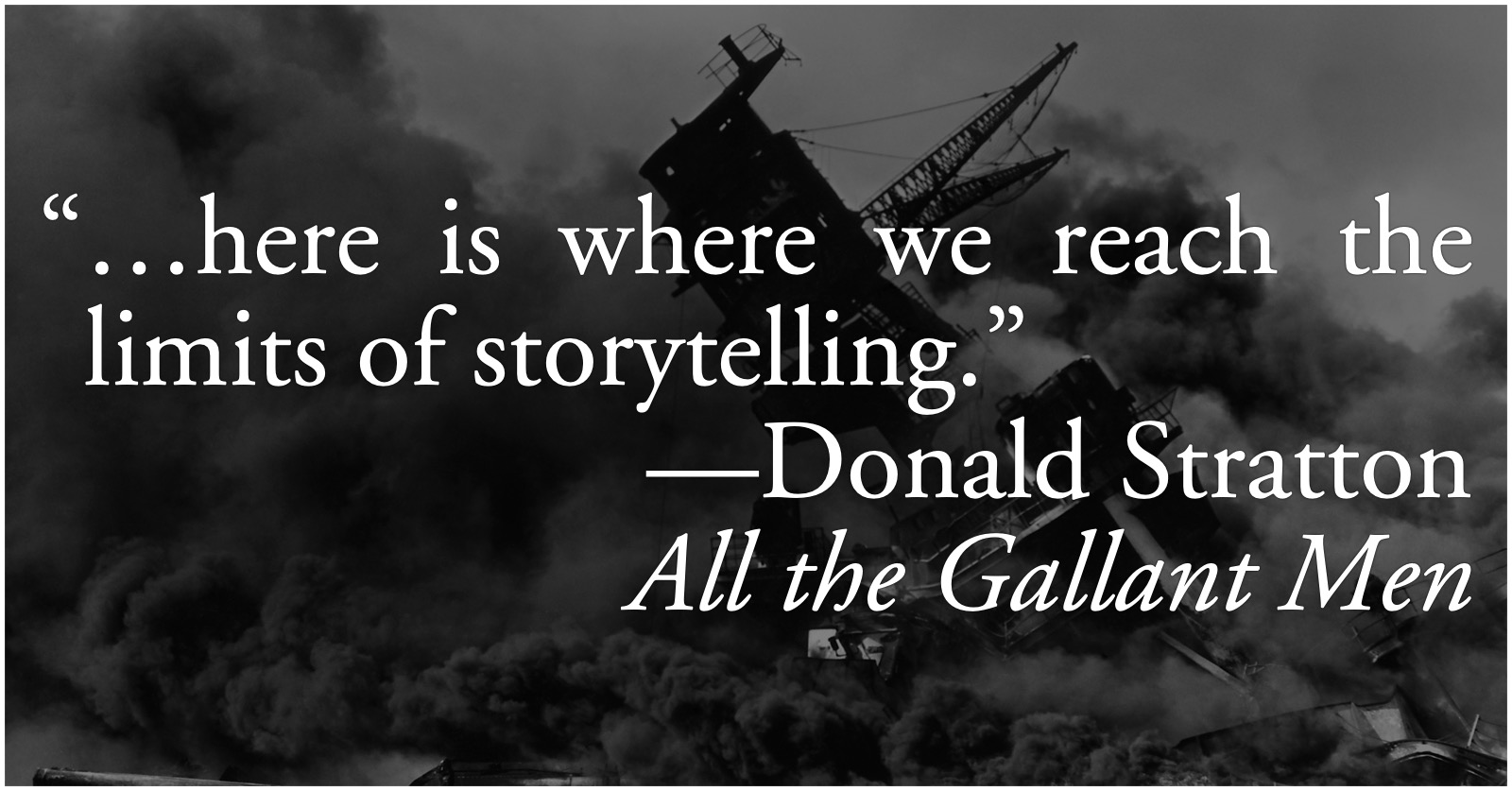
The book year for me began in earnest over Valentine’s Day travel in San Diego—and on the way to it. Driving through west Texas and El Paso I listened to Mike Rowe’s interview with Nikki Stratton about her grandfather, Donald Stratton, and the book he wrote with Ken Gire about being on the USS Arizona during the Japanese attack on Pearl Harbor.
I’ve long been aware of a Stratton on board the Arizona. While I’m pretty sure we’re not related it did of course interest me. So, when I happened to see Don Stratton’s All the Gallant Men a few hours later at Coas Books in Las Cruces, I couldn’t resist buying it.
To Donald Stratton, the attack on Pearl Harbor mirrored the September 11 attacks, and he lamented that the lessons we learned on December 7 are being forgotten. One of those lessons is a question: “Am I worth dying for?”
To paraphrase Kevin Smith, the Arizona wasn’t even supposed to be there that day. It had been involved in an accident and stayed in place for minor repairs. It accounted for “nearly half of all the Americans who died that day”.
We were so young, those of us who enlisted—eighteen, nineteen, twenty years old… If we were not quite men on December 6, by midmorning of the 7th we were.
It’s an incredible story. He covers not just the morning of December 7, but also his recuperation back home in mid-America and his return to the United States Navy to finish out the war.
Though I may have left Pearl Harbor on a stretcher, I had returned on a Destroyer. I had recovered my strength, as had my country.
While in San Diego I picked up a book at the big monthly University Heights Public Library sale that was to occupy my time on and off literally up to the end of the year. I began reading Giuseppe Ungaretti’s Il Dolore in March while traveling in and around Barcelona. I finished it this morning as I write this post, New Year’s Eve, 2025, making it my “last review of the year” according to Goodreads.
- Astro City: Tarnished Heroes, Local Villains—Wednesday, August 20th, 2025
-
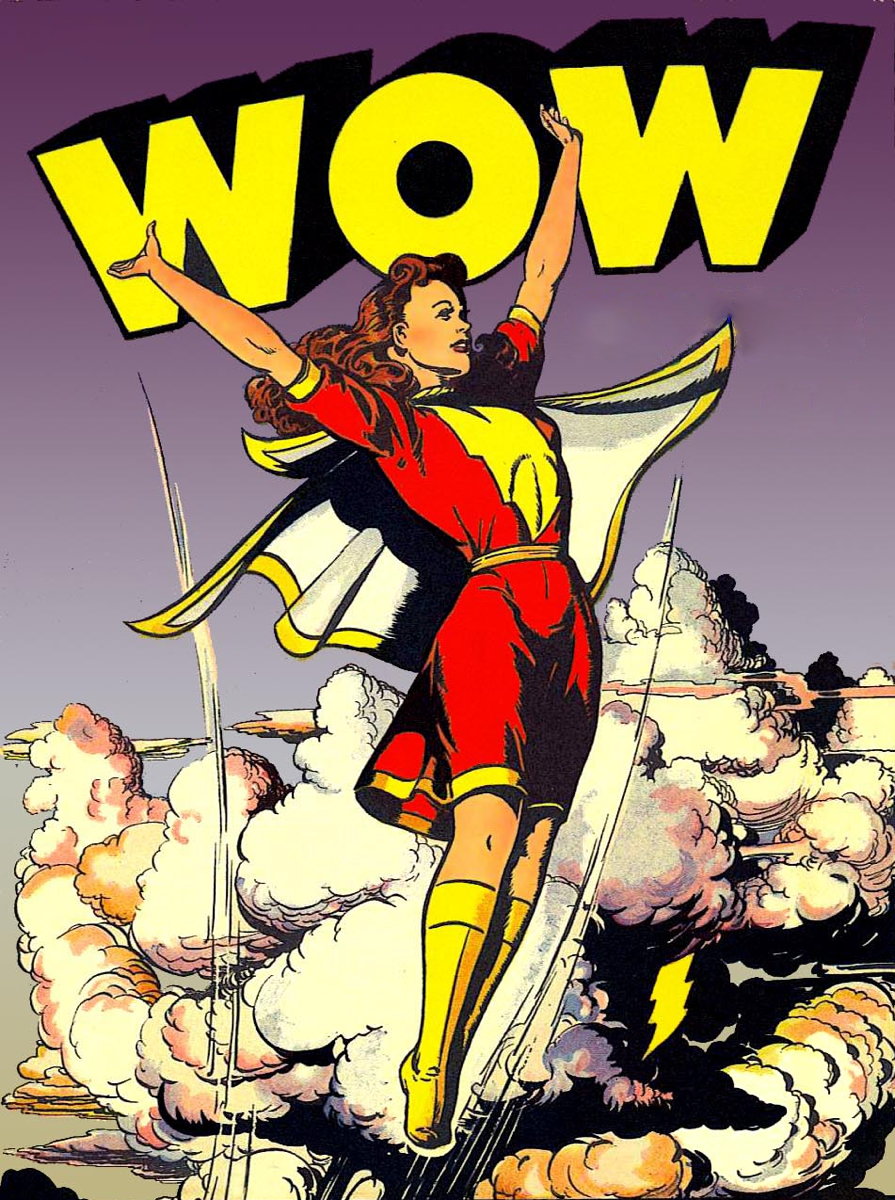
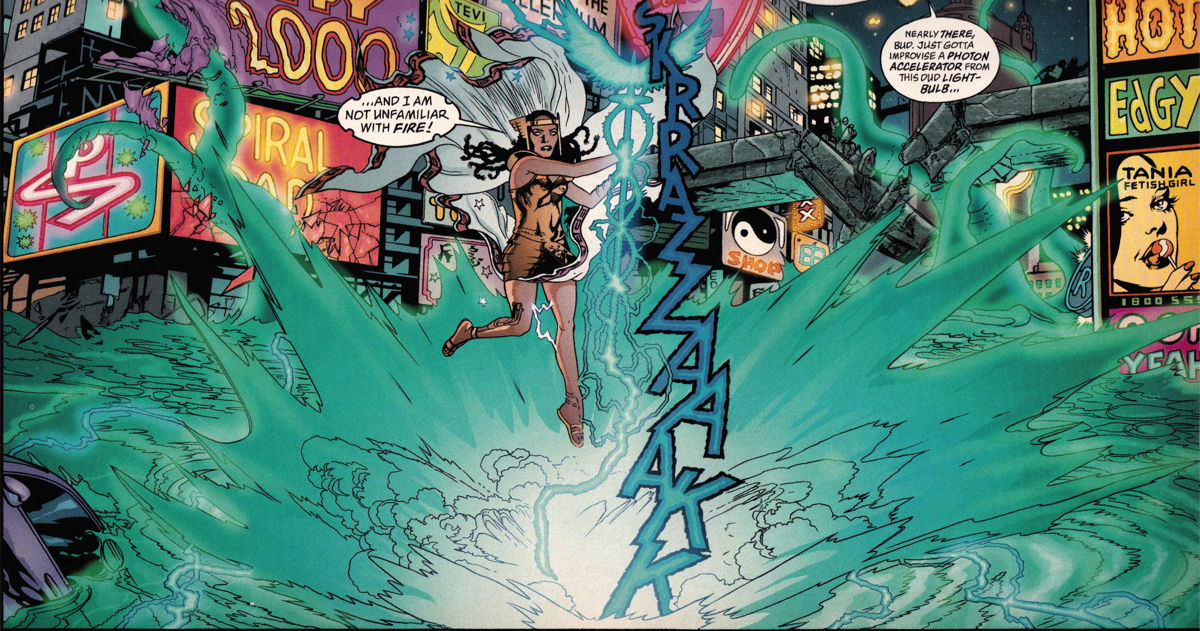
Mary Marvel demonstrates the joy of flight. This seems to be what Busiek was initially striving for, but gave up on.
Addressing the weird impossibilities in superheroes and superhero worlds deconstructively isn’t necessarily a bad idea, and some of the stories are in fact passably decent, with even better characterization than you normally get from deconstructive stories. Busiek’s a good writer. But the deconstructive stories he ended up writing were far easier than the reconstruction of the superhero that he set out to do. That failure is more disappointing than the stories are enjoyable.
Probably the worst and best example of this comes in Local Heroes, the fifth book in the series. The third book, Family Album, provided a brief respite of sorts. It took on a topic that superhero comics rarely do: family. On the other hand, it did the same for the family that the series had so far done to being a superhero or just living in a superhero world: it showed the insurmountable problems such a world creates for normal family life, foreshadowing the problems of justice in Local Heroes. In Busiek’s telling, even a golden-age world of superheroes is necessarily a world of existential loss.
The frame in Family Album followed a normal family moving to Astro City—and getting caught in the family dynamics of the gods themselves. The main story involved Jack-in-the-Box attempting to maintain a family life in a world not just of superheroes but of, again, time-spanning superheroics. It’s up-front about the fears of fatherhood, of what happens to your children when you’re gone, of how children embody multiple potentials. In a superhero world those infinite potentials are real, and they bring infinite pain.
The Junkman story in Family Album follows an old man who is unable to share his accomplishments: the Junkman had no family. In a normal world, this would be the story. In a superhero world, he creates a complicated scheme to ensure that someone will appreciate his life. A world of superheroes creates loss, and in a world of superheroes, loss creates more loss. The pebble rolls downhill and takes out a city.
Tarnished Angel is Jim Rockford meets Marvel. But unlike Rockford, Busiek’s protagonist really is a loser. He never amounts to anything, not even at the end. I’m sure that’s the point, and it was moderately enjoyable reading once and then again now as I’m going through my old comics. But even at its darkest, the explicit point of Astro City was the joy of it, like that old drawing of Mary Marvel flying into the sky with a heavenly smile. Not only does Tarnished Angel not have that joy, it doesn’t have anything to replace it with, either.
- Astro City: Hope to Hopeless in the Big City—Wednesday, July 30th, 2025
-
In his first Astro City collection, Life in the Big City, Kurt Busiek set himself a very noble goal:
The superhero has been dissected, analyzed and debunked, his irrationalities held up to the light… to show them for the unworkable Rube Goldberg machines they are… it’s almost become impossible to present a superhero who does what he does without being emotionally unstable, incapable of dealing with reality… We’ve been taking apart the superhero for ten years or more; it’s time to put it back together and wind it up, time to take it out on the road and floor it, see what it’ll do.
Having this goal in mind—unstated in the uncollected single issues—made the debut of Astro City a real breath of fresh air in superhero comics. I remember avidly searching out each issue and then each collection as Busiek moved from Superman to Batman to Marvel, each with a new world of wonderful stories combining the charm of the old-school with the art and storytelling of the new.
Unfortunately, Busiek found it very hard to transcend his era; his desire to “floor it” never exceeded deconstruction’s 55 mph limits. That makes even the best of these books not stand up well to re-readings. But what Busiek wanted to do was so necessary that it took me, at least, a long time after I stopped looking for the collections to remove them from my want list. I wanted to believe long after I lost faith.
Even the first collection, a take on Superman, amounts to mostly deconstruction rather than reconstruction. At best it’s deconstruction from a different angle. Few writers have really grokked Superman. Outside of Maggin! and Morrison• even those writers who don’t prefer a Moore-like destructor of worlds still don’t understand the genuine balanced goodness underlying Superman, his upbringing, and the Metropolis he inhabits.
On the surface, that Busiek isn’t up to the level of a Maggin! or Morrison is forgivable. But he needed at least to try to reach those stars in order to achieve his noble goals. Instead, rather than a Superman so powerful he cannot but fall to the temptations of power, Busiek’s Samaritan is so good he cannot possibly balance his life as a hero and reporter. Asa Martin works at a newspaper just as Clark Kent does. But Martin is not a reporter. He’s a fact checker, isolated in his private, locked office, never interacting in the newsroom as Kent so famously did. There is no Lois Lane, no Jimmy Olsen, no Steve Lombard for Asa Martin.
- My Year in Books: 2024—Wednesday, January 8th, 2025
-
The year started with an amazing collection of books from a trip to San Diego. I have so many books in my to-read pile that I don’t travel for book sales anymore, but if a book sale happens to be where I’m traveling… In San Diego I hit the La Playa Bookstore remodeling sale and the University Heights Library Sale. I also visited Verbatim Books, the Mission Hills Library Store, and Grace’s Book Nook. And of course I stopped at Coas in Las Cruces on the way out.
For a blackjack total of 21 books. Thongor in the City of Magicians, from Coas, kept me in reading material through New Mexico and Arizona. Post Captain, The John Wayne Code, Gracie: A Love Story, Lights Out, The Pope Benedict XVI Reader, Stella Fregelius, In Trump Time, Cyrano de Bergerac…
“This plus your regular class load should turn your brain to tapioca in less than a month.”
I’ll have more to say about tapioca when I get to 2024’s Year in Food.