


Refrigerator Revolution Revisited: Your 1933 Frigidaire
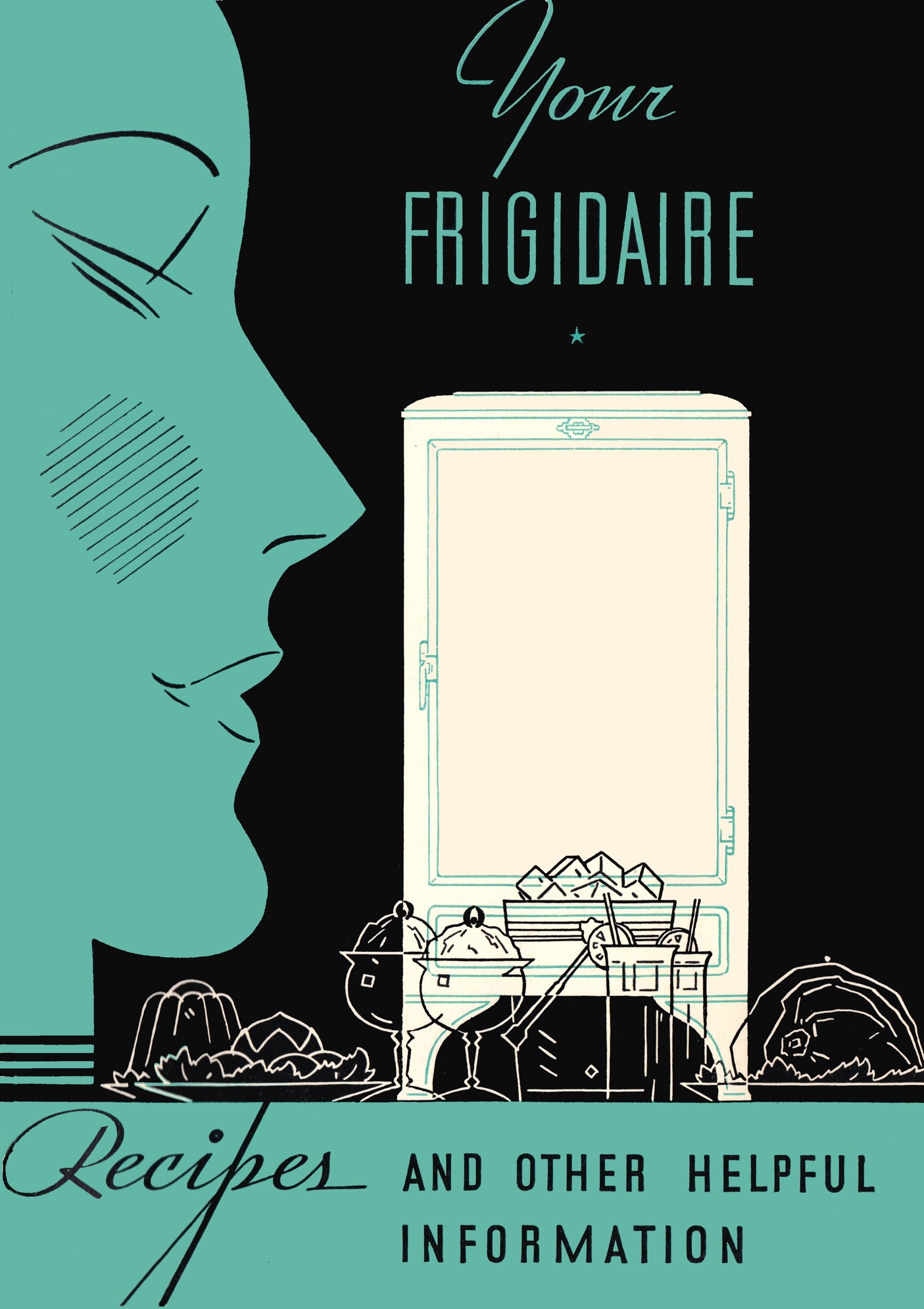
Available in print and as a free download (PDF File, 10.5 MB).
The very first refrigerator cookbook I covered in this series when I decided to start scanning and releasing them was the 1928 Frigidaire Recipes. That was only a year after the seminal General Electric book—and refrigerator—that started the home refrigeration revolution. Both were elegant hardcovers filled with elegant illustrations of the good life that comes from owning your own home refrigerator.
Both understood that what they were offering was not just another way to store food but a completely change in how food would be referred to and how we would interact with it. They recognized they were offering a completely change in lifestyle.
Revolution: Home Refrigeration
- Frigidaire, 1928
- Cold Cooking, 1942
- Cold Cookery, 1947
- Kitchen-Proved, 1937
- General Electric, 1927
- Refrigeration, 1926
- Frigidaire, 1933 ⬅︎
- Better Living
Your Frigidaire: Recipes and Other Helpful Information (PDF File, 10.5 MB) isn’t just from the same company as that 1928 book, it’s the same author. Verna L. Miller is listed as the director responsible for collecting and compiling the “facts which have accumulated during years of study and research by the Frigidaire Department of Home Economics.”
But 1933 must have felt like a lot longer than five years. Frigidaire was no longer the premier refrigerator maker that they had been in 1926. General Electric’s 1927 Monitor Top upended the market: refrigerators were no longer limited to those who had room for a giant compressor in the basement, which was where Frigidaire had had the lead.
Those five years also encompassed the end of the Roaring Twenties and the beginning of the Great Depression… and the first rumblings of a new world war. The year 1933 also saw the Reichstag fire, and the beginnings of the re-armament of Germany—and the crumbling of the League of Nations as both Germany and Japan walked out.
Yet for all that, there’s no specific mention in this book of thrift for the sake of weathering a depression. There’s not even mention of a depression. What we might consider depression recipes are accompanied by what we would definitely consider recipes of the rich. Soup whose only ingredient is broth and noodles are a single page turn from appetizers with caviar.
Potato Chips with Caviar
Select large size potato chips. Spread with chilled caviar which has been seasoned with lemon juice, adding a few rosettes of creamed cheese.
Potato chips might not then have been the ubiquitous low-class food they are today. In her 1931 Joy of Cooking Irma Rombauer used potato chips as cocktail snacks as well, presenting them in the same way, as individual servings.
But it’s hard not to see some of the changes as being the result of wanting to economize. Those were the “conditions which you, yourself” were encountering for many of Frigidaire’s customers and potential customers.
From the perspective of its interior design, this is not a very different book from the 1928 manual. It’s not a hardcover, which alone makes it less elegant. But the inside is very similar, filled with elegant subheadings, a well-chosen font for both the headings and the text, and beautifully-presented photographs.
They did play up elements that were ignored or merely subtexts in the previous book.
…you will find this book practical because it is based on real experience. All of the ideas and recipes have been worked out under the same conditions which you, yourself, will encounter in the use of your Frigidaire.
The closest they came to acknowledging the times is a “new” section on “Thrift in Marketing”. A new Frigidaire—probably marketed less to people who already had a refrigerator than to people who had no refrigerator yet—is described here as an economical purchase. You can save on meat by buying meats on sale and keeping them refrigerated for later use; you can save leftovers, and food parts not used in the initial meal, for use in subsequent meals.
You save on canned goods, by buying larger cans for a lower per-ounce cost and “the part which is not used at the first serving can be kept in your Frigidaire to be used later.”
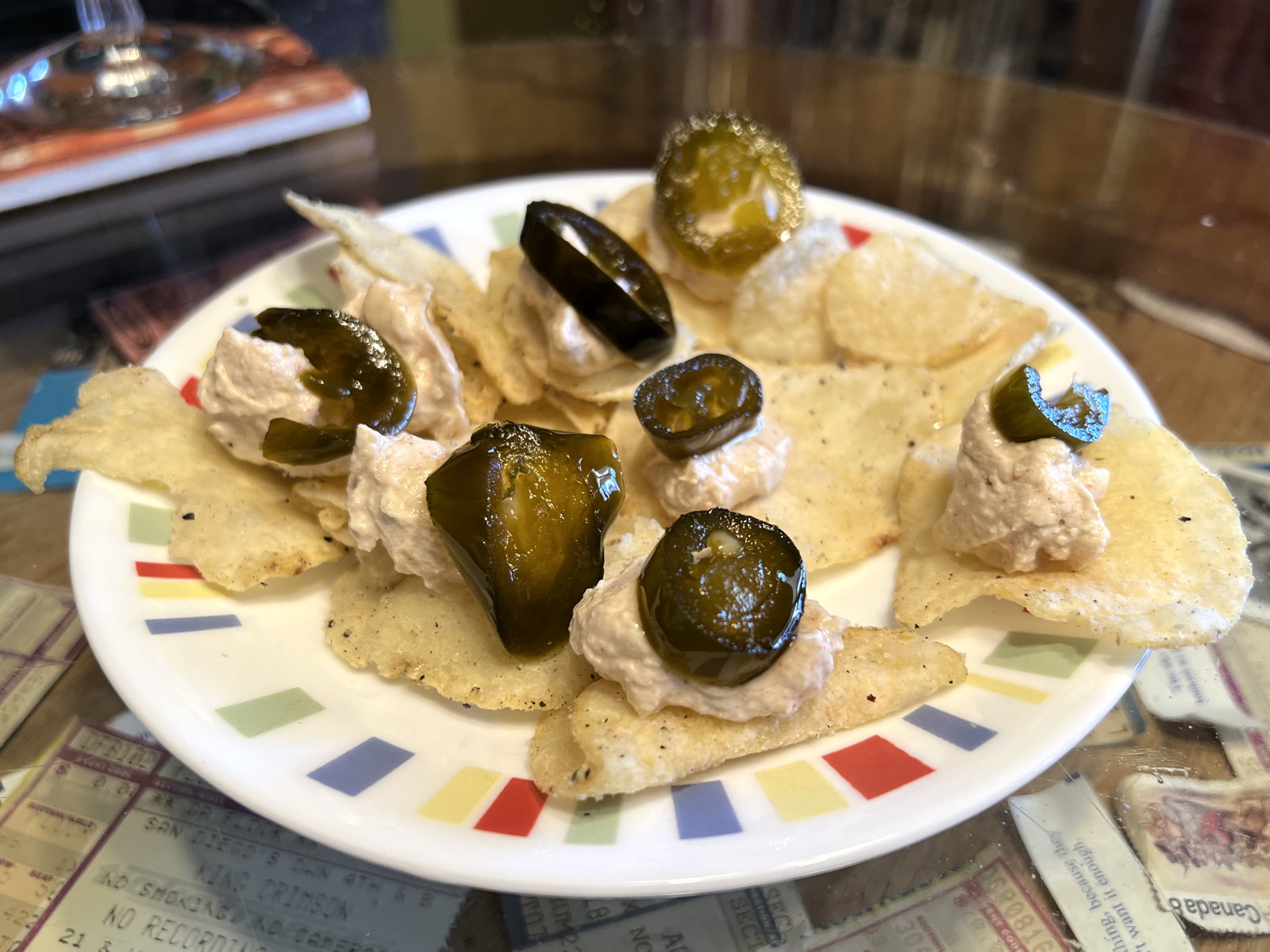
Potato chip cocktail snacks, from The Joy of Cooking.
Similar to canned goods, milk and cream also “often sell for less in the larger bottles… Quite a saving on cream can be made by making one purchase for the entire week.” You can buy produce in quantity, at a lower cost per serving than by buying it as needed.
You only have to go shopping once per week. The morning trip to the market is no longer necessary.
And all of the “odds and ends which would otherwise be wasted” can be saved in your refrigerator or freezer for “a large saving and a great contribution to better living.”
“You save money. You save time. You save all the left-overs.”
Your Frigidaire includes many kinds of recipes that the older Frigidaire Recipes didn’t. The older book suggested that the refrigerator would make your old recipes easier and better but had no section for entrees, no section for sandwiches, and while they had a section labeled “soup” all it contained was soup stock.
The soup section in Your Frigidaire begins with the aforementioned Noodle Soup:
NOODLE SOUP
- eight servings
- 1 egg
- Flour
- Chicken broth
To one egg add one-half egg shell of water. Beat slightly. Add flour enough to make a very stiff dough. Knead. Then roll as thinly as possible. Dust with flour. Cut with noodle cutter, or roll and cut into thin strips. Unroll strips and add to seasoned chicken broth. Boil rapidly for about 5 minutes.
Noodles may also be cooked in chicken stew and served in place of a vegetable.
The subtitle “eight servings” can only apply to the number of noodles created; they’re the only part of the dish limited by the ingredient list. Even that limit comes from the “1 egg”. Everything else builds off of that egg: you’ll use whatever flour you need to “make a very stiff dough” with it.
Eight servings requires at least a quart of broth, and even then it would only yield a half cup per person. This is either a very sparse soup, or a very small appetizer course.
It was, however, a very good chicken(ish) noodle soup. If I’d had some leftover chicken to add to it, it would have been phenomenal. It’s also the fastest I’ve gone from flour to homemade noodles to eating, ever. This soup is pretty much the nail in the coffin of my keeping dry noodles on hand.
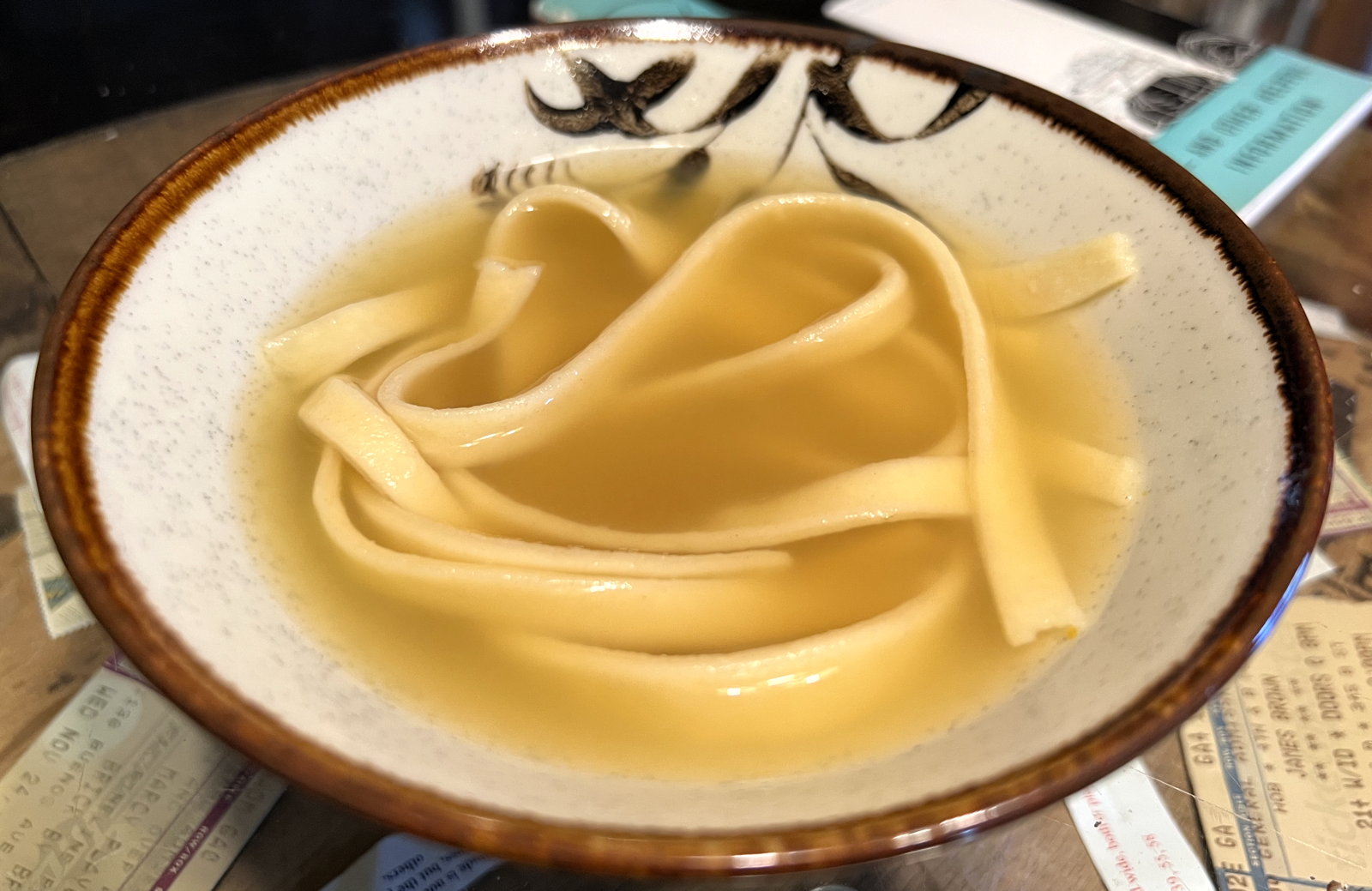
Noodle Soup
Servings: 4
Preparation Time: 30 minutes
Miss Verna L. Miller
Your Frigidaire: Recipes and Other Helpful Information (PDF File, 10.5 MB)
Ingredients
- 1 egg
- 1-½ tbsp water
- pinch salt
- 1 cup flour
- 1 quart chicken stock
Steps
- Beat egg with water.
- Add salt.
- Add enough flour to make a stiff dough.
- Knead for several minutes.
- Roll very thin.
- Sprinkle with flour.
- Cut with a pastry cutter or knife.
- Bring stock to a boil and boil noodles until done, about five minutes.
Another potential nod to thrift is the “refreshing” Orange and Lemon drink from the beverages section. At the stated six servings, it comes out to one orange per person and ⅓ lemon per person. It’s far from freshly-squeezed fruit juice, however: The rest of the drink is made up of ⅙ cup sugar and ⅔ cup water per person.
It is very tasty, with probably not that much more sugar than if it were freshly-squeezed. And it stretches those expensive oranges!
The old book didn’t have entrees. This contains several: a couple of scalloped dishes, Macaroni with Ham, Meat Loaf, Goulash, Chili… the ingredient list for the Chili is hamburger, onion, “1 large bottle catsup” and a can of red kidney beans.
I’m not likely to try ketchup chili, but an entree I did try was the Cheese Souffle: milk, grated cheese, and eggs in a simple roux. The eggs are separated so that the egg white can be beaten and folded in. It made a very good breakfast for a couple of days.
There are fruit drinks in both books, but the new book has more. The soup section in the old book didn’t have recipes for soup, but rather for making your own soup stock. This book also has that, but it has several recipes for things like bean soup, tomato soup, cream of celery soup, etc.
One interesting new ingredient is “coffee cream”. It appears to be, or be a form of, half-and-half, possibly sweetened. From their description of how long it lasts and what you have to do to whip it, it has more fat than milk, but less than cream. And it’s listed under the Thrift in Marketing section, implying that it provides a savings over cream.
Another new section in this book is a section for cookies. The old book only had one cookie recipe along with a couple of notes that your old cookie recipes would work even better by making only as many cookies as needed; you could keep the rest of the dough in the refrigerator and have just enough fresh cookies any time. And the time spent in the refrigerator made them better cookies!
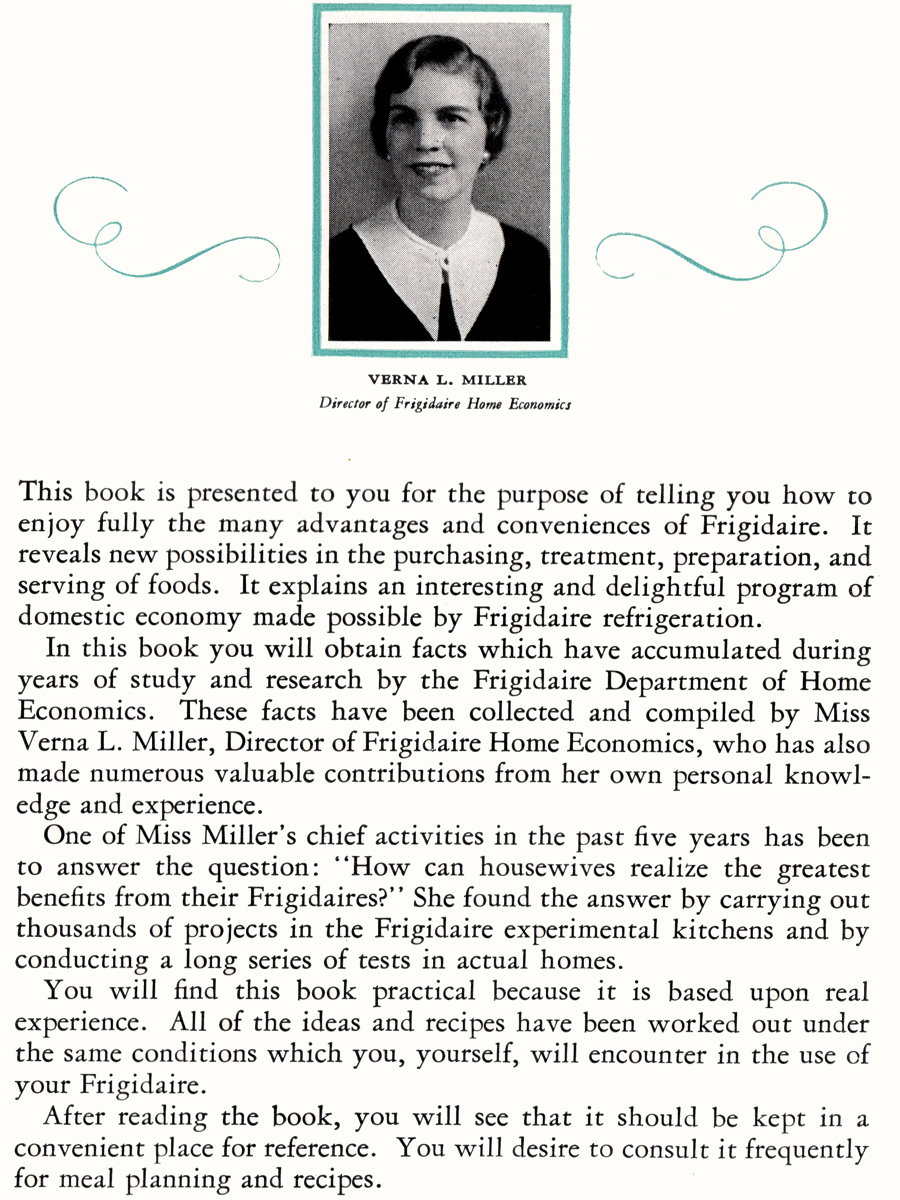
“A delightful program of domestic economy”.
Your Frigidaire, however, has at least four cookie recipes, including the original’s Frigidaire Cookies. I made the Old-Fashioned Soft Sugar Cookies. They’re very quick: at 475° they bake well within the “approximately ten minutes” window. I used an airbake sheet, which usually adds about ten to twenty percent to the baking time, and they were still done in nine minutes.
What makes these cookies “old-fashioned”? Possibly the use of sour cream. Now that you have a refrigerator, perhaps, your cream doesn’t go sour, so you need to specifically get sour cream if you need it.
The recipe calls for mixing the baking soda into the sour cream first. I suspect this is for testing that both the baking soda is still good and that the cream is sour. The word the recipe uses is “dissolve”, not “mix”, which leads me to believe that the sour cream they were referencing was different than what we call sour cream, something a little more like liquid that could thus be dissolved into.
It’s hard to tell, though. Terminology in cooking can be weirdly unrelated to normal English. The Sour Cream Dressing seems to provide further evidence for a more liquid cream, however. The instructions include “Cook in top of double boiler until mixture thickens”, but with modern sour cream the mixture is pretty thick to begin with.
I used strained Greek yogurt for the cookies, and it worked fine. I could see the baking soda reacting with the acid immediately. And the cookies were lovely.
For the Sour Cream Dressing, I used sour cream, as I expected that the added (and different) flavor would be cooked away in the cookies but not in the dressing. After trying the dressing with the Chinese Cabbage Salad, I’m pretty sure that was the right decision. This is an interesting salad, and one that, I think, bolsters the nagging suspicion that most of these recipes were meant to be added to, even if it’s just salt and pepper.
Rather than cooking until thickened, since it was already thick, I cooked to about 150°.
Besides salt and pepper, I tried this salad with chopped peanuts first, and second time with sliced and toasted almonds. The added crunch and the nuttiness much improved the salad’s texture.
Only two other recipes in the book called for sour cream dressing, the Chop Suey Salad and the Prune Salad. I didn’t try either. But I did use this dressing as the base for a potato salad, and that was even better than the cabbage salad.
Soufflé, Salad, Soup… and a Cookie
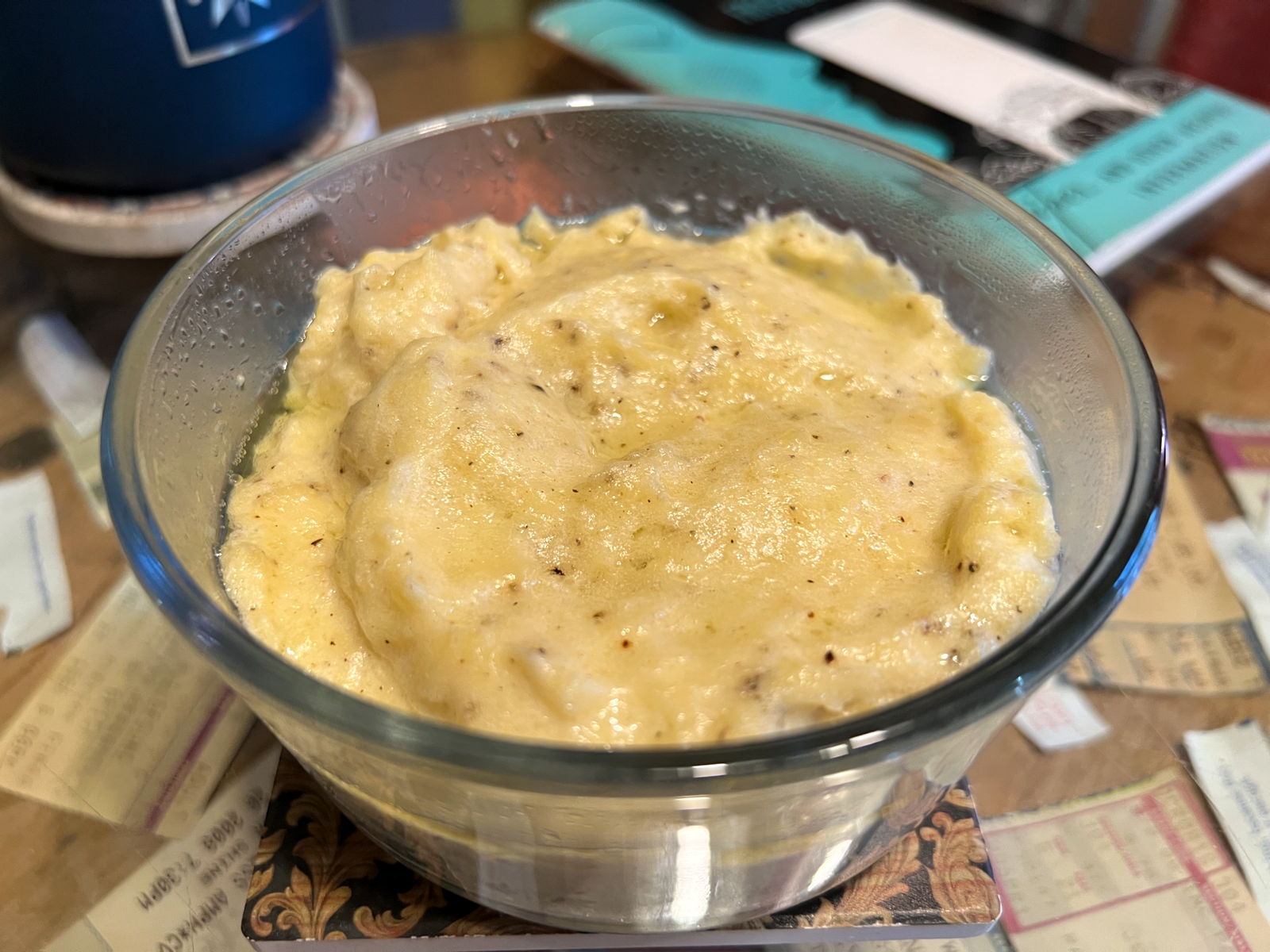
Parmesan didn’t give it a great color, but it tasted great.
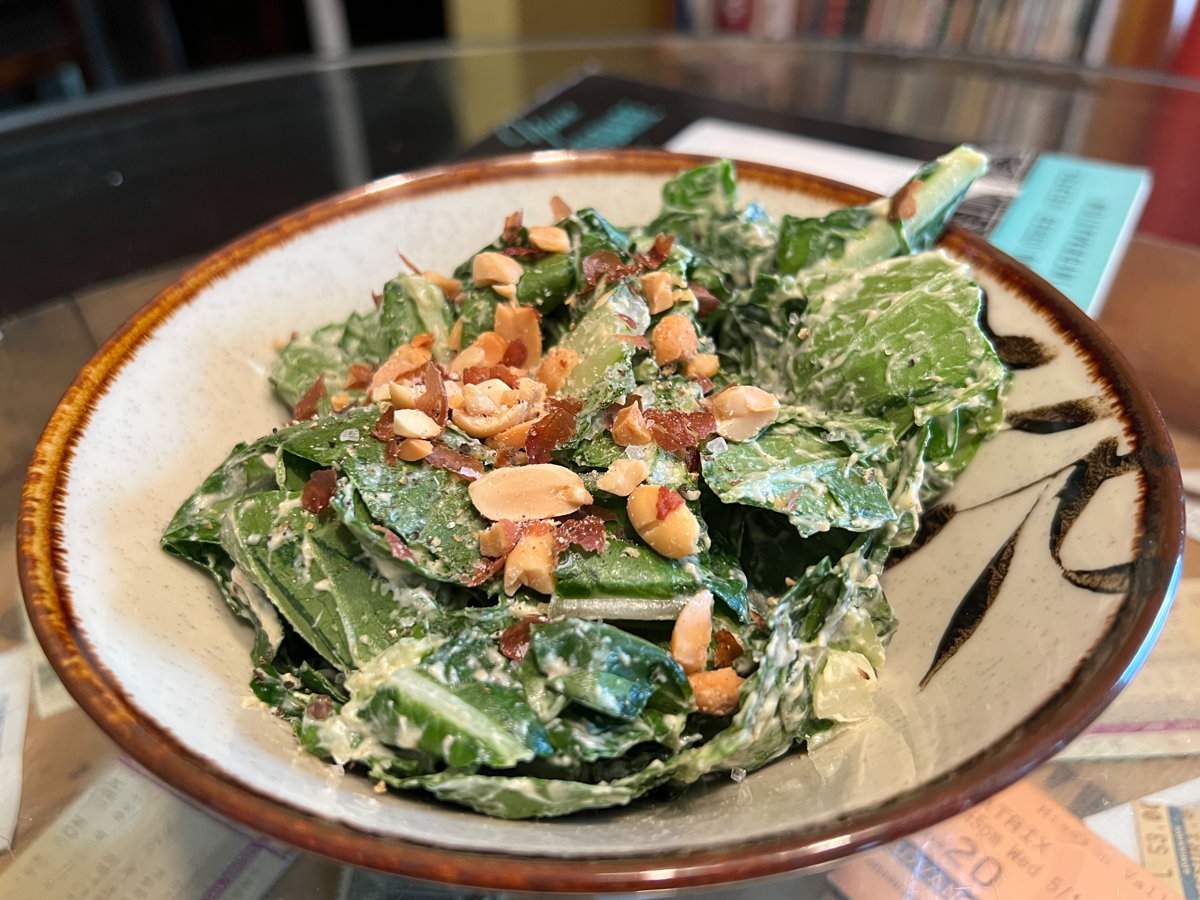
I assumed that “Chinese cabbage” meant bok choy.
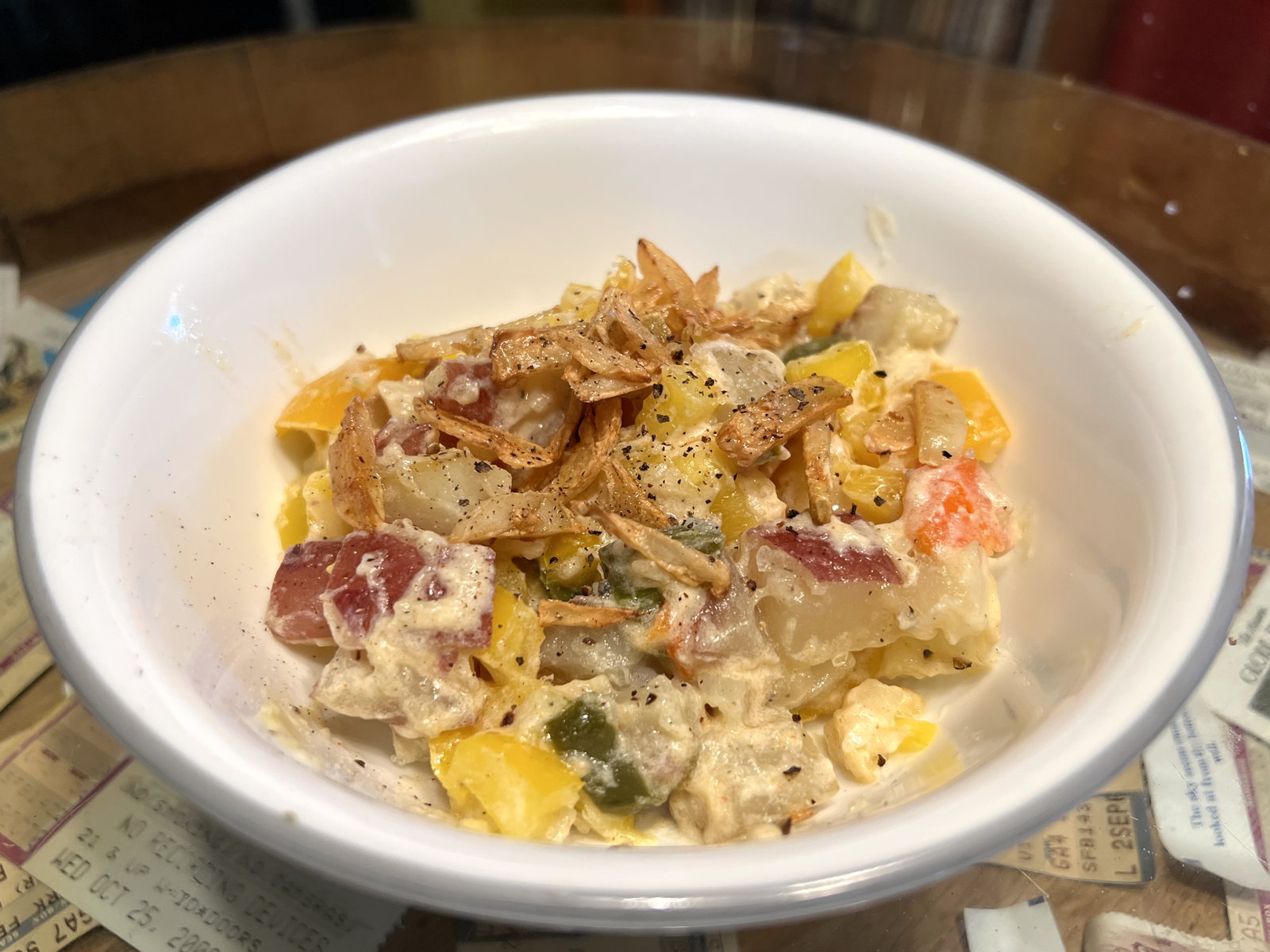
The Sour Cream Dressing went very well with roast potato salad.

Absolutely wonderful noodle soup—with nothing but noodle and stock!
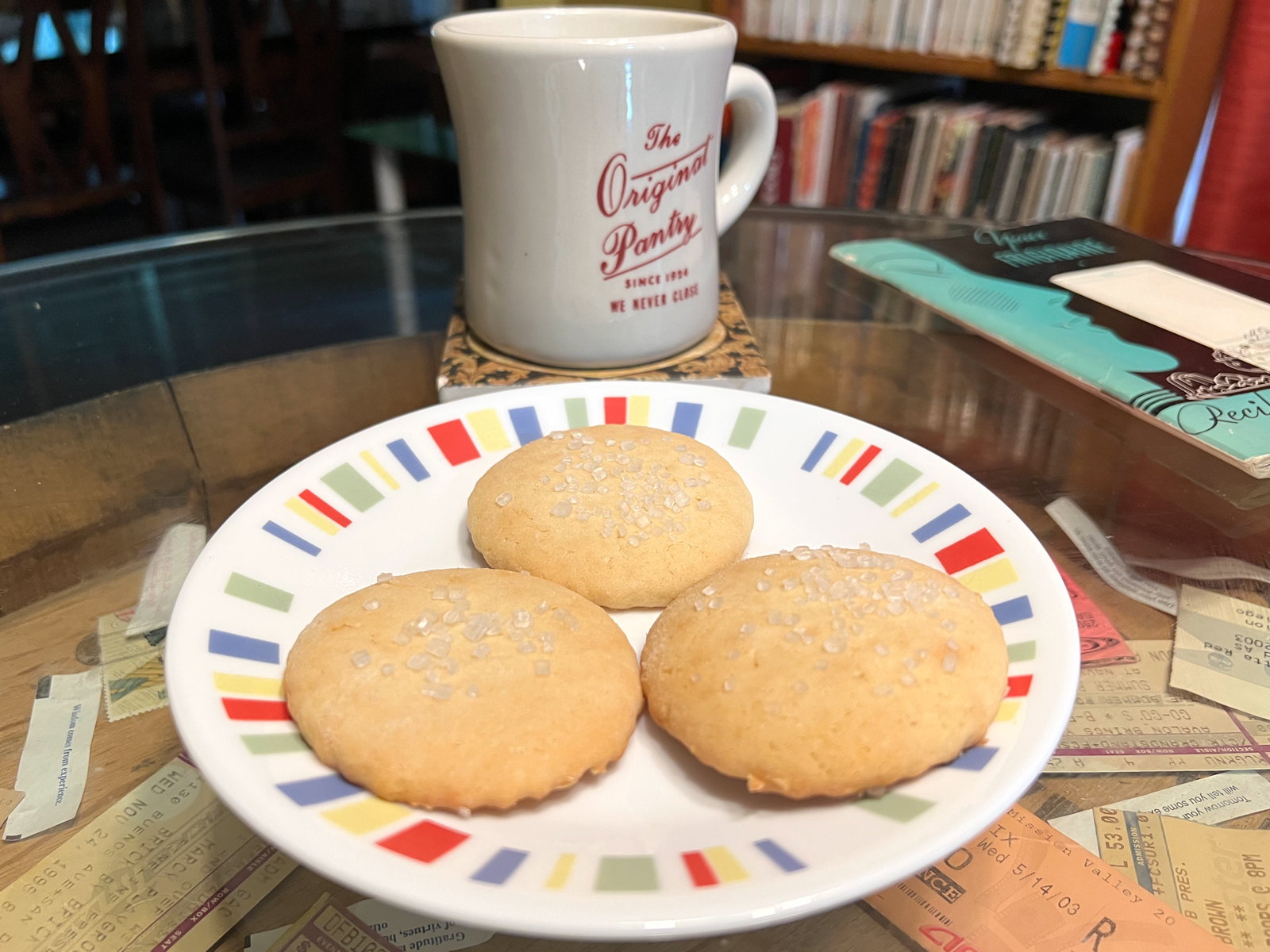
Sour cream sugar cookies topped with sugar.
Rice only made one appearance in the old book, for tuna salad. Nothing was glorified. This book’s Glorified Rice is an interesting dessert of rice and dates folded with whipped cream. The rice is cooked twice, first with water and then again with milk, so it’s unsurprising that this tastes a lot like rice pudding.
There’s no gelatin in the recipe, although there are many recipes which do call for gelatin, including a Lemon Sherbet and several Frozen Creams.
Frozen desserts in older recipes often mention pouring into a “refrigerator tray” or, as this book calls them in recipes such as the Glorified Rice, a “freezing tray”. I’d already established that this meant the ice cube trays that came with refrigerators, in an answer to my own question on Seasoned Advice. This book further confirms that, and in a way that indicates the use was already so obvious that it went without saying.
The trays are made of stainless metal. Ingredients of desserts and salads will not tarnish them.
Speaking of frozen desserts, one of the weirdest things in this book is that there are no recipes for ice cream. Instead, there are recipes for Frozen Creams. Between 1928 and 1933, Frigidaire for some reason decided to rename ice creams.
Some of the recipes are nearly exactly the same. The Vanilla Custard Cream in both books—in the Ice Creams section in 1928 and in the Frozen Creams section in 1933—differ only by calling for ½ cup of coffee cream in 1933 instead of the ⅓ cup of single cream in 1928.
The Vanilla Ice Cream of 1928 differs from the Vanilla Frozen Cream of 1933 in two similarly minor ways.
| Vanilla Ice Cream (1928) | Vanilla Frozen Cream (1933) |
|---|---|
| 1 Cup XX cream ⅔ Cup confectioners sugar 1½ Cups single cream 1½ Teaspoons vanilla Whip XX cream until light and fluffy. Add sugar and vanilla. Careful fold into this 1½ cups single cream. Pour into tray and allow to freeze to a mushy consistency. | 1 cup whipping cream ½ cup granulated sugar 1½ teaspoons vanilla 1½ cups coffee cream Whip cream until light and fluffy. Add sugar and vanilla. Carefully fold into this one and one-half cups coffee cream. Pour into tray and allow to freeze firm. |
There is more sugar in the earlier version but the recipe is otherwise the same. Another difference is not in the recipe but in the presentation. The 1928 book had general instructions for ice cream at the beginning of the section; this 1933 book does not. Each recipe describes specifically what to do while the dessert is freezing instead of referring you to “Method III” or “Method II”.
Elegant Mysteries of a Cool Year

Lovely drink. The maraschino cherry is a bit odd, given that it falls to the bottom.
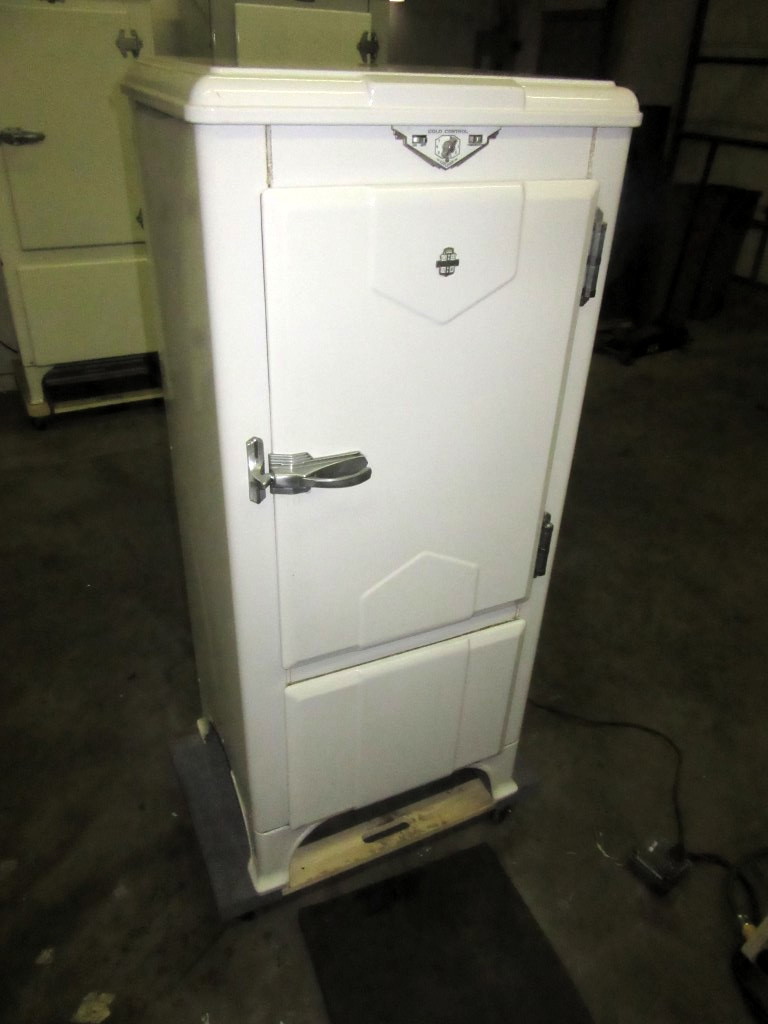
A 1933 Frigidaire about to be restored.
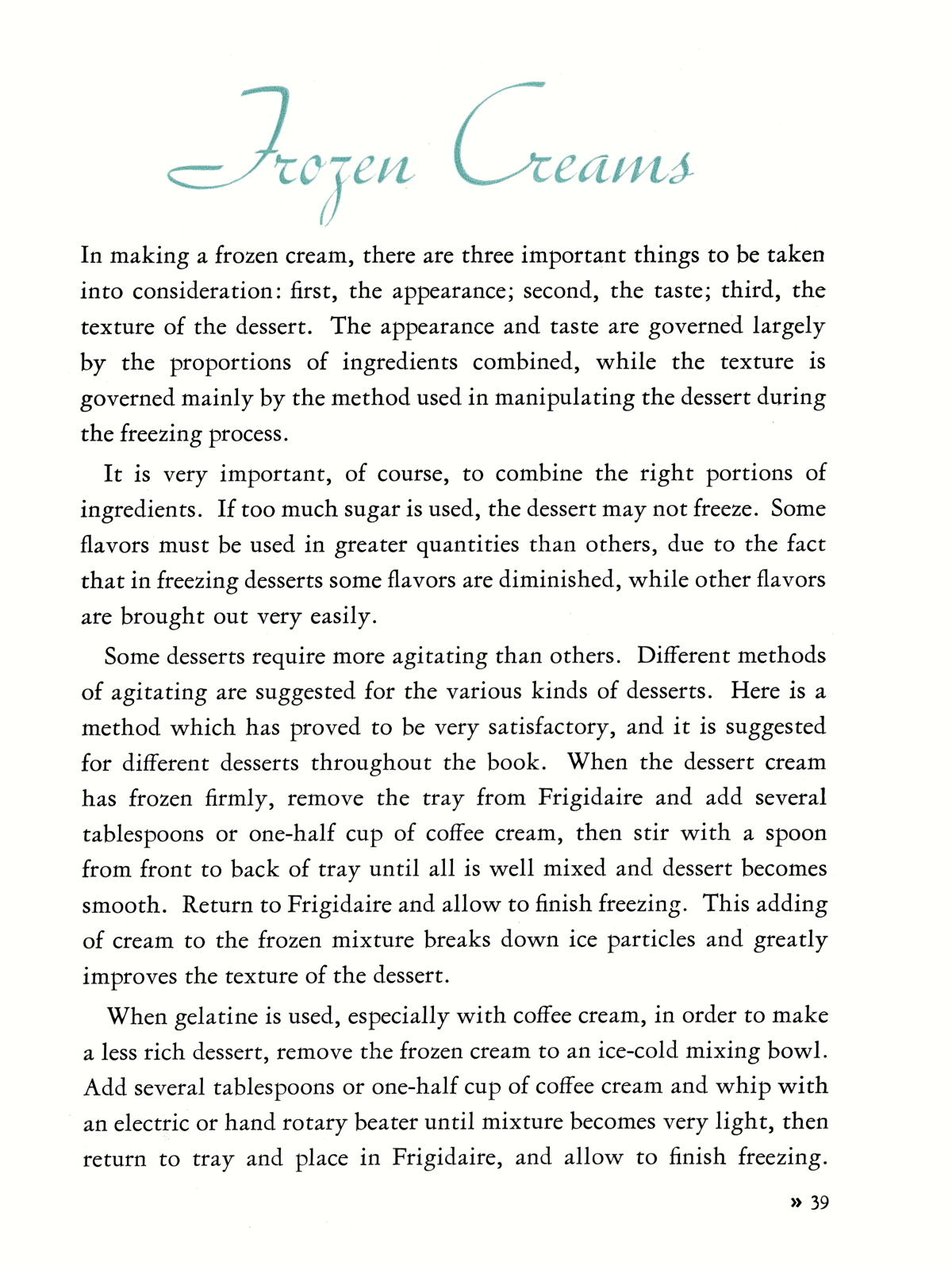
Why rename ice cream frozen cream?

Quite good, though it needs to be thawed first if you go beyond the “allow to freeze lightly” of the instructions.
That’s not the biggest change, however. Every single one of what was or what would have been a homemade “ice cream” in the old book is retitled “frozen cream” in this book. It’s especially weird in that some of the recipes outside this section provide “Ideas for using Commercial Ice Cream”. The Frigidaire Pie calls for “1 pint ice cream”, for example.
There is technically a suggestion that your homemade “Frozen Cream” will work, too, but “frozen cream” is hidden behind a pronoun: “…and the suggestions apply equally well to that which you make yourself.”
Presumably, they knew it was obvious that frozen cream and ice cream were the same. So why the attempted name change? Were they trying to avoid the mention of ice? To make “ice” cream no longer an “iced” dessert but a refrigerated one? They do have a fruit ice recipe or two, but these are watery desserts that are frozen to literal ice.

In Irish Mashed Potato Pie for Π Day I theorized that the adjective “Irish” was used to distinguish white potatoes from sweet potatoes. This book’s use of the term is what led me to suspect that. The list of ideas for leftover vegetables includes one section for “Potatoes, Sweet”. And one for “Potatoes, Irish”.
Another interesting aspect of the book is that only one recipe contains alcohol: a fairly standard egg-nog that is improved by using the refrigerator to “Have eggs and milk very cold”. It includes “wine or brandy” in the ingredient list. As was common during prohibition, this recipe ends with the statement “This recipe is very good for invalids.”
Alcohol prohibition was repealed December 5, 1933 with Ohio, Pennsylvania, and Utah providing the necessary thirty-six states for the Twenty-First Amendment. Repeal officially went into effect ten days later.
It was pretty obvious well before December that prohibition would end. My home state of Michigan was the first to pass the amendment on April 10, 1933. Other states rapidly followed. Further, 3.2 beer and wine had already been legalized on April 7 with the March 22 signing of the Cullen-Harrison Act.
Of course, even states that passed the amendment didn’t necessarily end prohibition in their state. Utah wouldn’t start selling alcohol again until 1935.
It’s very possible that this edition of the book was printed in December, 1933, judging from the “12-33” in the code in the back of the book. This would mean, of course, that it had been prepared earlier than that. This book might, then, have been prepared just before prohibition ended, providing a bookend to cookbooks feeling it necessary to acknowledge the illegality of alcohol except “for invalids”!
I’ve made this book available as a free download (PDF File, 10.5 MB) and in print on Lulu.com. If you enjoy early refrigerator cookbooks, this is a worthy candidate for your collection. I especially recommend the Cheese Souffle and the Noodle Soup.
This is probably the last of my Refrigerator Revolution posts. I’ll be continuing the theme, slightly, in a series on alternative milk products. Since they were originally designed to preserve milk at room temperature they needed to find new purpose to survive in a refrigerated world.
“Electric light,” wrote George Rutler in The Stories of Hymns•, “has obscured a sense of the toil needed to erase darkness.” Modern refrigeration, starting in 1927, and reliably electricity since then, has obscured the toil needed to ensure the safety of our meals, the variety of our ingredients, and the availability of once rare frozen delights. I hope you enjoyed this journey through the initial years of the refrigerator revolution.
If you want to collect them all, here are the early refrigerator facsimile reprints I’ve done:
| Electric Refrigerator Menus & Recipes | General Electric | 1927 | Download (PDF File, 22.3 MB) | |
| Frigidaire Recipes | Frigidaire | 1928 | Download (PDF File, 15.5 MB) | |
| Your Frigidaire | Frigidaire | 1933 | Download (PDF File, 10.5 MB) | |
| The Westinghouse Kitchen-Proved Refrigerator Book | Westinghouse | 1937 | Download (PDF File, 11.6 MB) |
Of course, I have many more facsimile reprints and cookbooks featuring other early food topics. Enjoy!
In response to Revolution: Home Refrigeration: Nasty, brutish, and short. Unreliable power is unreliable civilization. When advocates of unreliable energy say that Americans must learn to do without, they rarely say what we’re supposed to do without.
books
- Your Frigidaire: Recipes and Other Helpful Information: Miss Verna L. Miller at Lulu storefront (paperback)
- A facsimile reprint of the manual and recipe book for Frigidaire’s 1933 refrigerator.
- Your Frigidaire: Recipes and Other Helpful Information (PDF File, 10.5 MB)
- The 1933 manual for Standard Series Frigidaire refrigerators, by Verna L. Miller (Director of Frigidaire Home Economics) and the Frigidaire Corporation of Dayton, Ohio.
Other Books
- Cookbooks on Lulu and Amazon
- I have several books and reproductions available on Lulu, and a few books available on Amazon. On Lulu especially, it helps to buy more than one book at a time to reduce shipping costs per book.
- Review: Joy of Cooking 1931 Facsimile Edition: Jerry Stratton at Jerry@Goodreads
- This self-published first edition of Irma Rombauer’s Joy of Cooking is very similar to the “professionally” published later version, just smaller. It’s difficult to overstate just how much this book grew over the fifteen years between 1931 and 1946.
- The Stories of Hymns•: Father George William Rutler (paperback)
- “The History Behind 100 of Christianity’s Greatest Hymns… The text and composition of each hymn is included, as well as inspiring accounts of their authors and composers… and notes on the significant contributions each one made to theology and music.”
recipes
- Garlic Dips and Sauces for Potatoes
- Today is National Potato Day. Why not have some potato chips or hash browns, and top them with one or both of these easy-to-make dips/sauces? They’re great on chips, on a baked potato, or in a potato salad—or with just about any vegetable or thick stew.
- Irish mashed potato pie for Π Day and Saint Patrick’s Day
- In this sestercentennial year, here’s a great triple-celebration pie. It’s from about 1876 and it can fill in for both Pi Day and St. Patrick’s Day!
Refrigerator Evolution
- Electric Refrigerator Recipes and Menus: Miss Alice Bradley at Lulu storefront (paperback)
- A facsimile reprint of the manual and recipe book for General Electric’s groundbreaking 1927 refrigerator.
- Electric Refrigerator Recipes and Menus (PDF File, 22.3 MB)
- A 1927 guide to using a home refrigerator/freezer “Specially Prepared for the General Electric Refrigerator” by Miss Alice Bradley, Principal of Miss Farmer’s School of Cookery.
- Frigidaire Recipes: Miss Verna L. Miller at Lulu storefront (paperback)
- A slightly larger reprint of the 1928 Frigidaire Recipes cookbook and refrigerator manual. This is a wonderful resource for recipes from the twenties and for elegant recipes in general.
- Frigidaire Recipes (PDF File, 15.5 MB)
- A 1928 manual and cookbook for the Frigidaire home refrigerator/freezer.
- Refrigerator Revolution Reprinted: 1928 Frigidaire
- If you’d like to have a printed copy of the 1928 Frigidaire Recipes, here’s how you can get one. Also, a lot of new recipes tried.
- Refrigerator Revolution Revisited: 1927 Electric Refrigerator Menus & Recipes
- The very first modern refrigerator/freezer came with a very revelatory cookbook that treated customers nearly the same way computer manuals would exactly fifty years later: as partners in a revolutionary new means of creativity.
- Refrigerator Revolution Revisited: 1937 Kitchen-Proved
- Refrigerators started to take off during Prohibition, and became ubiquitous following World War II. This Westinghouse refrigerator manual and cookbook gives us a glimpse at home refrigerator/freezers in the Great Depression.
- Refrigerator Revolution Revisited: Your 1933 Frigidaire
- Frigidaire, five years after losing their dominance to General Electric, and four years into the Great Depression. Elegance and thrift: they still can’t bring themselves to say why economization is necessary “under the same conditions which you, yourself, will encounter”.
- The Westinghouse Kitchen-Proved Refrigerator Book at Lulu storefront (paperback)
- Originally published by the Westinghouse Electric & Manufacturing Company of Mansfield, Ohio, ca. 1937. “This is your book and we hope that it will help you to enjoy using your Westinghouse Refrigerator.”
- The Westinghouse Kitchen-Proved Refrigerator Book (PDF File, 11.6 MB)
- A ca. 1937-38 Westinghouse refrigerator operating instructions, kitchen guide, and recipe book.
refrigerators
- 1933 Frigidaire antique refrigerator: David Allen
- “A mutual friend has commissioned me to repair his ‘time capsule’ like-new 1933 Frigidaire. Hope I can do this without scratching it!”
- What is a refrigerator tray in older recipes?: Jerry Stratton at StackExchange
- “For freezing ice cream or other confections in a refrigerator’s freezer area, a refrigerator tray was a rectangular, shallow, open container. The ice cube tray (often provided with the refrigerator) began, around the mid-to-late thirties, to be fitted with a removable divider so that it doubled as the refrigerator tray.”
- The World of Refrigerators in 1926
- It all changed in 1927. So what did home refrigerators look like before General Electric’s 1927 monitor-top model?
More Great Depression
- My Year in Food: 2025
- My year in food extended from 1776 to 2026, from San Diego to Barcelona, and from Texas to Michigan. I also made several vintage books available for you to download!
- Should we be pessimistic about good governance going into 2016?
- As we head into the final year of President Obama’s presidency, and a new election year, it may help to look into the past for guidance.
More Refrigerator Evolution
- Refrigerator Revolution Revisited: 1928 Frigidaire
- The 1928 manual and cookbook, Frigidaire Recipes, assumes a lot about then-modern society that could not have been assumed a few decades earlier.
- Refrigerator Revolution Revisited: 1942 Cold Cooking
- Iceless refrigeration had come a long way in the fourteen years since Frigidaire Recipes. And so had gelatin!
- Refrigerator Revolution Revisited: 1947 Cold Cookery
- The 1947 Norge Cold Cookery and Recipe Digest reflects not just increased access to electricity but also the end of a second world war.
- Refrigerator Revolution Revisited: 1937 Kitchen-Proved
- Refrigerators started to take off during Prohibition, and became ubiquitous following World War II. This Westinghouse refrigerator manual and cookbook gives us a glimpse at home refrigerator/freezers in the Great Depression.
- Refrigerator Revolution Revisited: 1927 Electric Refrigerator Menus & Recipes
- The very first modern refrigerator/freezer came with a very revelatory cookbook that treated customers nearly the same way computer manuals would exactly fifty years later: as partners in a revolutionary new means of creativity.
- Two more pages with the topic Refrigerator Evolution, and other related pages