


Google is wasting your ad money
Google has come a long way from when I wrote my last post about Google and ads back in 2007. At that time Google had only recently acquired YouTube. Nearly twenty years on, I now watch a lot of YouTube videos. Three days a week I spend an hour and a half on the treadmill, watching nothing but videos on an Apple TV. I start with my YouTube watchlist and only move on to what I’ve recorded on my DVR after my watchlist is empty. Given all of the wonderful vintage cooking, history, and science shows on YouTube, this rarely happens.
I’ve been doing this now for over half a decade, which means that Google has massive amounts of information about what videos I watch, how I watch them, what ads I watch, what ads I skip, and when I skip them.
And yet they still can’t tell what I might be interested in, whether to buy or to learn more about. At best, they seem to be completely ignoring the very obvious data that they have on me. But more and more it seems as if they are deliberately showing me ads that they know I’m not going to watch—and that they know are going to convince me not to watch any subsequent ads in that ad block, too.
They know what videos I watch. They know I watch physics videos, space videos, vintage cooking videos, Apple videos, old movie videos, the making of movies, roleplaying games, unique firearms and medieval weapons, Italian news, history, music, vintage computers, and various combinations of the above.
You could probably sweep my very limited demographic by starting a channel focused on the history, food, and culture of the American west as depicted in spaghetti westerns. Especially if you made it on an iPhone and also talked about fiddly tech bits and illustrated your points with an old west roleplaying game managed by a TRS-80 Model I.
They have never seen me watch a video about dogs, cats, children, cleaning up messes, incontinence (it only now occurs to me to wonder if those two are related), or new cars.
They do, however, know that I often watch low-information-density videos—mainly videos by people who talk slowly—at +25% or even +50%. And yet they still show me ads that literally provide no information at all for the first five to ten seconds—or sometimes ever.
I have no idea what those ads are selling: I skip them when given the opportunity, and, when not given the opportunity, I turn my attention elsewhere.
They know, at this point, that after I watch an ad I’m much less likely to watch the same ad again if given the choice. I might watch an exceptional ad a second time or even a third time, and the better the ad, the more often I’ll pay attention to it. But there are no ads today so good that I’m going to keep watching them like I used to watch classic ads and music videos. Music videos were themselves ads for the albums and bands they represented, of course, and very successful ones, at least on me.
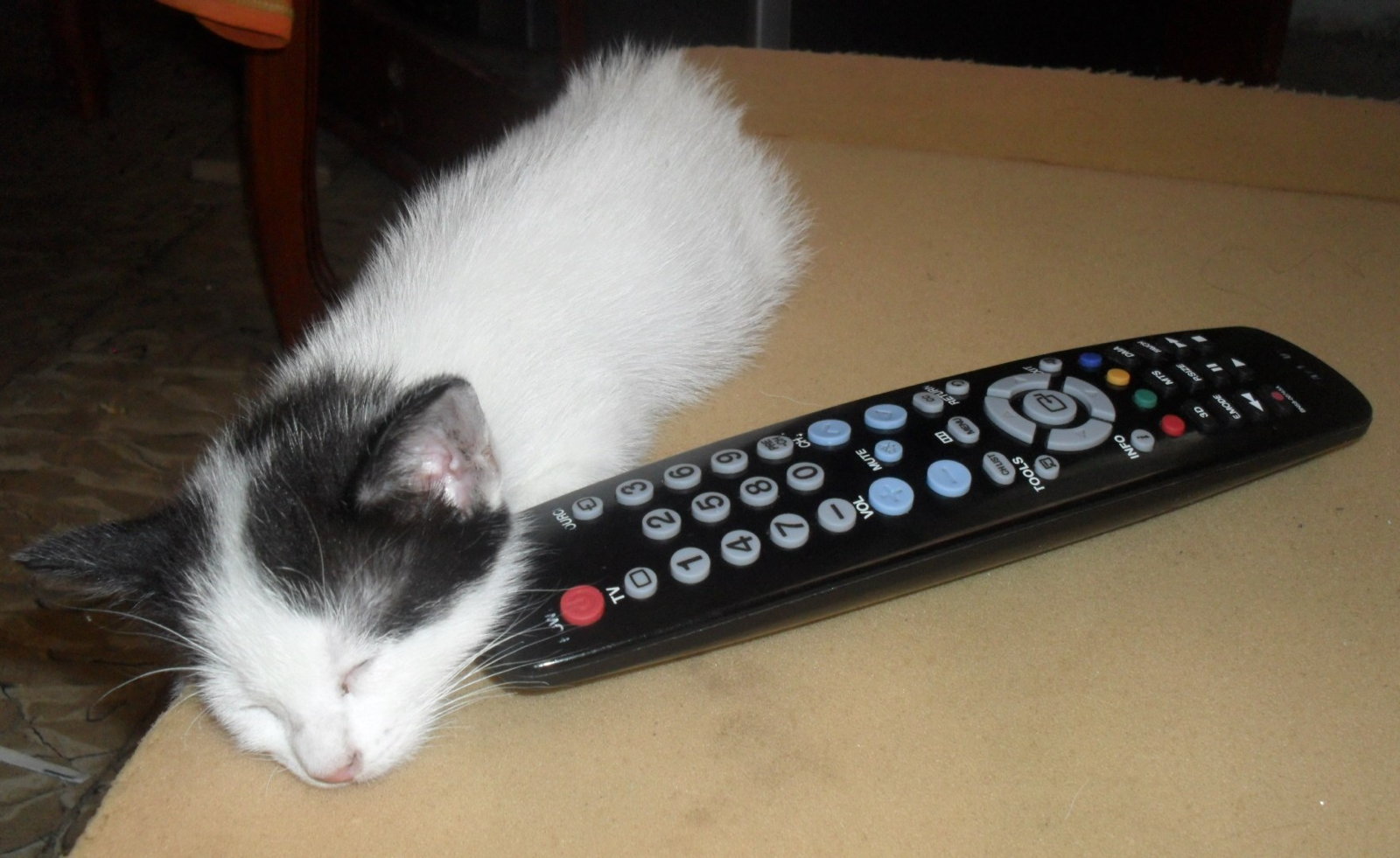
After you’re finished admiring the cat, notice the MUTE button front and center on this remote. (EEIM, CC-BY-SA 3.0)

They also do occasional surveys instead of ads, asking me what products or brands or companies I’ve seen ads for recently. I always answer these, and truthfully. Presumably, some of the ones I haven’t seen were presented to me, so they know that I haven’t seen them.
I actually wish there were still ads so compelling that I’d want to watch them over and over, but there are not. Or at least, if there are, they aren’t being shown to me. But Google certainly knows—or has the data to know—that there is no ad over the last several years that I have not, when given the opportunity, skipped over if I’ve already seen it at most three times.
I also don’t understand how they think that upping the ad volume is an effective tactic. Back in the days of broadcast television this might have made sense. Not only did the viewer not have much in the way of other options, they might very well go into another room for the few minutes of advertising.
But this is not the era of broadcast television. If the volume is louder than the video I just watched—or if the voices are annoying—I mute the television. This is the only information they don’t apparently get: what ads I mute and when I mute them. As far as I can tell this information isn’t passed through HDMI to the source. YouTube also doesn’t get when I both mute and start fiddling with my phone until the ads are over. It’s possible, of course, that if you’re using a Google phone they even get that information.
There is one piece of information they do get. There is one time when they can be absolutely certain I am looking at the screen. If an advertisement comes on during that moment, they literally tell me to stop looking at the screen. It’s as if they don’t want viewers to watch ads. I have several folders that I save videos in for future reference if I think I might want to watch a video again later. So I have a folder for music, and for history, and for food, and so forth. If I have the menu screen for marking which folders the current video should be in open, when an ad comes on, they make the menu go away. The menu isn’t hiding the ad. The ad is playing in full right next to it. Google literally knows that I am looking at the screen, and as soon as an ad goes on, they’re like, no, no, this is an ad. You should not be looking at the screen. Go away and come back later.
While Google doesn’t know when I mute or adjust the volume, they do know that I have other options when I’m in front of my TV, whether on the treadmill or off. They still delight in providing ads at a much higher volume level than the video I just watched. If this were the fifties it would be annoying. But this is not the fifties. We have this thing called a “remote”. We have an infinity of other options for how to spend our time on our tiny portable computers.
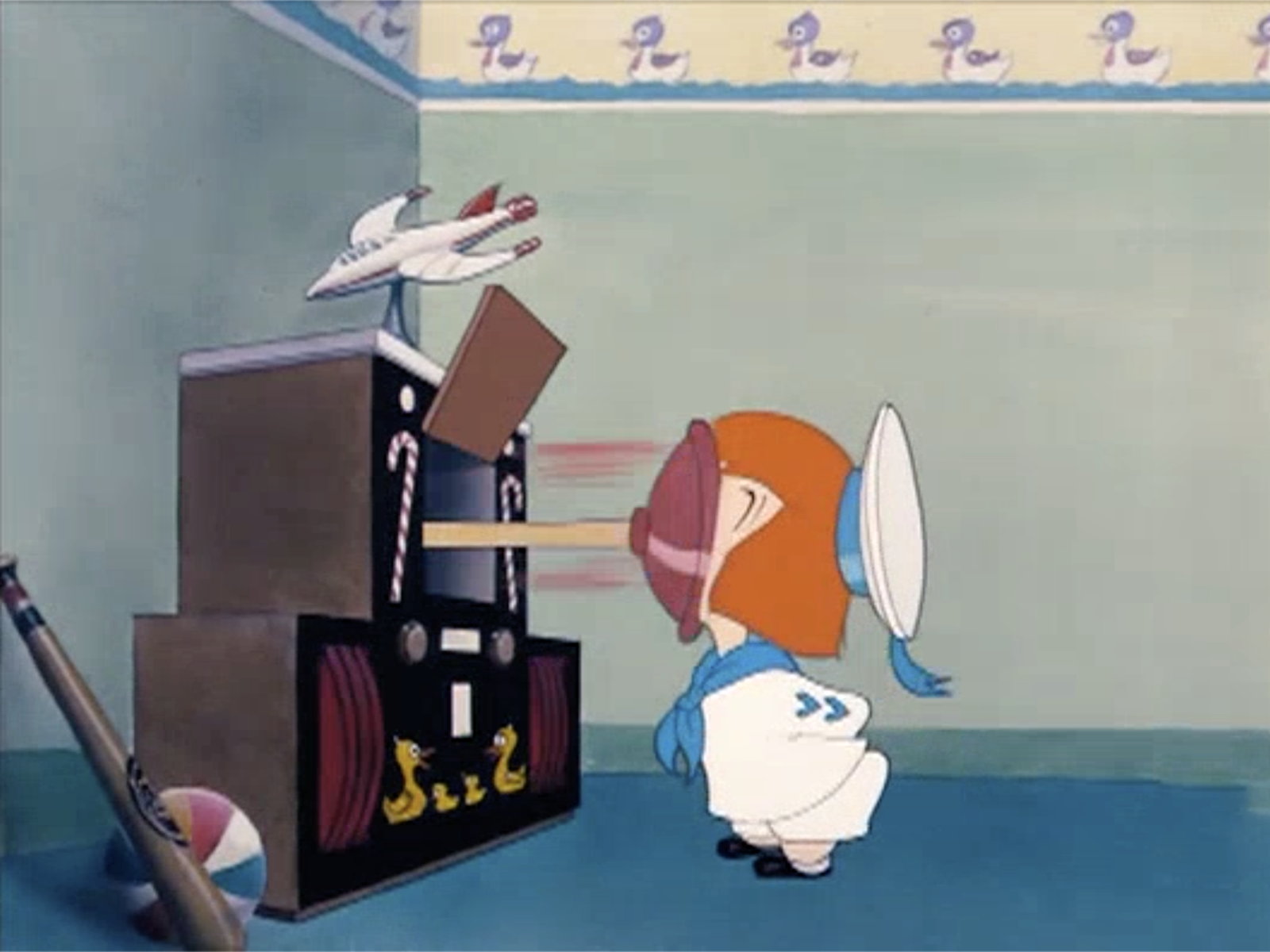
Tex Avery predicted YouTube…
Most of those other options are easily consumed in very short chunks, while ads are playing.
I’ve gotten very good at lashing out at the remote and pressing “mute” when the volume suddenly jumps or when a particularly annoying voice starts talking. Even though they don’t get the data about that, Google must know this is an option. They’re a technology company. At one time, at least, they were very good at being a technology company. They may not know what options I choose when ads are annoying but they do know that even the most basic modern digital device allows me multiple options to silence or otherwise ignore such annoyances.
There is no such thing as unskippable content today except in the most pedantic sense. I may not be able to literally skip ads unless YouTube presents that as an option, but I can mute them. I can turn my attention elsewhere. I can switch to a different app.
I do the same for annoying radio ads. I often listen to the radio in the morning over my coffee and breakfast. But when an especially annoying ad comes on, I switch to my iTunes music collection. If your ad follows an especially annoying one, I will never hear it, on radio or on YouTube.
We are far from the day when there were only three channels to watch and they all ran the same basic content with the same basic ads at approximately the same time. Google must know this. It looks very much like they are deliberately and very efficiently wasting any ad money spent on YouTube ads, and deliberately sabotaging the ads themselves. YouTube’s ads are stuck in the sixties in all the bad ways and none of the good ones.
When I first saw the skip feature show up several years ago, I thought, this is wonderful. Now they’ll have a better idea of what ads appeal to me. Instead, they seem to use that feature solely to choose which ads become unskippable, usually after I skip the same ad three or four times. Which of course just results in my muting the television and doing something else for the next minute or half-minute.
I sometimes almost wish that the Apple TV passed along whether or not I’ve muted an ad, but Google would probably just use that information to pause the ad and refuse to go further.
Admittedly, it isn’t as bad as it used to be. For a long time they thought I was a middle-aged black woman with incontinence issues who lived alone with my cats. It was so bad I was beginning to wonder just who the general YouTube audience actually was…
…I wonder if that neighborhood cat that keeps coming to my back yard is a Googlebot. Maybe they do know when I mute the television.
In response to Google making the web safe for ads: Google is attempting to make it less annoying to follow advertisements.
cooking
- Claire Saffitz x Dessert Person: Claire Saffitz
- Claire Saffitz makes recipes mostly from her wonderful cookbook, Dessert Person.
- Collard Valley Cooks
- “Where We Cook Like Mama Did.”
- Glen & Friends Cooking: Glen Powell
- “We are food people… We grow our own gardens, we pickle, we make jam, we start with base ingredients… FOOD!”
- Sandwiches of History: Barry W. Enderwick
- “I’ve always been passionate about food, cooking, culture, and of course, eating. The great thing about sandwiches, in addition to being portable, is that the possibilities of what can go between the bread (and the bread itself) seem limitless. And it cuts across cuisines around the world.”
history
- Review: Cooking for the Astronauts: Jerry Stratton at Jerry@Goodreads
- Where else can you get “the first cake to fly in space”? Dorothy “Dotti” Kunde started at the Kennedy Space Center crew quarters kitchen in 1983 and was there through the Challenger and the Columbia disasters. This book hits several of my interests: history, cooking, and space travel!
- Tasting History with Max Miller: Max Miller
- “Tasting History is the cooking show for history lovers and the history show for food lovers.”
- Townsends
- “Live history.”
movies
- The Internet predicted in 1949 by Tex Avery at Mimsy@YouTube
- “From the Tex Avery cartoon, ‘The Home of Tomorrow’, the television not only answers questions, it tells questioners to shut up already, and bullies them to stop asking such questions.”
- Mimsy@YouTube: Jerry Stratton
- There are a couple of very short clips of movies that I’ve used in my posts, but mostly it’s me favoriting German Skull Soldiers, Honey Badger, and Sweet Meteor of Death 2012.
- Super Easy, Barely An Inconvenience—Screen Rant Pitch Meetings
- “What if some of the worst movie-making decisions were made with the best intentions? Step inside the pitch meetings for some famous movies!”
music
- Rick Beato
- Rick Beato’s ear training, music theory, and guitar tutorials.
More advertising
- Retro Review: Small Soldiers
- What if Steve Jobs made toys?
- Wallow with pigs, expect to get blocked
- If you want me to watch your web advertisements, don’t advertise with ad servers or web sites that display obnoxious ads.
- Google Maps location-sensitive ads?
- It looks like Google Maps is providing location-sensitive ads.
- Google making the web safe for ads
- Google is attempting to make it less annoying to follow advertisements.
More Google
- What app keeps stealing focus?
- I’ve been having a problem on Mac OS X with something stealing focus. Here’s how to at least find out what that something is.
- Google: This is a closed out of date discussion
- Google’s Blogger forms are a bit on the wonky side when they close a topic.
- Climategate crashes Google?
- Google is claiming that, in order to provide the most relevant, objective results in Google News, they need to toss ones that people want to read and comment on. What?
- Google responds to Climategate-gate
- I’m guessing Google got a lot of questions about this; their response didn’t answer my question.
- Google hacked by climategate deniers?
- I can’t believe that Google would actually remove climategate from their common search drop-down. But something appears to be happening here.
- Two more pages with the topic Google, and other related pages