

The Rambling Face of V: V for Von Neumann
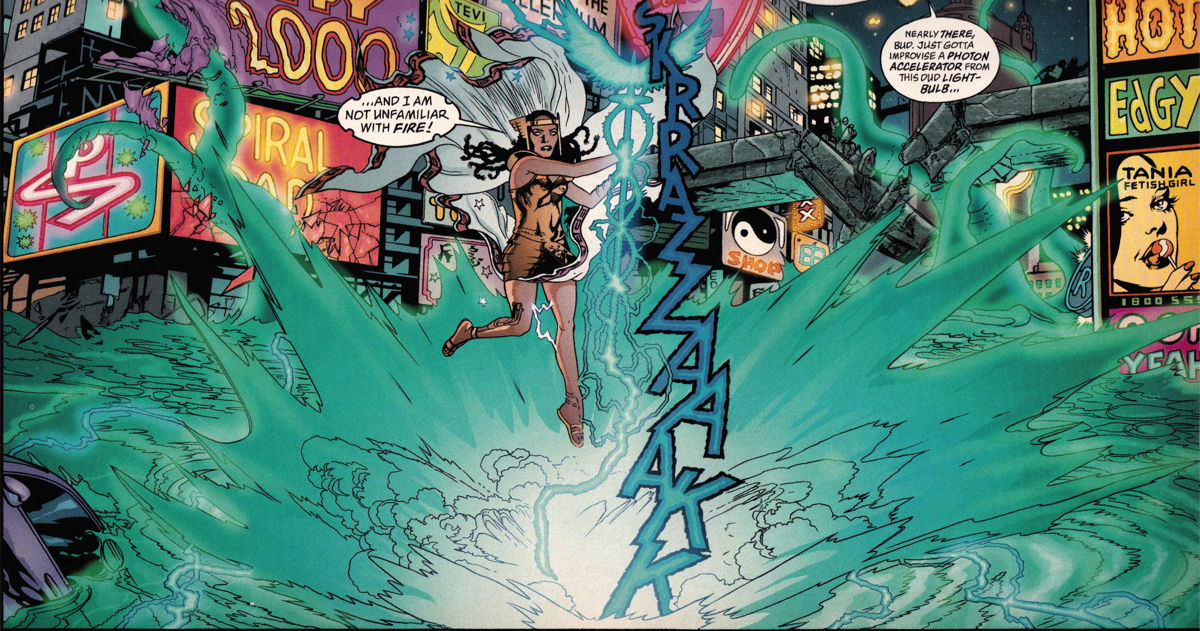
Alan Moore’s best works provoke a lot of thought about the human relationship with social and technological progress. When I wrote The Five Faces of V I was also reminded quite a bit about what I wrote in Our Cybernetic Future. I ended up cutting most of those references because they didn’t really touch directly on the comics. But there are some very important questions in that crossover. One is the concept of the singularity. The other is the mentoring effect of the existence of the United States—or the idea of the United States—as a world power. The two are heavily related.
Much of Moore’s vision of progress could be said to combine John Von Neumann’s optimism—that for every technological problem an answer will be found—with Norbert Weiner’s entropy-inspired pessimism, that there will be a lot of degradation along the way.
Much of this treads lightly into the realm of a singularity, a point where technological progress becomes so self-supporting that it becomes incomprehensible to humans and unstoppable by humans. What lies on the other side of a singularity is a literal revolution that is objectively unpredictable. We simply cannot know it. Which, of course, looks a lot like Moore’s spiritual revolution in Promethea.
I didn’t talk about the singularity in As We May Blog because von Neumann didn’t cover it in his famous essay, but he was one of the first to consider the likelihood of a technological singularity, a point at which progress becomes so rapid that its changes are both unpredictable and profound. Uncontrollable progress is the dark side of von Neumann’s optimism. If every problem has a solution, this includes problems we haven’t even thought of. It includes problems that we don’t even consider to be problems.
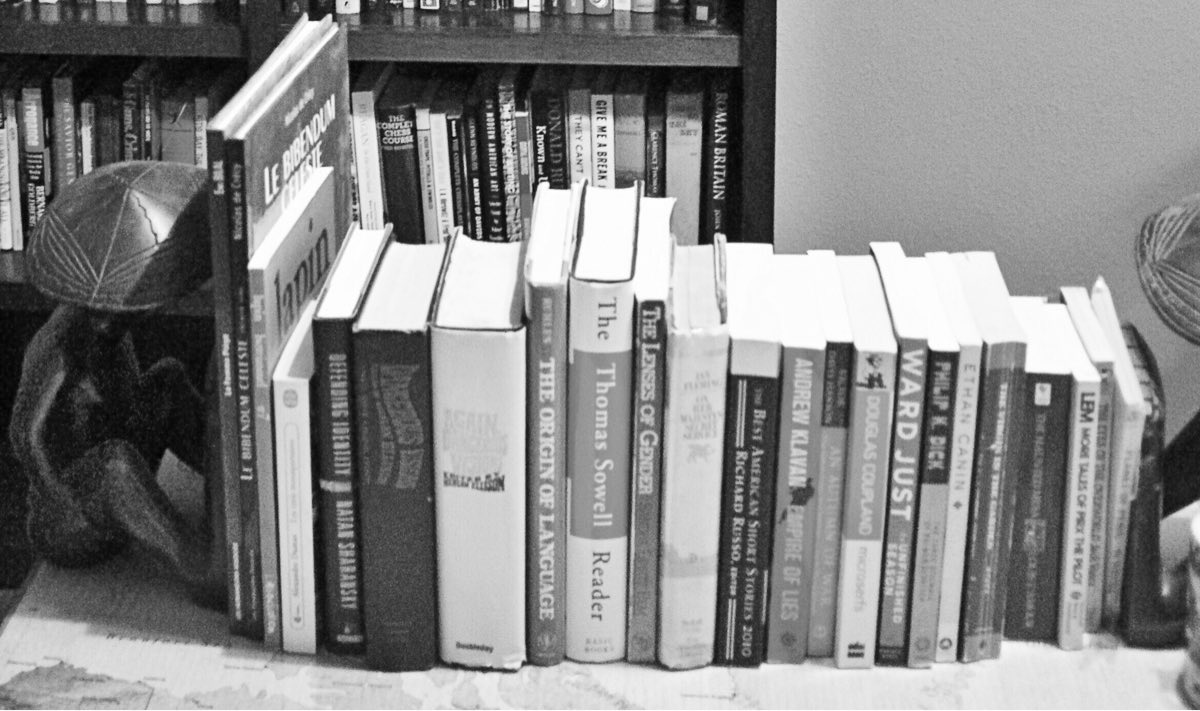
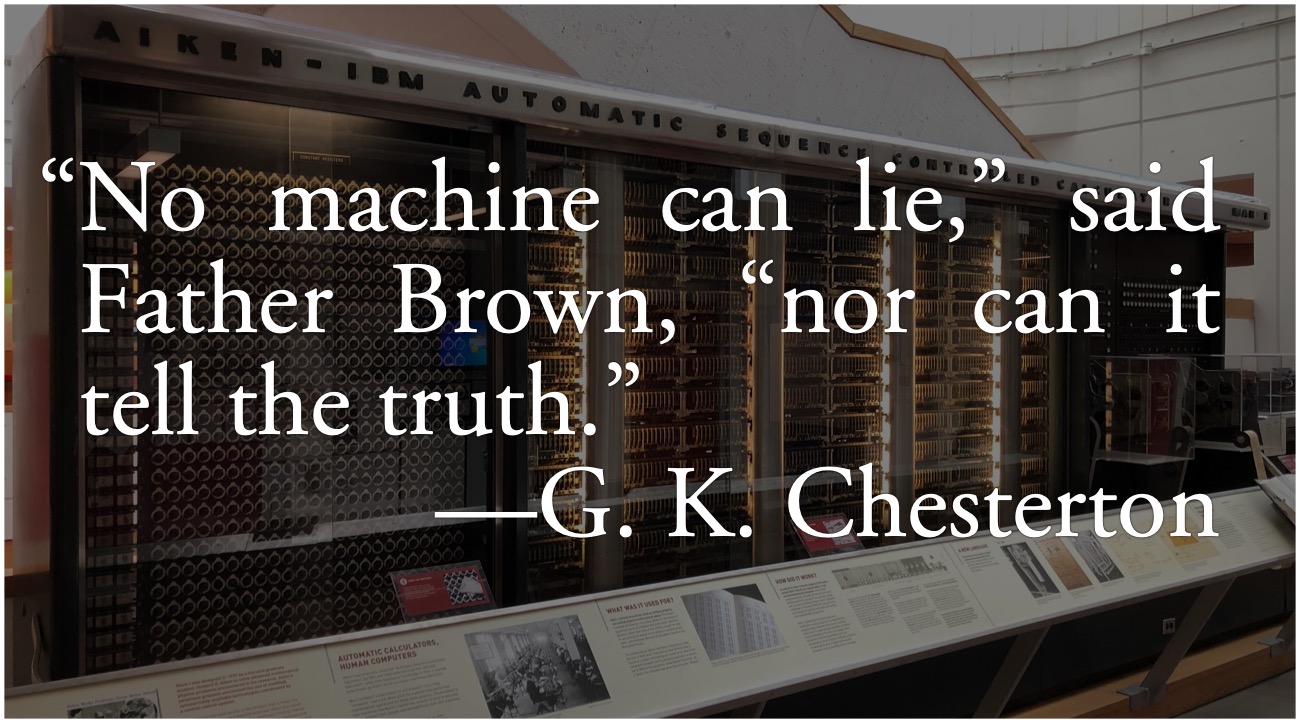
Von Neumann potentially recognized this. He was quoted by E. T. Jaynes, in Probability Theory, as having responded in a 1948 Princeton lecture to the statement that “a mere machine can’t really think, can it?”
You insist that there is something a machine cannot do. If you will tell me precisely what it is that a machine cannot do, then I can always make a machine which will do just that! — John von Neumann (Probability Theory: The Logic of Science)
This is definitionally true, but the implications are far from tautological. If it can be described, it can be automated is very close to if it can be thought, it can be automated. At some point this kind of inevitable automation becomes self-automating, at which point the thought doesn’t have to come from a human and it becomes unpredictable both for its speed and for its changes.
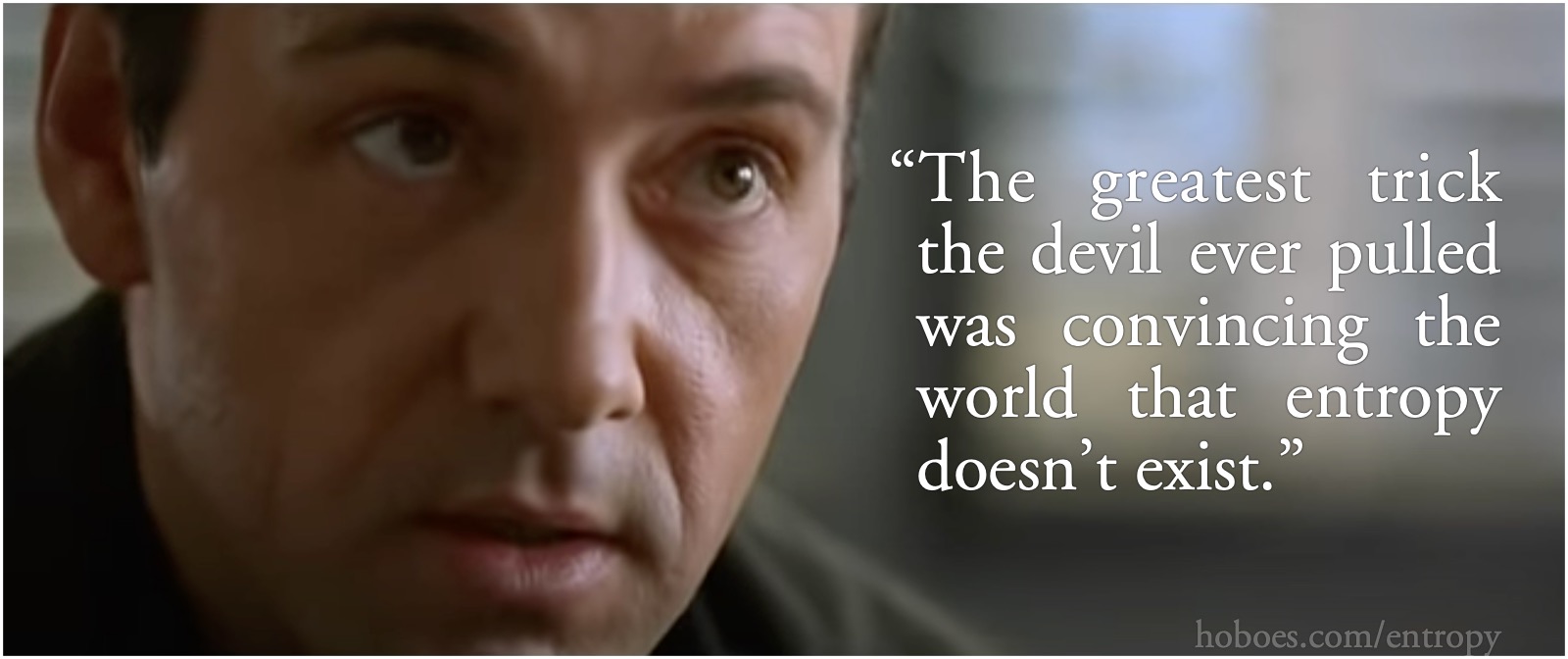
If you consider the singularity in the context of Weiner’s entropy, the situation becomes even more dire for humanity. Not only is the singularity unpredictable, it is also beyond temporal communication. The entropy across a near-infinite change will itself be near-infinite.
Trying to communicate across the point of singularity, that is, trying to influence the other side of the singularity, hits an impenetrable entropic barrier. It simply cannot be done. Once the singularity is set in motion, we cannot influence it.
Moore’s Promethean spiritual singularity was hinted at in his first major work. In V for Vendetta V was the first human to pass the ascendant event horizon, and so was able to have his way with the rest of un-ascended humanity.
The same thing is touched on in Watchmen. Who watches the watchmen? Who even are the watchmen who need to be watched? Where V was almost certainly an ascended human, Veidt may have been merely a self-proclaimed ascended human. The Veidt method appears to have promised ascension through self-enlightenment. But self-enlightenment is prone to self-deception. Detective Fine’s comment about the man who murdered his children applies just as well to Adrian Veidt’s murder of half of New York City:
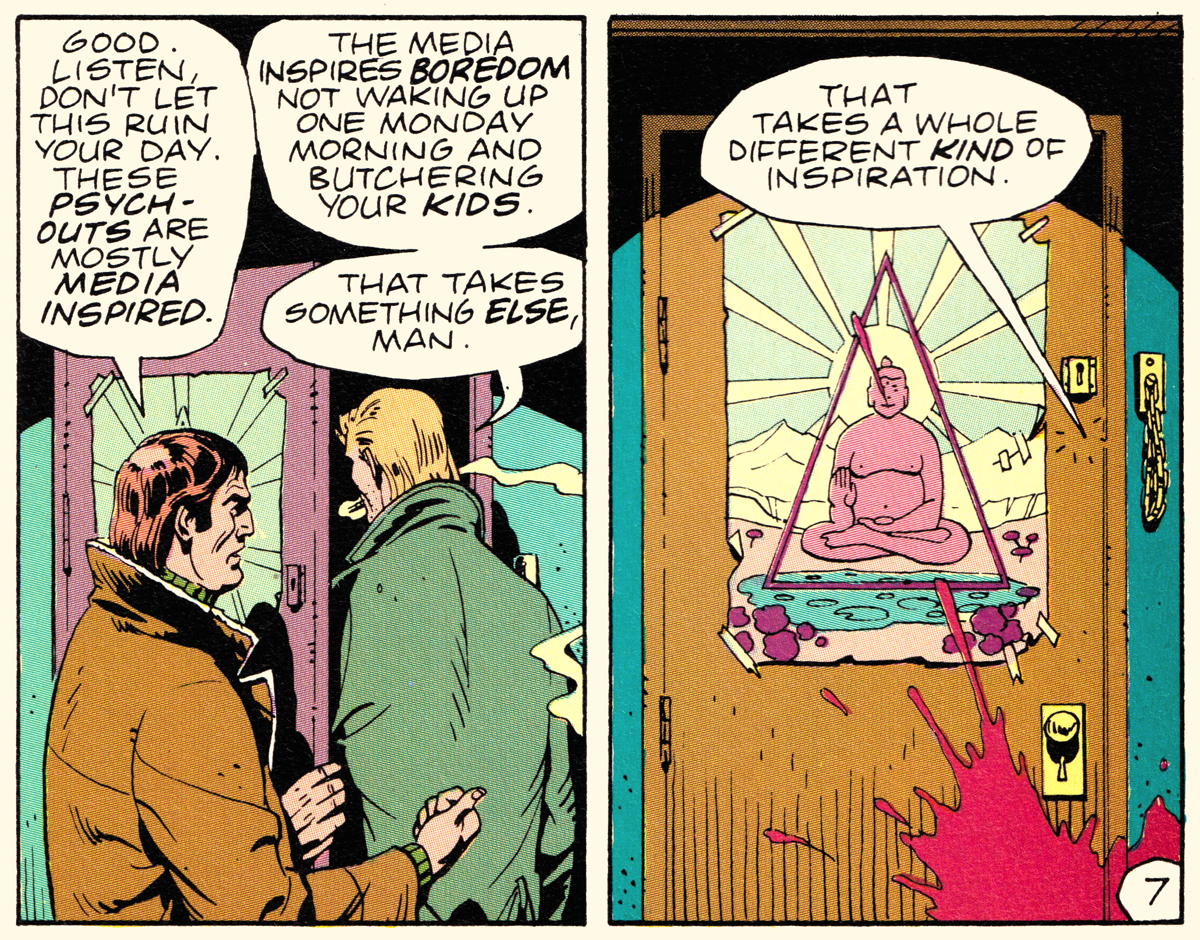
A different kind of enlightenment…
That takes a whole different kind of inspiration.
Dr. Manhattan’s post-Watchmen new creation lies far beyond Earth but it is not without serious implications for humanity.
What Moore tends to use his various incarnations of V to examine, especially post-V for Vendetta, is responsibility and balance. And it is especially responsibility and balance in a world that has gone beyond a religious foundation for responsibility and balance. Moore’s people are very similar to the people that Stephen Fry’s Ted Wallace described in The Hippopatamus:
“…we’re all grown-ups. Even the religious amongst us are no longer superstitious. Nobody happy and confident believes in ghosts or telepathy or miracles. But art abides.”
If you replace “art” with “science”, the science heroes of Promethea certainly fit that description, unable to even comprehend that Promethea was anything but a science heroine.
How important Promethea’s balance would be in our real world is obscured by Moore’s constrained view of technology and human freedom. Because they were set far from the modern world, Moore was freer in both From Hell and Promethea to alter how the world works. V for Vendetta and Watchmen were set in a contemporary period, albeit an alternate history one, with contemporary technology and contemporary psychology. V for Vendetta is much like 1984 in that respect, which was for all practical purposes set in 1948. Even the much-memed chocolate rations in 1984 were something Orwell lived under at the time he wrote the book.
Moore, like Stephen Fry, puts his characters beyond religion. But reality does not change because people stop believing in it, not even in Promethea where belief plays such a large part in the heroine’s powers. In Moore’s world, making technology human again requires a magic that is very close to, if not synonymous with, religion.
Moore’s magic is communication at such a low level that it rewrites the secret world hidden behind the façade of our illusory reality. We could almost say at the quantum level. Moore rarely makes use of physics in the way that other authors, such as Morrison, do, but the idea of levels of reality is at the heart of Promethea and Moore deliberately links Promethea’s mysticism both to modern science and to his own conception of magic as layers of reality.
It is a very religious conception of mysticism. And it is important to remember that for Moore, magic solutions are not impossible even in the real world. He purports to be a believer in the kind of magic he wrote about in Promethea. Promethea itself posits a sort of spiritual version of von Neumann’s technological singularity, at least as popularized by Ray Kurzweil.
But Moore also appears to recognize the dangers inherent in humanity moving beyond religion. In both our reality and Promethea’s, as beliefs in foundational truths give way science itself becomes religion, losing its effectiveness as science. The result in Moore’s worlds is a loss of vitality in both religion and in science.
The closest message to this in the United States comes from Dennis Prager, not likely someone Moore looks to as an admirable moral center.
If people were basically good, we wouldn’t need values; we could rely on the human heart to always do the right thing. But the heart is not a moral compass; it is a generator of emotions. Values are there to overrule our heart, our emotions, our appetites, our weaknesses, and even our often flawed reasoning.1
Moore’s works show examples of Prager’s thesis that “Despotism may be able to do without faith, but freedom cannot.”2 While Moore might disagree with Prager that “Only with a moral God do right and wrong actually exist”3 or that “Reason without God is ineffective”4, if you replace “God” with “magic” or possibly even with “the divine”, you have Moore’s thesis in Promethea:
- Only with a paranormal morality outside of the visible world can right and wrong exist.
- Without right and wrong, there is tyranny.
- With tyranny, technology becomes a tool for ending humanity.
The more power a person has, the more that person’s responsibility lies in restraint as much as in action. This is very easily forgotten, and very easily misunderstood. It’s a question as old as the Old Testament:
Blessed is the rich that is found without blemish, and hath not gone after gold. Who is he? and we will call him blessed: for wonderful things hath he done among his people. Who hath been tried thereby, and found perfect? then let him glory. Who might offend, and hath not offended? or done evil, and hath not done it? His goods shall be established, and the congregation shall declare his alms.—Ecclesiastes 31:8-11
“Who might have done evil, and hath not done it.”
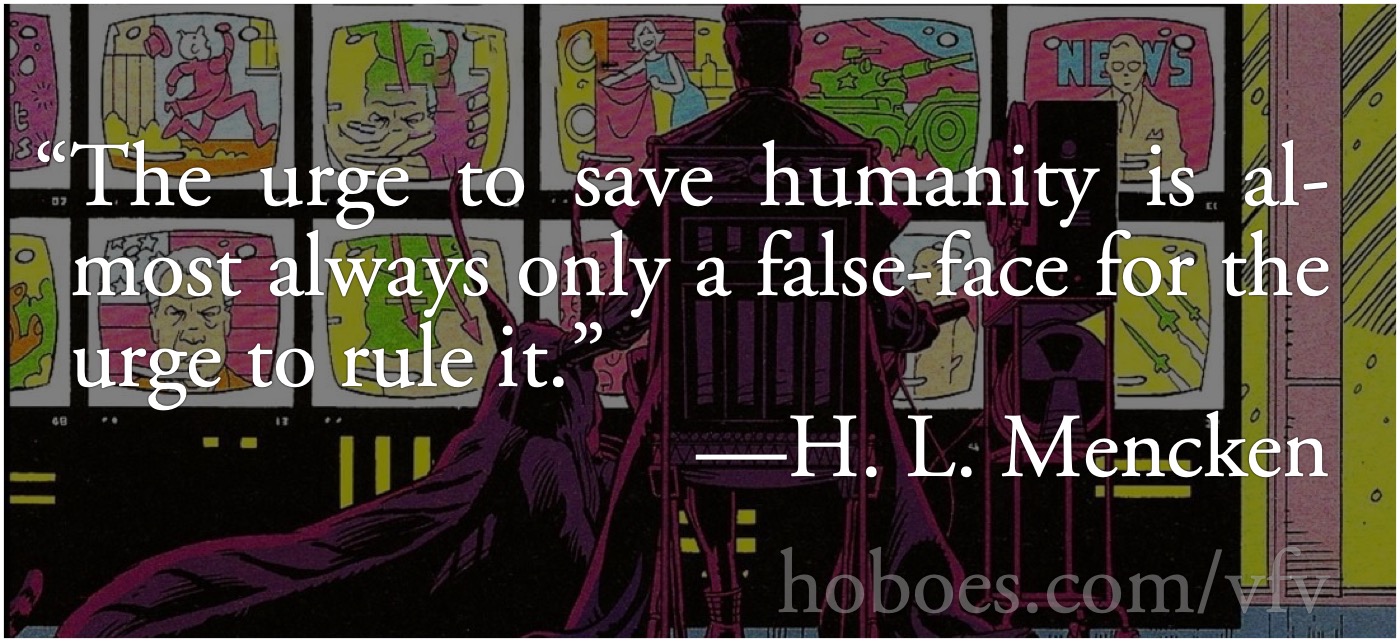
Blessed are those who, given great resources, use them for wonderful things among their people. But also blessed are they who could have done evil, and merely did not do evil.
There is a morality to not doing evil when one has the opportunity to get away with it. Few writers examine this, however, from the perspective of a world where superheroes exist. For Moore, such power is analogous to political power in a corrupt world, most obvious in the world of Miracleman. Moore addresses the basic problem of power: it is nearly impossible for those who achieve power to avoid the temptation to take over other people’s lives.
This topic is why I’m disappointed Moore never wrote Twilight of the Superheroes. Political freedom is responsibility. Veidt’s Egyptian symbolism incorporated one of the profound truths of this: we always feel we would have been better off in the fleshpots of Egypt than living as a free people. Representative government is very unnatural in almost exactly the same way that a superhero such as Superman acting unselfishly is unnatural.
Superman is often synonymous with America as a superpower, and Moore appeared to be poised to make this comparison directly. In Twilight, other superheroes once acted heroically because Superman did. When Superman gave up on heroism, and especially when Superman gave up on restraint, so did every other hero. If America fails as an example of representative government, says Moore’s allegory, the rest of the Western World will give up and grab for their piece of the totalitarian pie just as other superheroes did in Twilight.
When mankind ascends to the next spiritual level, what will we do with that power? Who will be our moral compass individually and collectively? Promethea attempts to answer that question with a new divinity, a new magic based in reason—and a reason anchored in the underlying divinity of the world. In many ways, Promethea is paradoxically an attempt to answer Dennis Prager with a theology that is not based in an external God but in an externalization of our internal reason.
Like all deities oriented in the worshiper’s self, this is likely to be a bloody failure. As I wrote at the end of the original series, the real story in Moore’s works begins after the final panel.
In response to FiVe Faces of Alan Moore’s SaVior: V, Veidt, and Constantine are very much the same person, each ushering in a new era of human greatness through their own devious means. Even Promethea and Faust, and Moore’s interpretation of Jack the Ripper, share that vision to a lesser extent. What do these five faces of the same man mean?
Dennis Prager (Still the Best Hope•, p. 336)
↑Despotism may be able to do without faith, but freedom cannot. — Dennis Prager (Still the Best Hope•)
↑Still the Best Hope, p. 345.
↑Still the Best Hope, p. 350.
↑
Alan Moore
- Alan Moore’s Twilight of the Superheroes
- Some time circa 1987, after Watchmen and before his falling out with DC, Alan Moore submitted a proposal for a series that was never published. Plunging the DC Universe into Ragnarok, the Twilight of the Gods, it was never brought to fruition.
- The Fifth Face of V: I Have Saved You
- Time brings progress and it brings suffering. Can humanity be saved from the latter without losing the former? How much can we turn over to machines or governments before we are no longer human or free?
- The Fourth Face of V: Science ascends, Man gives way
- Is all power destined to be abused regardless of good intentions? Is technology necessarily dehumanizing? What happens when literally everyone has that technology at all times?
- The Full Face of V: In Your Hands
- The real story in all of Moore’s books is what happens after the final page. This is most obvious in Watchmen, but every one of these books highlights an uncertain future.
- Our Cybernetic Future 1945: As We May Blog
- As we go back in time for insight into the future, actual hardware recedes and the relationship between man and hardware comes to the fore. In 1945, Vannevar Bush laid out a vision of the Internet and desktop computers filled with the knowledge of mankind. And he recognized that this would not merely change how quickly we think, but how we think.
- Promethea (Book I)•
- A vaguely Wonder Woman-esque superheroine (sorry, “science hero”) examines the magical workings of the world and our creativity. Watch for the little things; “Weeping Gorilla” had me laughing throughout.
history
- Our Cybernetic Future 1954: Entropy and Anti-Entropy
- In 1954, Norbert Wiener warned us about Twitter and other forms of social media, about the breakdown of the scientific method, and about the government funding capture of scientific progress.
- Our Cybernetic Future 1972: Man and Machine
- In 1972, John G. Kemeny envisioned a future where man and computer engaged in a two-way dialogue. It was a future where individual citizens and consumers were neither slaves nor resources to be mined.
- Probability Theory: The Logic of Science: E. T. Jaynes
- “The following material is addressed to readers who are already familiar with applied mathematics at the advanced undergraduate level or preferably higher; and with some field, such as physics, chemistry, biology, geology, medicine, economics, sociology, engineering, operations research, etc., where inference is needed. A previous acquaintance with probability and statistics is not necessary; indeed, a certain amount of innocence in this area may be desirable, because there will be less to unlearn.”
- Review: 1984: Jerry Stratton at Jerry@Goodreads
- “We shall meet in the place where there is no darkness.” It is fashionable to compare Orwell unfavorably to Huxley nowadays, but that’s mostly because Orwell’s message of voluntary repression is a much more difficult one than Huxley’s drug-induced repression.
- Review: Chocolate Wars: Jerry Stratton at Jerry@Goodreads
- A history of the rise and fall of once-iconic English chocolates and the international struggle by confectioners to survive following the ground-changing introduction of milk chocolate. Deborah Cadbury is a distant relation to the founders of the Cadbury chocolate-makers but that was more inspirational than experiential.
- Review: Still the Best Hope: Jerry Stratton at Jerry@Goodreads
- Prager does not insult people who hold different views; he simply believes they’re wrong and explains why. He doesn’t attribute evil or malice to those he disagrees with, and in fact presents their side so well that their argument sometimes appears compelling. His central thesis is not a particularly new one, but it is well-argued: America is very different from other places in the world, and that difference is a good thing for America.
- Review: The Hippopotamus: Jerry Stratton at Jerry@Goodreads
- Fry has a sense of evil and the ability of people to accept evil in order to avoid confrontation that is frightening. Characters in this book use all sorts of very believable justifications to whitewash his very obvious evil and to make themselves virtuous by comparison.
More Alan Moore
- The Full Face of V: In Your Hands
- The real story in all of Moore’s books is what happens after the final page. This is most obvious in Watchmen, but every one of these books highlights an uncertain future.
- The Fifth Face of V: I Have Saved You
- Time brings progress and it brings suffering. Can humanity be saved from the latter without losing the former? How much can we turn over to machines or governments before we are no longer human or free?
- The Second Face of V: The Twilight of Man
- Moore’s stories aren’t just about overthrowing an oppressive regime. They’re about a superior being overthrowing an oppressive regime because normal humans won’t—they’re doing the job Britons, Americans, and the Worldly Wise won’t do. How much are they about the decline of mankind in favor of something else?
- FiVe Faces of Alan Moore’s SaVior
- V, Veidt, and Constantine are very much the same person, each ushering in a new era of human greatness through their own devious means. Even Promethea and Faust, and Moore’s interpretation of Jack the Ripper, share that vision to a lesser extent. What do these five faces of the same man mean?
More Promethea
- The Second Face of V: The Twilight of Man
- Moore’s stories aren’t just about overthrowing an oppressive regime. They’re about a superior being overthrowing an oppressive regime because normal humans won’t—they’re doing the job Britons, Americans, and the Worldly Wise won’t do. How much are they about the decline of mankind in favor of something else?
More Watchmen
- The Third Face of V: The Freedom to Starve
- Are V and Veidt heroes? What do they really do that’s different from what Norsefire did, or from what the Tales of the Black Freighter protagonist did?
- The First Face of V: A Crucible of Fire
- V is a creature of man, born of fire and perverted science. He is the savior of man, giving his life to usher in a new world of freedom and individual liberty. Including the liberty to die.
- FiVe Faces of Alan Moore’s SaVior
- V, Veidt, and Constantine are very much the same person, each ushering in a new era of human greatness through their own devious means. Even Promethea and Faust, and Moore’s interpretation of Jack the Ripper, share that vision to a lesser extent. What do these five faces of the same man mean?