- Thomas Jefferson’s Pumpkin Soup—Wednesday, October 21st, 2026
-
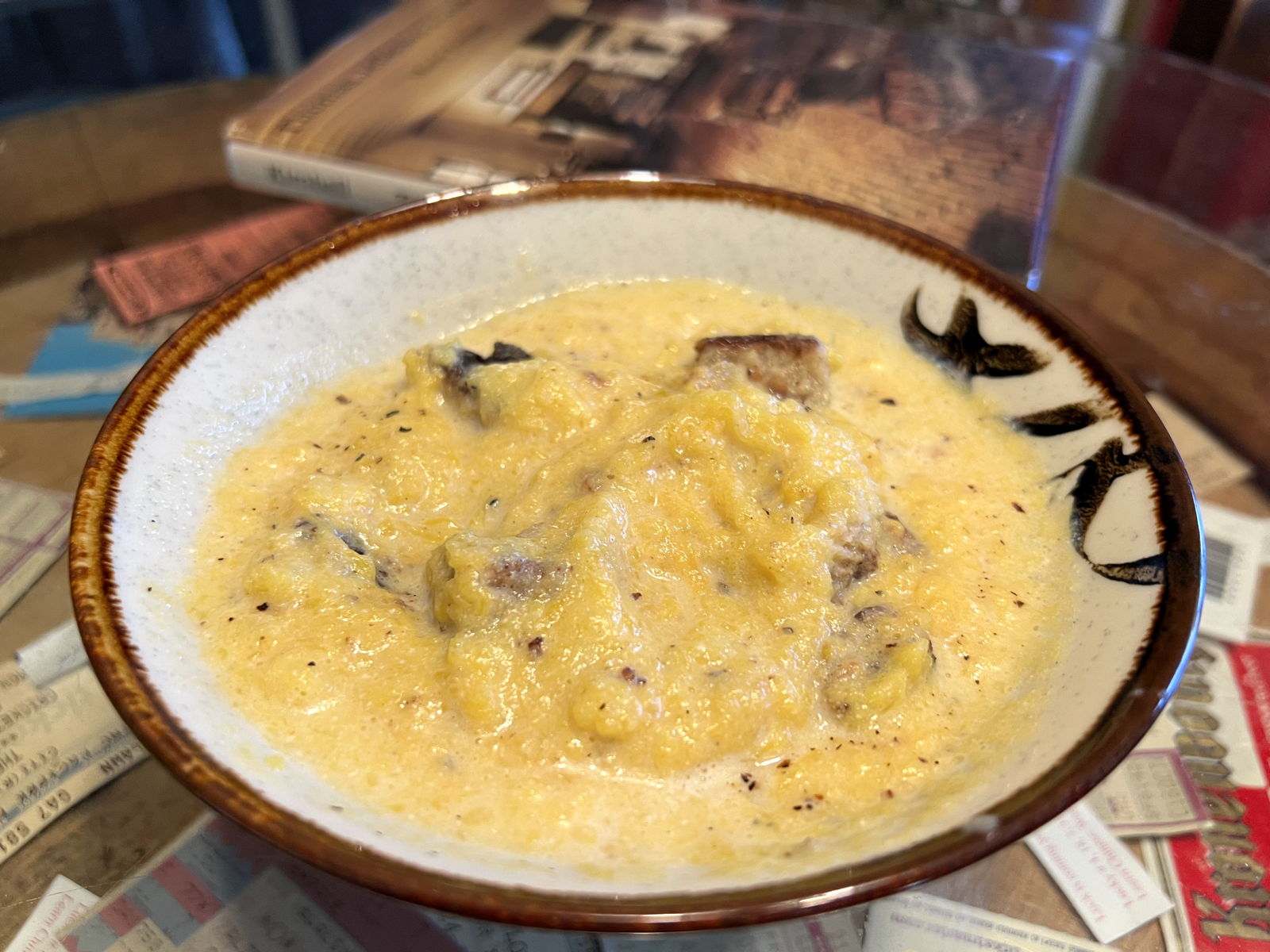
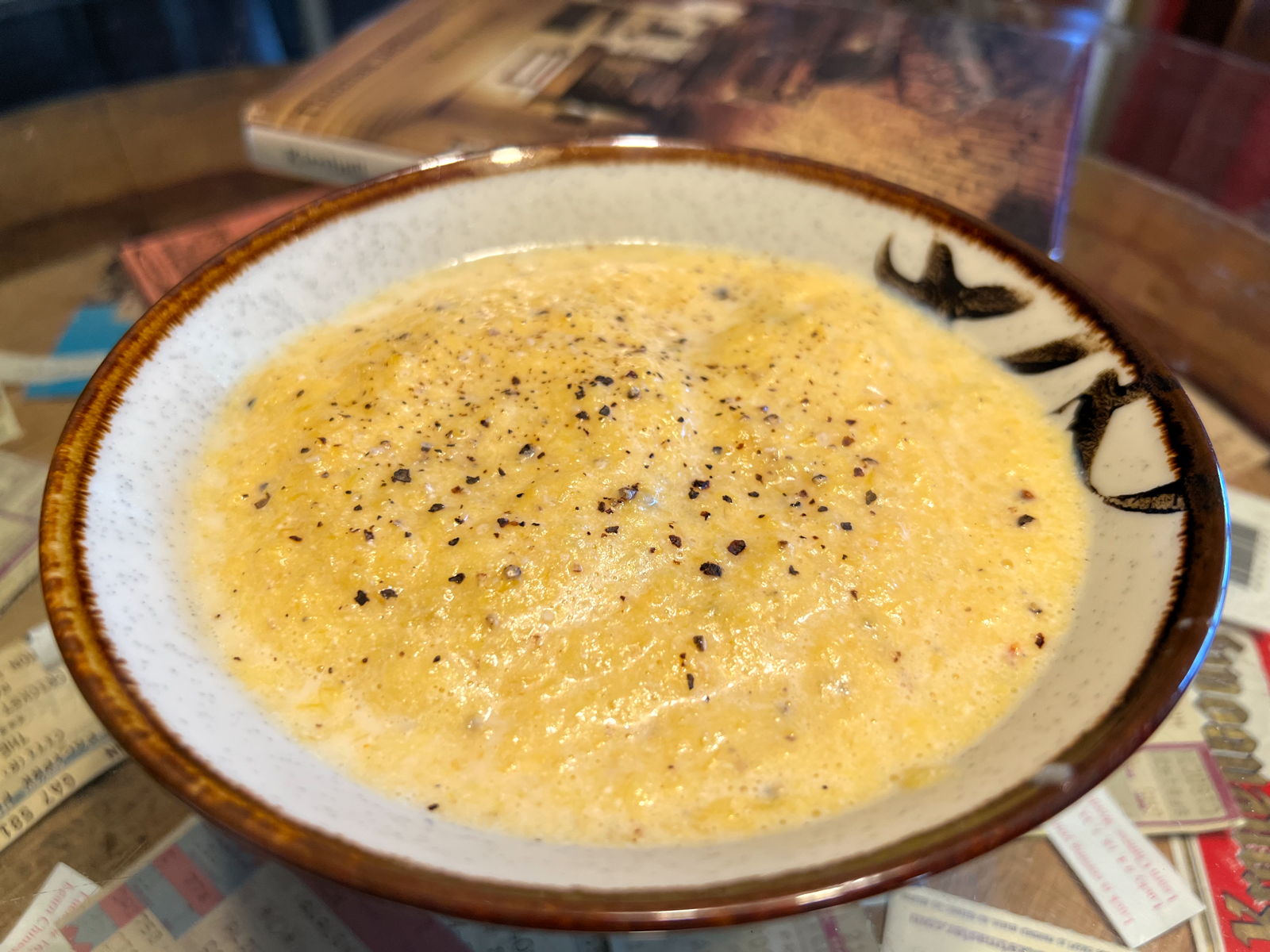
Thick enough that croutons did not immediately turn soggy.
One of the recipes I tried from Marie Kimball’s Thomas Jefferson’s Cook Book is the Pumpkin Soup attributed to “Annette”. I left this out of my Monticello Meal post because soups aren’t very good ideas for pot-lucks, especially Fourth of July pot-lucks with paper plates, drinks, and, nowadays, phones. You’d need four hands instead of the usual three if soup was involved, too!
This would be, however, a great soup for a Thanksgiving meal. It’s a fine example of how simple is often better. This soup includes none of the spices and other flavorings normally included in pumpkin soups. So often, pumpkin dishes are so spiced you could just as well use carrots or orange food coloring to get the same result and no one would know the difference.
Many pumpkin pies are so filled with cinnamon, cloves, allspice, nutmeg, brandy, and the rest of the holiday flavor profile that the pie appeals more to people who don’t like pumpkin than people who do.
Salt and pepper are it for this soup. It tastes like pumpkin. If you like pumpkin, you’ll like it. If you don’t, you won’t.
Pumpkin soup
Take half a small pumpkin, peel, cut in small pieces and put on the stove with half a glass of water. When the pumpkin is tender, drain, and pass through a colander. Add 3 tablespoonfuls of butter; sugar, salt, and pepper to taste. Let it simmer for fifteen minutes. Add 4 cups boiling milk, stirring well while pouring it in. When well mixed, pour over croutons, made by cutting three slices of bread in small cubes and browning well in butter.
Annette.
I chose to steam the pumpkin rather than simmer it in the water. I’ve found that steaming preserves and even enhances the color of vegetables, and for pumpkin that color is part of the appeal of the soup.
- This Boy Digs Deep: Eddie Doucette in TV Guide—Wednesday, September 16th, 2026
-
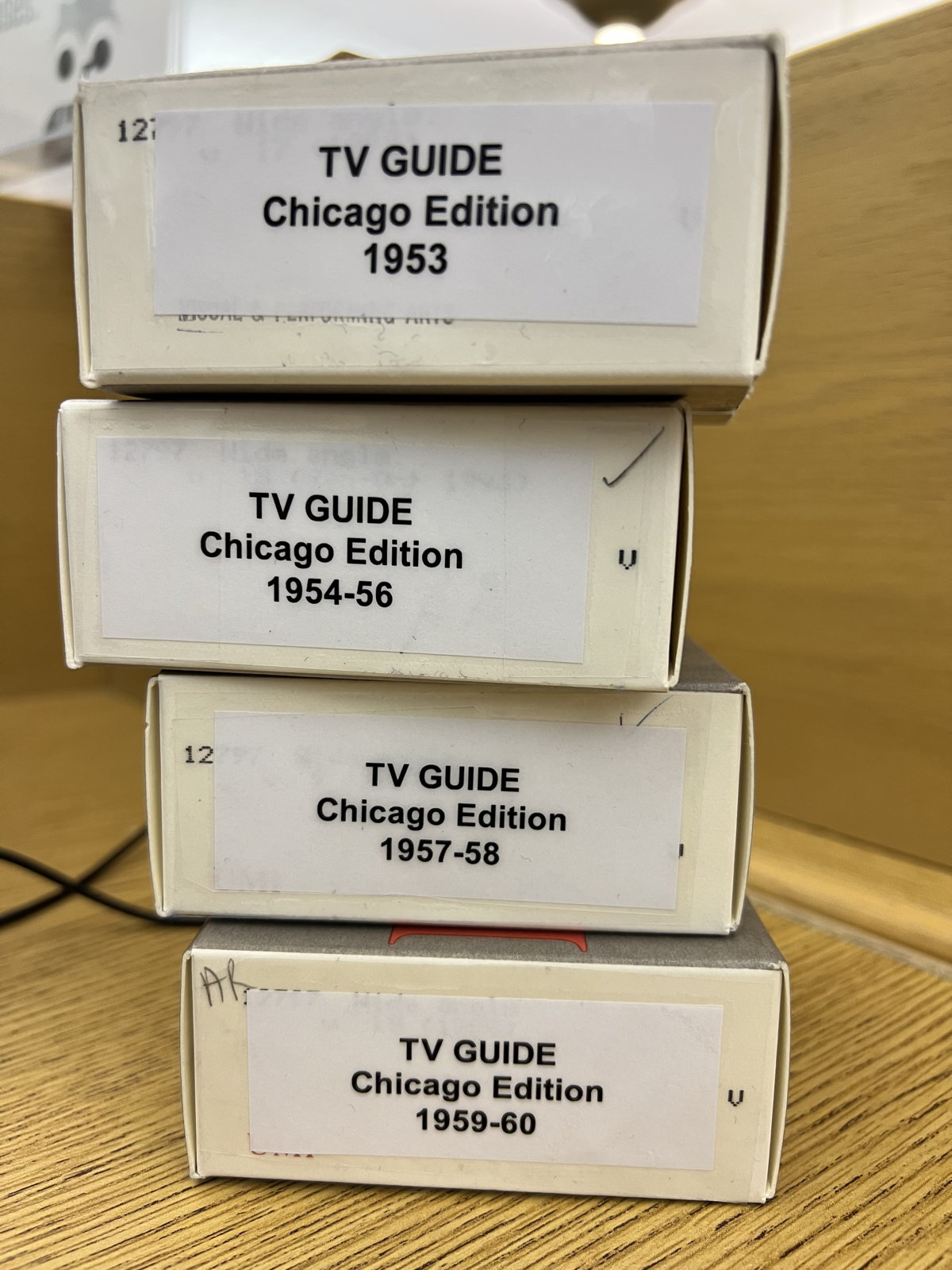
I only got through the 1953 and 1954-56 reels.
Eagle-eyed readers will have noticed that I removed the question marks from the Eddie Doucette Home Cooking episode guide back in February. Some friends invited me up to stay with them a short walk from the Chicago Public Library, so before enjoying Chicago’s wonderful food and drinks I spent a few hours each morning going through the library’s Chicago-edition TV Guide microfilm reels again. I was able to recheck all of the questionable entries and verify or correct my initial guesses.
Unfortunately, the library doesn’t have the TV Guide originals. I hope they still exist somewhere because the microfilms, while useful, are vintage scans that we would now consider to be very poor quality—which is why I needed to recheck them. My saved scans from the first session weren’t legible enough for a couple of the entries.
At one point the library’s computer system went down, so I tried to use the non-computer-based microfilm reader. It, or I using it, was unable to make the scans readable. They needed near-movie level “Computer: Enhance” in some cases. Mere optical, mechanical magnification wasn’t good enough.
Fortunately the computer system came back up by the time I gave up trying to make the older reader work.
The library’s TV Guide archives begin with April, 1953. While that obviously doesn’t cover the 1952 season, Eddie Doucette’s Home Cooking clearly was on the air in 1952. The Backstage Diary in the April 3, 1953, Guide included this snippet:
Look for Eddie Doucette to take his culinary show to another station, possibly WBBM-TV. Chef Eddie has been bombarded with letters and phone calls, all bemoaning his departure from channel 5.
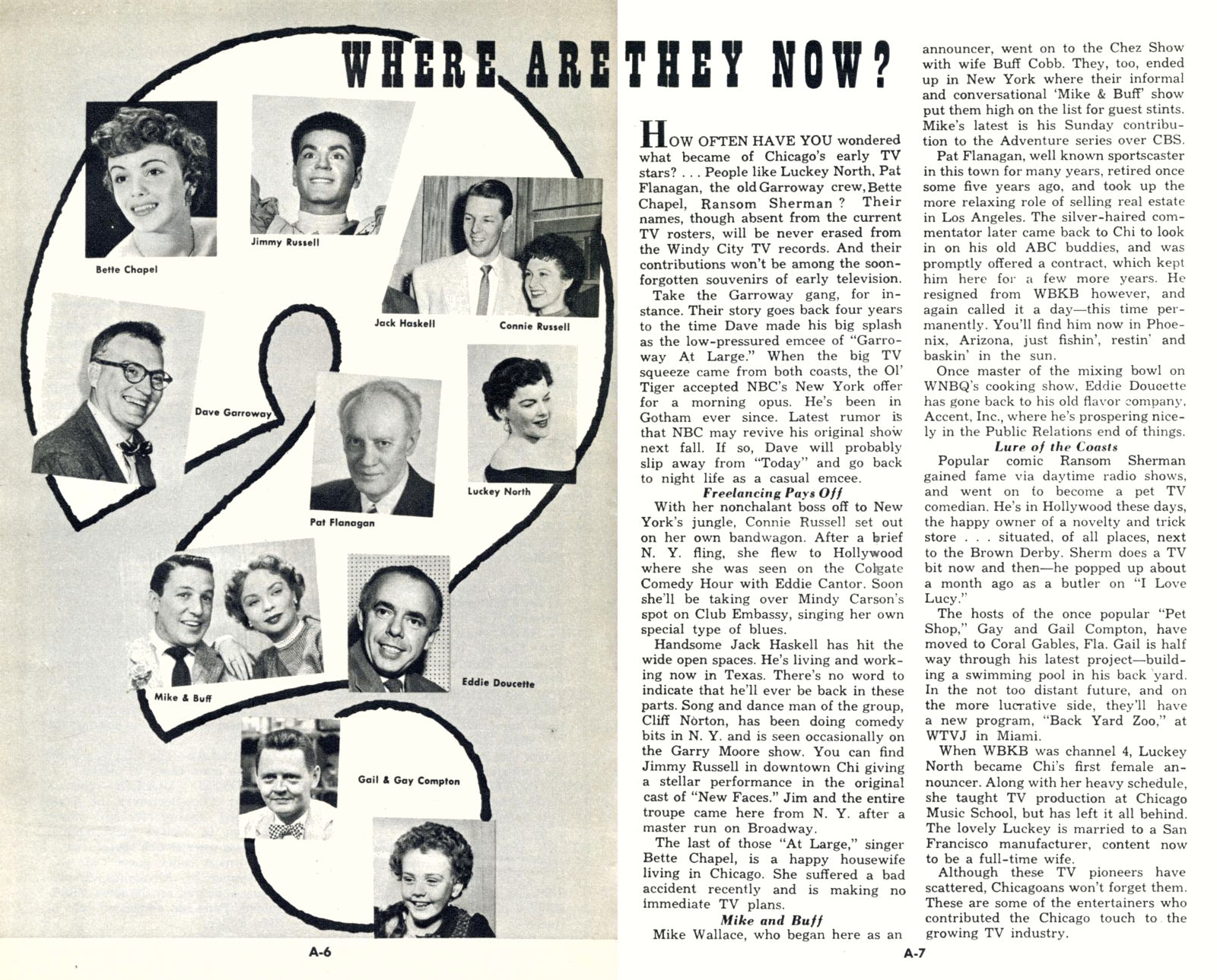
By the June 5 Guide, however, a Where are they now? (JPEG Image, 452.1 KB) spread wrote:
Once master of the mixing bowl on WNBQ’s cooking show, Eddie Doucette has gone back to his old flavor company, Accent, Inc., where he’s prospering nicely in the Public Relations end of things.
- Garlic Dips and Sauces for Potatoes—Wednesday, August 19th, 2026
-
Today is National Potato Day. Why not have some potato chips or hash browns, and top them with one or both of these easy-to-make dips/sauces? They’re great on chips, on a baked potato, or in a potato salad—or with just about any vegetable or thick stew. I also like them on toasted bread, such as Eddie Doucette’s potato bread.
I’m winding down the Semiquincentennial posts, but if you’re not, consider Thomas Jefferson’s potato pie for this potato day as well.
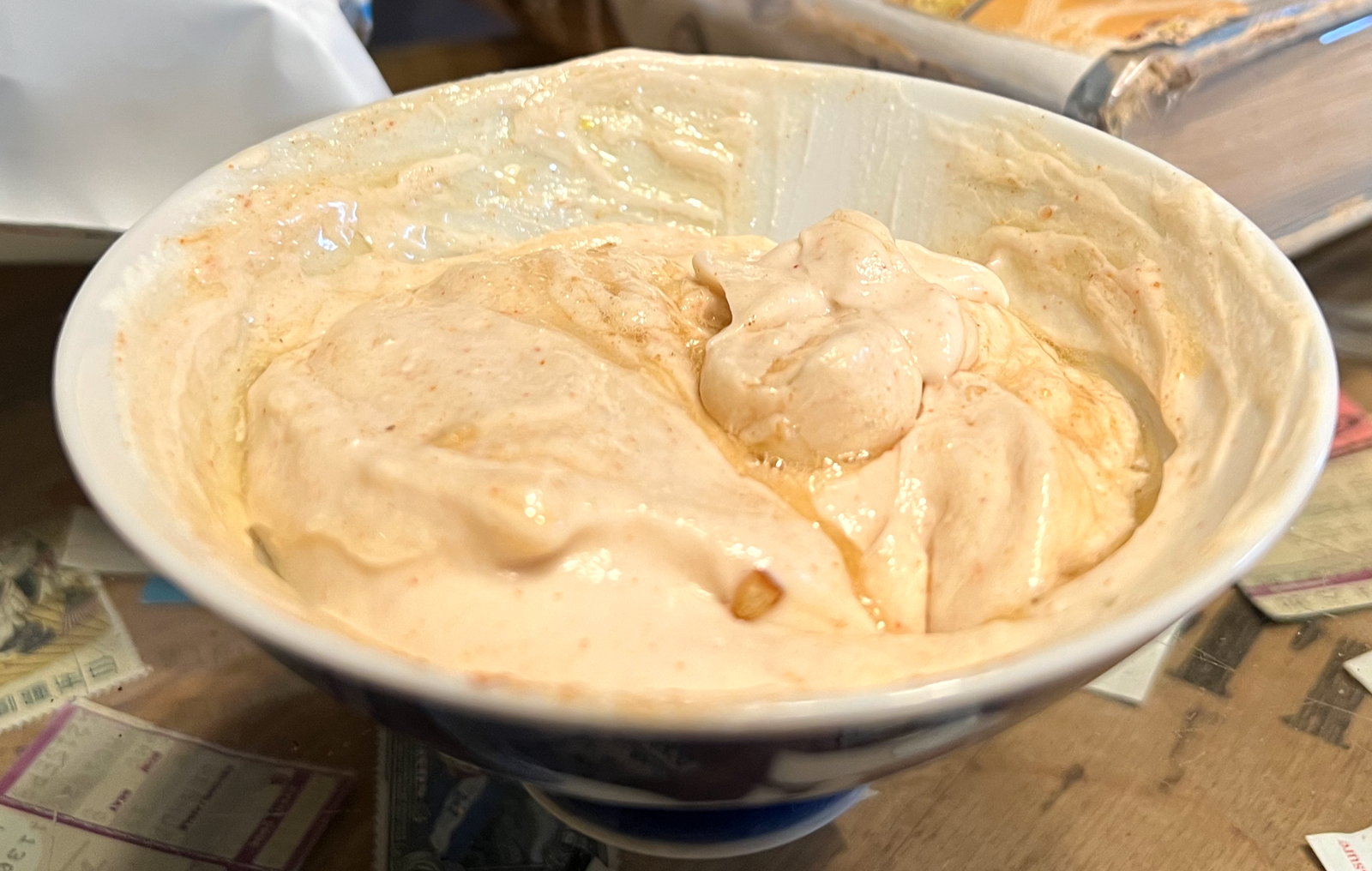
The Joy of Chips Dip
Servings: 8
Preparation Time: 10 minutes
Irma S. Rombauer
The Joy of Cooking (1943) (Internet Archive)Ingredients
- 8 oz yogurt
- 2 cloves garlic
- 2 tbsp butter
- ¼ tsp coarse salt
- ½ tsp smoked paprika
- 1 tbsp Worcestershire sauce
- 1-2 tbsp nutritional yeast (optional)
Steps
- Finely chop garlic.
- Fry garlic in hot butter over medium-low heat until golden brown.
- Pour into the yogurt and mix well.
- Add Worcestershire, paprika, yeast, and salt, mixing well each time.
Potato chips and chip dip are a lot like hot dogs and buns: there’s always one left when the other runs out. I’m the kind of person who runs out of dip long before I empty a bag of chips. What I need is a jar of endless dip! So I was overjoyed to find that Irma Rombauer’s chip dip in The Joy of Cooking isn’t just easily-made and easily-proratable but also very flavorful.
Work to a smooth paste:
Roquefort cheese or soft cream cheese
Season it with:
Worcestershire sauce
Paprika
Spread it on:
Crispy potato chips - Tempt Them with Tastier Foods: Third Printing—Wednesday, July 8th, 2026
-

An October 1, 1956 ad for WNBQ in Chicago highlights “Bob Murphy, Kay Westfall and Chef Eddie Doucette” as the station’s top sellers. (Click for full ad.) (JPEG Image, 360.5 KB)
I’ve just published the third printing of Tempt Them with Tastier Foods. With this release my collection of Eddie Doucette recipes exceeds a hundred pages. It is available as a free download in PDF (PDF File, 12.5 MB) and ePub (ePub ebook file, 10.9 MB) formats, as well as in print.
The new recipes come from several sources. I continue to be notified whenever a new reference to Eddie Doucette shows up on newspapers.com. And I continue to look for references on more general searches, which, among other things, netted a couple more matchbook recipes.
I managed to find a copy of his All-American Hog Dog pamphlet. I included recipes from images of it in the second printing, but it turns out there are recipes on both sides. The new, reverse-side recipes are now included in that section of the book. They include a fascinating-looking Hot Dog Pate and a Frank ’n’ Kraut Shepherd Pie that is very similar to the Oktoberfest Sauerkraut in the original printing but with hot dogs added.
I also decided to take a look at which newspaper most of the recipes came from, and then follow their IGA advertisements all the way through the sixties and into 1971. That turned out to be The Idaho State Journal of Pocatello, Idaho. A week in the newspapers.com archives netted several new recipes from the Journal’s regular Thursday IGA ads.
- Food for the Great Anniversary Festival (AccordingToHoyt.com)—Friday, July 3rd, 2026
-
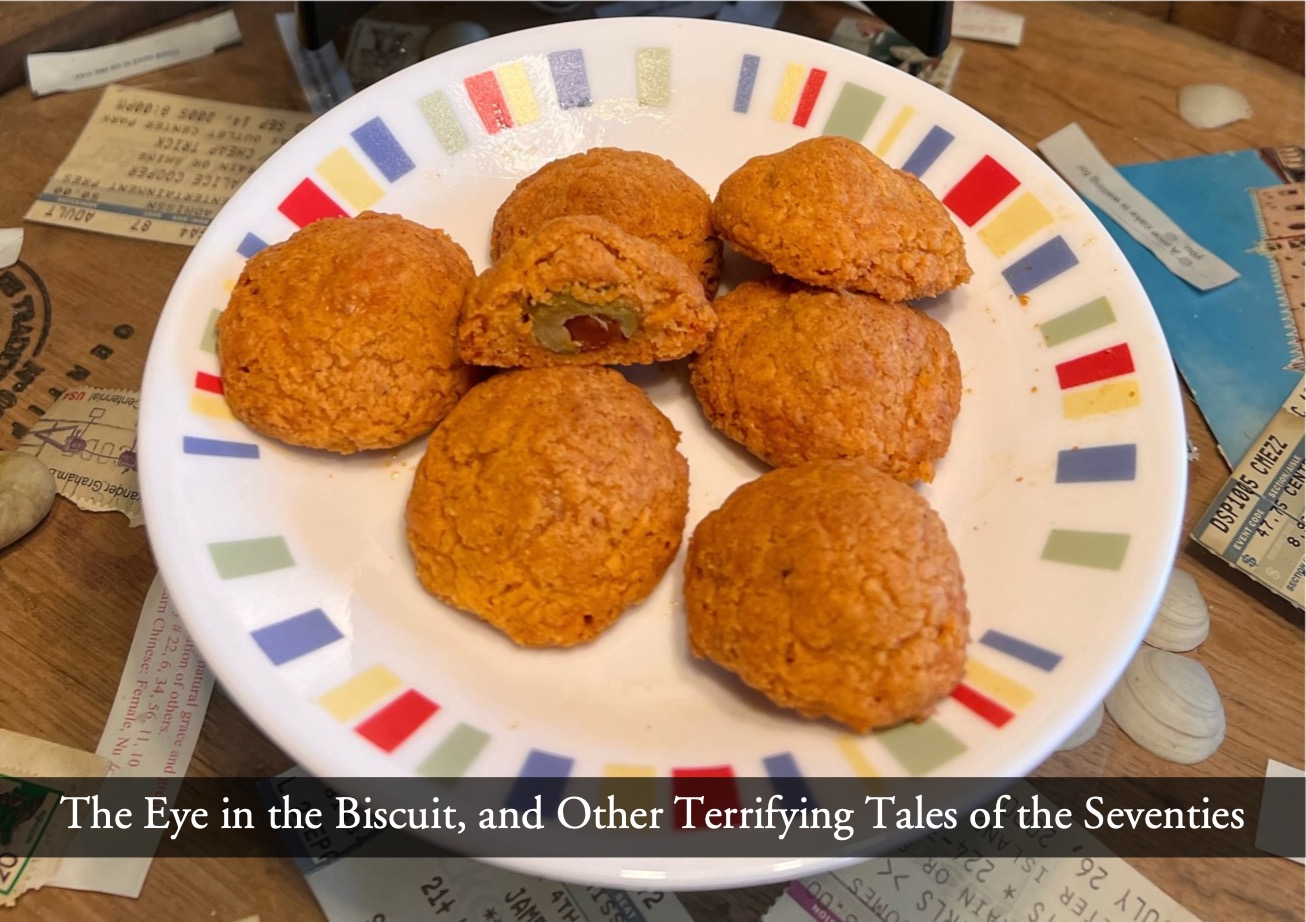
The image links to the Great Anniversary Festival recipe cards (PDF File, 4.5 MB), but this particular recipe is available in A Sestercentennial Cookery.
Sarah Hoyt invited me to post something about Bi/Vi/Centennial food on According To Hoyt, and it’s now up. Please read Food for the Great Anniversary Festival there! It features a special collection of Centennial-friendly recipes just for Hoyt’s Huns, and includes recipes not in A Sestercentennial Cookery. There are also different takes on the history of some of these books and foods than I put into the break-out posts.
If you came here for the Great Anniversary Festival recipe PDF (PDF File, 4.5 MB), you can download it by way of this link (PDF File, 4.5 MB)!
I’ve also linked the other eighteenth and nineteenth century cookbooks below.
- A Monticello Meal for Independence Day—Wednesday, June 24th, 2026
-
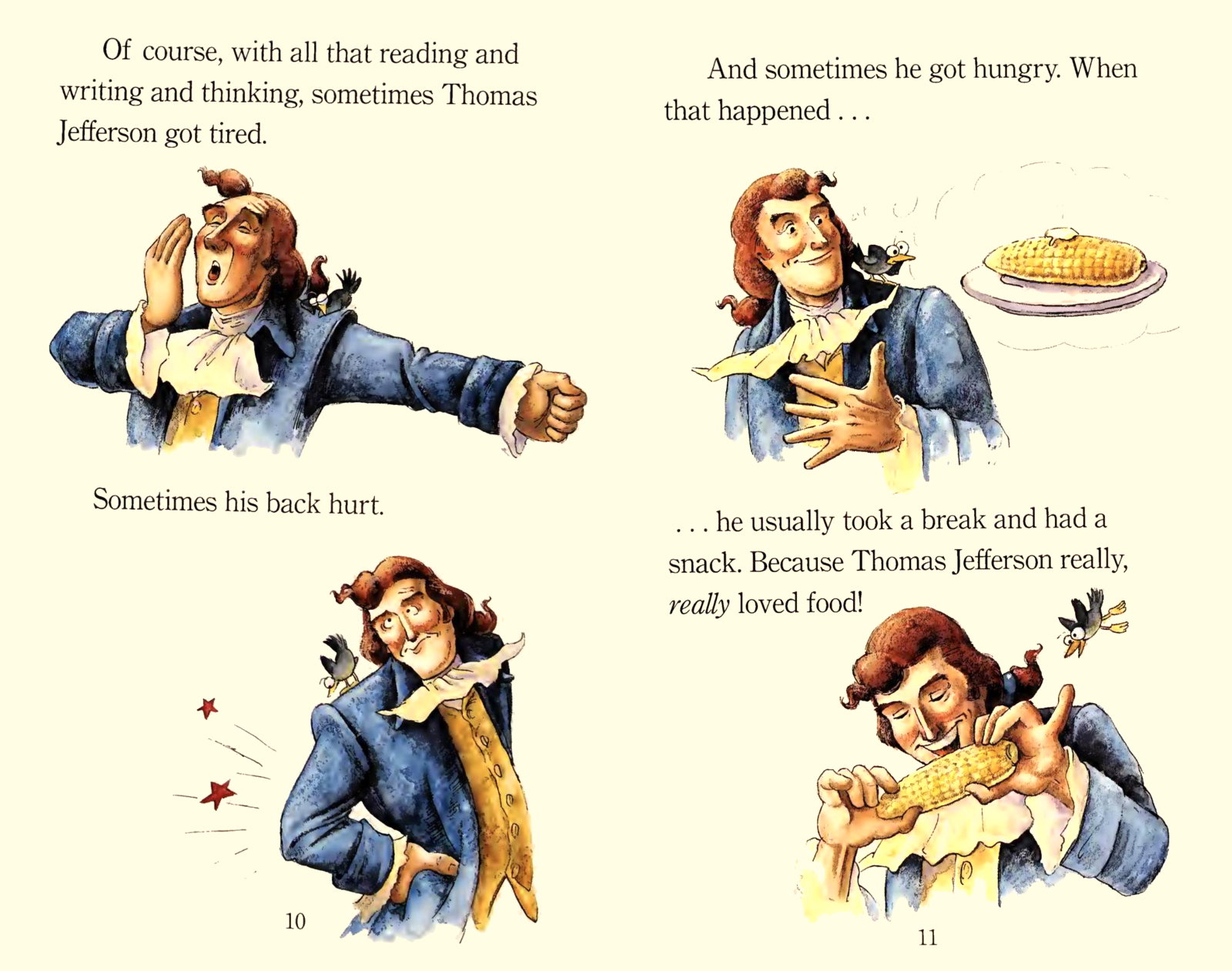
There’s even a children’s book about how much of a foodie Jefferson was.
The Fourth of July celebrates the signing of the Declaration of Independence. The Declaration was drafted by Thomas Jefferson. Why not add a couple of Jefferson’s or his family’s recipes to your celebration?
- Bicentennial meal
- Centennial Meal
- Vicennial Meal
- Sestercentennial Cookery
- Monticello Meal ⬅︎
- Great Anniversary Food
If there were a patron of American foodies, it would be Thomas Jefferson. He famously designed and possibly built his own pasta machine after enjoying pasta on an overseas trip to Italy. He is credited with introducing such varied foodie delights to America as waffles, macaroni & cheese, and vanilla pods.
His ice cream recipe from his time in France is widely copied and possibly the most common example of the foods he popularized. As reproduced by the Thomas Jefferson Foundation’s web site for Monticello, it is simple and likely very good, using cream, separated eggs, and sugar. It is churned using a “sabottiere”, which appears to be an early form of ice cream churn, a “sorbetière” in modern French.
And Jefferson didn’t just bring foreign foods to America. He also brought American foods to foreign lands. He considered the apples of France “vastly inferior to his prized Newtown Pippin from Virginia. So began a five-year mission to introduce his French colleagues to the great delicacies of his homeland.”
- Ice Cream Cookery, Second Printing—Wednesday, April 29th, 2026
-
Are you ready for the summer of Independence? Summer celebrations are always better with ice cream, and the no-churn recipes in The Padgett Sunday Supper Club Ice Cream Cookery• are my personal favorites.
Since publishing my Ice Cream Cookery last year, I continue to try new ice creams alongside the old favorites. One was so impressive I’ve added it to the book. Last year for a gaming festschrift I went over some recipes given to me by Alarums and Excursions publisher Lee Gold. Her father’s Orange Cream Sherbet, made with oranges, lemons, cream, milk, and eggs, is very, very good.
This differs from the Lemon Cream Sherbet that debuted in the first edition more than in replacing some of the lemon with orange. It also replaces the gelatin with eggs, beating the yolks and whites separately. It enhances the citrus flavor by utilizing the peels of the orange and lemon as well. It is an absolutely wonderful sherbet, and would be great as the filling of an ice cream pie or cake. It’s not too shabby between two chocolate cookies as an ice cream sandwich either.
I’ve also made a minor change to the graphics. In its first edition photo, the Plombir Slivochnyi was somewhat eclipsed by a cheesecake from Tempt Them with Tastier Foods. I try to make these photos reflect how I actually use and eat the depicted foods, and I like ice cream with my cake. Even cheesecake. But I’ve now replaced the Plombir Slivochnyi photo with one that puts the ice cream up front.
-
“This is going to get salty.”
“A lot of recipe writers and publications… present recipes in a way that they are very difficult to read. They put up roadblocks. They over-complicate them. They try to make something into something that it isn’t.”
Glen goes on a rant about a particular style of recipe-writing that also makes me laugh. It’s all about over-complicating things in ways that literally do nothing for the recipe. This particular cookie recipe hits one of them for me. He doesn’t talk about this in the video, but he does fix it in his altered version: it calls for unsalted butter… and then adds salt. I’ve pretty much stopped keeping unsalted butter on hand because every one of them seems to do this.
It’s why I put the note in A Traveling Man’s Cookery Book about converting sodium content to salt.
If the recipe required clarifying the butter, that might make sense. But it does not. It requires browning the butter, which is the opposite of clarifying. So, this recipe calls for a 10½ tablespoons of butter (an amount worthy of Glen’s rant) and ⅜ teaspoon of fine salt (ditto).
Of the three butters I buy—the store brands at H-E-B, Randalls, and Trader Joe’s—each contains exactly 90 mg of sodium per tablespoon. That means 10½ tablespoons butter contains 2,362.5 mg of salt. This is less than a percent off of what ⅜ teaspoon is. It’s a measuring error.
You could make this cookie and it would be just fine by using normal butter and not adding salt. Literally, the author required unsalted butter and then added exactly the same amount of salt back in. Given that this is a modern trendy recipe, adding more salt not only wouldn’t hurt, it likely would make it even better.
As they say, watch the whole thing.
Glen Powell: The Cookie THEY Don’t Want You to Make at Glen & Friends Cooking (#)

Mimsy Were the Borogoves
Food: Recipes, cookbook reviews, food notes, and restaurant reviews. Unless otherwise noted, I have personally tried each recipe that gets its own page, but not necessarily recipes listed as part of a cookbook review.